Oriental columbine Care (Aquilegia oxysepala)

Oriental columbine

About Oriental columbine

Oriental columbine (Aquilegia oxysepala) is a clump-forming perennial from woodland and meadow habitats in East Asia, especially China, Korea, and nearby regions. It belongs to the buttercup family and dies back in winter before re-sprouting in spring.

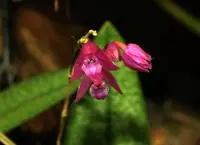
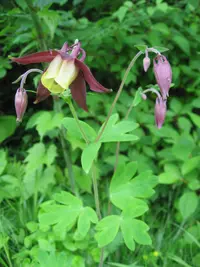
Plants form airy mounds of divided, blue-green leaves and send up slender stems with nodding, burgundy to yellow flowers that have short, hooked spurs. The overall look is delicate, but established plants are fairly resilient in temperate climates.

It generally prefers cool summers, partial shade, and moist but well-drained soil. Once these needs are met, it is not difficult to care for Oriental columbine in a garden setting.

Main Plant Requirements

Care Difficulty

Moderate Care

Light Preference

Partial Shade

Water Requirements

Moderate Water

Temperature Preference

Cold Hardy

Hardiness Zone

4–8

Soil Texture

Loamy, Sandy, Organic-rich

Soil pH

Acidic (5.5–6.5), Slightly acidic (6.5–7.0)

Soil Drainage

Moist but well-drained

Fertilization

Minimal (feed rarely)

Get Personalized Care Plan

Scan your plant to receive care tips personalized for your specific plant

Available on iOS and Android

How to Care for the Oriental columbine

This woodland perennial prefers cool, bright conditions with protection from harsh midday sun.

  • Provide 3–5 hours of morning sun with afternoon shade; dappled or filtered light under deciduous trees suits Oriental columbine well.
  • In hot summers, choose a site with shade after 11 a.m. to prevent leaf scorch, bleaching, and premature flowering decline.
  • In cooler climates, it tolerates more sun, but if stems stretch or flowering is sparse, move it to a brighter position with gentle morning light.

This plant prefers steadily moist, not saturated, soil and responds best to observation-based watering.

  • Water when the top 3–5 cm of soil feels dry, aiming for evenly moist soil during active growth and flowering.
  • Use well-drained soil; yellowing, soft foliage and persistent surface wetness indicate overwatering, while limp, dull leaves and dry soil signal underwatering.
  • Reduce watering in late fall and winter dormancy for Aquilegia oxysepala, supplying only enough moisture to prevent the root zone from fully drying out.

This hardy perennial tolerates a wide range of outdoor temperatures but grows best in cool to mild conditions.

  • Optimal growth occurs around 55–70°F (13–21°C), supporting strong foliage and stable flowering.
  • The plant typically survives down to about -20°F (-29°C) in the ground when well established, especially with mulch protecting the root zone.
  • It handles brief summer heat up to about 80–85°F (27–29°C) if soil stays moist and roots shaded, but prolonged higher temperatures can stress plants and shorten bloom time.

This species tolerates a wide humidity range and usually needs no special adjustment outdoors.

  • Prefers 40–60% humidity but adapts well to typical outdoor fluctuations in temperate climates.
  • Handles brief dry air periods, though prolonged hot, arid winds can cause leaf edges to brown and flowers to fade faster.
  • In very dry sites, reduce humidity stress by mulching the root zone and providing occasional wind protection during heatwaves.

This woodland-edge perennial prefers moist, well-structured soil that drains freely yet does not dry out rapidly.

  • Use a loose, loamy mix with high organic matter, such as garden loam blended with compost and leaf mold, to mimic natural forest-edge soil.
  • Aim for slightly acidic to neutral pH (6.0–7.0) to support nutrient availability and stable Aquilegia oxysepala growth.
  • Improve drainage and aeration by incorporating coarse sand or fine grit and a small portion of perlite into heavier or clay-based soils.
  • Avoid compacted, waterlogged, or very sandy soils that either suffocate roots or dry out so fast that foliage wilts between waterings.

This species can be grown in containers if the pot is deep and stable enough for its taproot and airy foliage.

  • Choose a container at least 25–30 cm deep to accommodate the taproot and prevent stress from restricted root space.
  • Select a heavier material such as clay or ceramic to stabilize tall, flowering stems against wind on patios or balconies.
  • Use a free-draining mix and elevate the pot slightly so drainage holes stay clear and excess water escapes quickly after rain or watering.

This woodland perennial needs only modest feeding to flower well in average garden soil.

  • Apply a light layer of compost around clumps in early spring to support fresh growth.
  • Use a balanced, slow-release fertilizer (around 10-10-10) once in spring at half label strength for caring for Oriental columbine.
  • Avoid additional feeding in midsummer onward to prevent soft, weak growth.
  • Stop fertilizing during winter dormancy; excess nutrients at this stage can stress roots.

Pruning Aquilegia oxysepala is mainly about tidiness and supporting repeat flowering.

  • In late spring to early summer, deadhead spent flower stems to encourage a lighter second flush.
  • Cut back yellowing or damaged foliage at ground level after flowering to refresh the clump.
  • Remove dead, diseased, or crowded stems with clean, sharp hand pruners to maintain airflow.
  • In autumn, leave some seedheads if self-sowing and wildlife value are desired, then clear them before winter if not.

This species is usually grown in garden beds, with transplanting done carefully due to its taproot.

  • Transplant in early spring or early autumn when temperatures are mild and soil is moist but not waterlogged.
  • Look for signs such as slow growth, stunted clumps, or crowded seedlings before lifting and spacing plants.
  • If grown in containers, repot only every 2–3 years when roots circle the pot, gently loosening them to limit shock.
  • Water well after moving plants, provide light shade for 3–5 days, and keep soil evenly moist to reduce root stress.

Aquilegia oxysepala is most often propagated from seed, with division used sparingly due to its root structure.

  • Sow fresh seeds in late summer or autumn in trays outdoors; natural winter chilling improves germination.
  • For spring sowing, cold-stratify seeds at 35–40°F for 4–6 weeks in moist medium before planting.
  • Use a free-draining seed mix, keep lightly moist, and provide bright, indirect light until seedlings establish.
  • Divide only older, strong clumps in early spring, taking large sections and replanting promptly to limit root disturbance.

This columbine is cold hardy and usually needs minimal winter care in most temperate climates.

  • Tolerates typical garden frosts once established, with foliage naturally dying back in late autumn.
  • After frost, cut back dead stems at ground level to reduce overwintering pests and diseases.
  • Apply a 3–5 cm mulch of leaf mold or compost around, not on, crowns to buffer freeze–thaw cycles.
  • Container-grown plants in very cold areas can be moved to a sheltered, unheated space to protect roots.

Care Tips

Rotate clump gently

Every spring, lightly loosen the soil around the crown with your fingers and gently straighten any leaning stems so flower stalks grow upright and are less likely to lodge in wind or rain.

Use light staking

In exposed or windy sites, place a few discreet thin canes or twiggy branches among the stems before flowering so the plant can lean on them, rather than tying stems tightly, which can cause breakage.

Self-seeding management

If you want controlled self-seeding, let only the strongest or best-colored plants keep their seed pods and deadhead the rest before they dry, which limits overcrowding and preserves desirable traits when growing Oriental columbine.

Leaf spot hygiene

At the first sign of dark leaf spots, remove and dispose of affected leaves and avoid overhead watering in the evening, which reduces fungal spore spread and helps keep the foliage presentable longer into the season.

Summer dormancy support

After flowering, allow foliage to yellow naturally, then cut it back and mulch lightly with composted bark or leaf mold to keep the root zone cool and stable during partial summer dormancy.

Common Pests and Diseases

Columbine leaf miner

This pest tunnels inside the leaf tissue, creating pale, winding trails that distort and weaken foliage. Symptoms include blotchy or serpentine patterns that make leaves look scorched or stained.

Solution

Remove and discard affected leaves as soon as trails appear to break the life cycle. Clean up plant debris, avoid overhead watering that keeps foliage wet for long periods, and use yellow sticky traps or a targeted insecticide containing spinosad if damage is severe.

Columbine sawfly

These insects defoliate plants quickly by chewing from the leaf edges inward, often leaving only midribs and major veins. Symptoms include rapid thinning of foliage and skeletonized leaves in late spring to early summer.

Solution

Inspect plants regularly in spring and handpick or crush larvae on affected leaves. If populations are high, use a strong water spray to dislodge larvae and apply a labeled contact insecticide such as insecticidal soap in the evening, repeating as needed while monitoring for beneficial insects.

Powdery mildew

This disease causes a white to gray powdery coating on leaves, stems, and sometimes flower stalks, leading to distortion and reduced vigor. Symptoms include dull, mottled foliage that can yellow and drop prematurely.

Solution

Improve air circulation by spacing plants properly and thinning dense growth, and water at soil level instead of overhead. Remove and dispose of heavily infected leaves, then apply a sulfur or potassium bicarbonate fungicide labeled for ornamentals at the first sign of powdery growth as part of broader Aquilegia oxysepala plant care.

Columbine rust

This disease produces small yellow spots on the upper leaf surfaces and orange to brown pustules on the undersides. Symptoms include premature leaf yellowing and drop, especially in crowded or damp plantings.

Solution

Promptly remove and discard infected leaves and any fallen debris to reduce spore spread. Maintain good spacing, water in the morning at soil level, and use a labeled fungicide containing chlorothalonil or myclobutanil if rust recurs or becomes widespread.

Aphids

These insects cluster on young stems, buds, and leaf undersides, sucking sap and causing curling or distorted growth. Symptoms include sticky honeydew deposits and sometimes sooty mold on leaves below infestations.

Solution

Rinse colonies off with a firm stream of water and prune heavily infested shoot tips. If needed, apply insecticidal soap or horticultural oil thoroughly to stems and leaf undersides, repeating every 5–7 days until populations drop, while encouraging natural predators such as lady beetles by avoiding broad-spectrum insecticides.

Interesting Facts

East Asian woodland specialist

This species is naturally distributed from eastern Russia through northeastern China to Korea and Japan, where it grows in cool, moist woodland edges and mountain slopes, often under partial shade.

Nodding two-tone flowers

Its flowers characteristically hang downward and typically combine dark red to purple outer parts with yellowish to greenish inner segments, an adaptation that helps protect pollen from rain in its humid native habitats.

Slender backward spurs

Compared with many other columbines, it has relatively narrow, elongated nectar spurs that curve or extend backward, matching the tongue length of its local long-tongued insect pollinators and guiding them to the nectar.

Botan icon

Did you know?

In parts of East Asia this species forms natural hybrid zones with closely related columbines, providing a useful model for evolutionary biologists studying how new species arise and maintain boundaries despite occasional interbreeding.

FAQs about Oriental columbine

This species is a perennial, returning from the same root system each year. Individual plants often stay productive for 3–5 years, then gradually decline. Allowing some self-seeding helps maintain a stable patch over time.

Grow Healthy Plants with Botan Care

Keep your plants happy and healthy with plant identification, disease detection, and easy care guidance.

Botan plant care app — identify plants on mobile

Explore More Plants