


Mounting strategy
Mount plants on cork or hardwood with a thin layer of long-fiber sphagnum around the roots to mimic their epiphytic habit and improve air flow while still allowing the root zone to stay evenly moist.

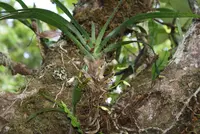
Angraecum borbonicum is a compact epiphytic orchid, usually growing on trees, with slender stems and narrow, leathery leaves. It produces delicate, star-shaped white flowers held on short spikes. Native to the islands of Réunion and Mauritius in the Indian Ocean, it comes from humid, mild forest habitats with good air movement. The plant prefers bright, filtered light, regular moisture around the roots, and a very well-draining, airy orchid medium. Due to its need for stable humidity and careful watering, it is moderately challenging, but learning how to care for Angraecum borbonicum can reward growers with elegant, long-lasting blooms.

Care Difficulty
Hard Care

Light Preference
Bright Indirect Light

Water Requirements
Keep Soil Moist

Temperature Preference
Tropical / Frost Sensitive

Hardiness Zone
Unknown

Soil Texture
Sandy, Organic-rich

Soil pH
Acidic (5.5–6.5)

Soil Drainage
Moist but well-drained

Fertilization
Light (every 4–6 weeks)
Scan your plant to receive care tips personalized for your specific plant
Available on iOS and Android
This orchid prefers bright, gentle light that mimics dappled forest conditions.
This species prefers consistent moisture around the roots without staying soggy.
This orchid grows best in intermediate to warm conditions with stable temperatures.
This orchid prefers consistently moist air to thrive indoors or in a greenhouse.
Angraecum borbonicum grows best in an airy, fast-draining epiphytic mix rather than dense potting soil.
This species is well suited to container culture when the pot is matched to its root behavior and moisture needs.
This orchid benefits from light, consistent feeding rather than heavy applications.
Pruning needs are minimal and focus on hygiene rather than shaping the plant.
This orchid prefers stability and should be repotted only when necessary.
Propagation is possible but slow and usually done by experienced growers.
This species is not frost hardy and needs mild, stable conditions in winter.

Plant Health Check
Not sure what's wrong with your plant? Check your plant's health inside the app.
This orchid is native to Réunion in the Mascarene Islands, where it grows as an epiphyte on trees in humid forests and montane habitats rather than in soil.
It produces small, white, star-shaped flowers that tend to open in the evening and release a stronger fragrance at night, an adaptation linked to pollination by nocturnal insects such as moths.
Wild populations are naturally limited to a relatively small geographic area, so conservation assessments treat habitat loss and forest degradation on Réunion as particularly important threats for long-term survival.

The species belongs to the Angraecum section Humbloti, a small lineage of mostly island-dwelling orchids in the western Indian Ocean that share similar starry white flowers and a strong ecological link to nocturnal moth pollinators.
This orchid usually blooms once a year, often in the cooler, drier season, producing star-shaped white flowers. With stable conditions and moderate feeding, it may occasionally flower a second time on mature, healthy plants.
Keep your plants happy and healthy with plant identification, disease detection, and easy care guidance.

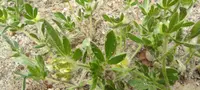
Anthyllis cornicina
Anthyllis cornicina
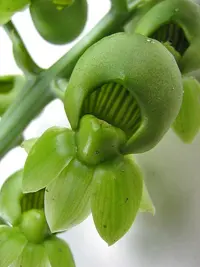
Large-fruited Catasetum
Catasetum macrocarpum
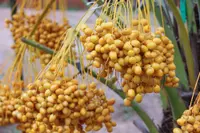
date palm
Phoenix dactylifera
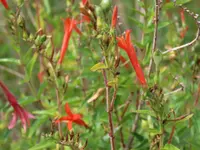
Wright's anisacanth
Anisacanthus quadrifidus var. wrightii
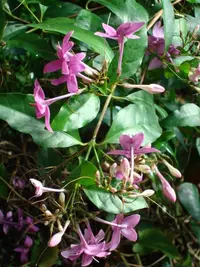
Shooting star
Pseuderanthemum laxiflorum
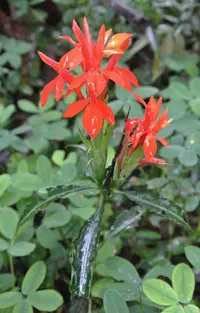
fiery spike
Aphelandra aurantiaca
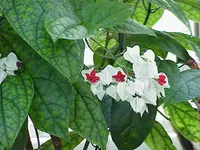
Bleeding glory-bower
Clerodendrum thomsoniae
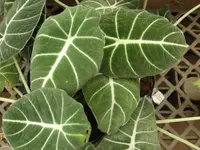
black velvet
Alocasia reginula