Heat-stress management
In very hot, dry periods, provide a light mulch layer 5–7 cm thick around the root zone and irrigate deeply before forecast heat waves to reduce stress on roots and maintain more consistent flowering.

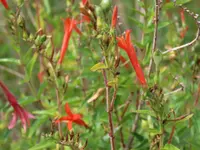
Wright's anisacanth (Anisacanthus quadrifidus var. wrightii) is a small, deciduous shrub native to dry rocky slopes and canyons of Texas and northern Mexico. It belongs to the acanthus family and is adapted to arid, sunny environments.
Plants form a loose, branching shape with narrow green leaves and vivid orange to red tubular flowers that attract hummingbirds. Stems can appear twiggy in winter as the plant drops some or all leaves.
This species is valued in water-wise gardens because it tolerates heat, drought, and poor, well-drained soils. Understanding how to care for Wright's anisacanth mainly involves providing strong light, good drainage, and avoiding constant wet conditions.

Care Difficulty
Easy Care

Light Preference
Full Sun

Water Requirements
Low Water

Temperature Preference
Warm Climate

Hardiness Zone
7–11

Soil Texture
Sandy, Loamy, Rocky

Soil pH
Slightly acidic (6.5–7.0), Slightly alkaline (7.0–7.5)

Soil Drainage
Well-drained

Fertilization
Minimal (feed rarely)
Scan your plant to receive care tips personalized for your specific plant
Available on iOS and Android
This sun-loving shrub thrives in bright, open conditions typical of arid and semi-arid landscapes.
This species is drought-tolerant and prefers infrequent, deep watering once established.
This desert-adapted shrub handles heat well but has limits in cold, especially in wetter climates.
This shrub is adapted to arid habitats, so indoor humidity control is usually unnecessary.
Soil for Anisacanthus quadrifidus var. wrightii should be fast-draining and mineral-rich to mimic rocky, arid ground.
This species can be grown in containers when provided with a stable, fast-draining setup suited to its shrubby form.
This drought-tolerant shrub needs minimal feeding, especially when planted in the ground in lean, well-drained soil.
Thoughtful pruning keeps Anisacanthus quadrifidus var. wrightii compact, dense, and floriferous.
This shrub is most often grown in the ground, so focus on careful transplanting rather than frequent repotting.
New plants are most commonly produced from semi-hardwood cuttings and seeds.
This desert-adapted shrub is fairly cold hardy in much of its range and usually needs only modest winter care.

Plant Health Check
Not sure what's wrong with your plant? Check your plant's health inside the app.
This Texas native shrub produces tubular orange to reddish flowers that are a primary nectar source for migrating hummingbirds in late summer and fall, especially along dry upland routes in central and west Texas.
In its natural range, it grows on limestone hillsides, canyons, and rocky slopes, showing high tolerance to heat, reflected light, and alkaline, low-organic soils common in the Edwards Plateau and Chihuahuan Desert edge.
Flowering often peaks after warm-season rains, a strategy that aligns nectar availability with periods when pollinator activity and seed set are most successful in its semi-arid habitat.

This species is a characteristic component of the Edwards Plateau shrublands in Texas and is frequently used in habitat restoration and wildlife-friendly landscaping to support native pollinators and small birds in dry, high-sun environments.
Lack of blooms usually results from too much shade, excessive nitrogen fertilizer, or pruning at the wrong time. This shrub flowers on new growth, so prune lightly in late winter and avoid rich, high-nitrogen soils that favor leaves over flowers.
Keep your plants happy and healthy with plant identification, disease detection, and easy care guidance.