


Encourage compact growth
Sow seeds in full, open exposure without nearby tall competition so plants develop a low, sturdy rosette that resists lodging and sun-stretching when growing annual agoseris in mixed plantings.

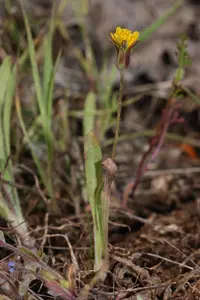
Annual agoseris (Agoseris heterophylla) is a small North American annual wildflower in the daisy family, often called mountain dandelion. It forms low rosettes of narrow, variable leaves and sends up slender stems topped with pale yellow flower heads that resemble simple dandelions. It naturally occurs in dry, open habitats, including grasslands, roadsides, and disturbed soils, especially in western regions. The plant grows quickly from seed, finishes its life cycle in one season, and generally needs full sun and well-drained soil. Once established, it tolerates poor soils and irregular moisture, which makes it relatively low-maintenance for gardeners who want to care for annual agoseris in meadow-style or naturalistic plantings.

Care Difficulty
Easy Care

Light Preference
Full Sun

Water Requirements
Low Water

Temperature Preference
Cool Climate

Hardiness Zone
6–10

Soil Texture
Sandy, Loamy, Rocky

Soil pH
Slightly acidic (6.5–7.0), Neutral (7.0)

Soil Drainage
Well-drained

Fertilization
Minimal (feed rarely)
Scan your plant to receive care tips personalized for your specific plant
Available on iOS and Android
This sun-loving annual thrives in open, bright conditions typical of its native grassland habitats.
This species prefers dry to moderately dry soils and is adapted to low, infrequent rainfall.
This annual is adapted to regions with cool to warm seasons and moderate temperature swings.
This species is very tolerant of dry air, so humidity rarely limits growth in typical outdoor conditions.
This annual prefers lean, fast-draining soil that mimics open, sandy or rocky sites.
This species can be grown in containers if the pot is shallow to medium-depth and drains quickly.
This native annual agoseris usually manages in lean soils but responds to light feeding in very poor sites or containers.
Agoseris heterophylla needs only light pruning to maintain appearance and support seed production management.
This shallow-rooted annual is best direct-sown, but limited transplanting can work with careful handling.
Agoseris heterophylla is most reliably propagated from seed, reflecting its natural annual life cycle.
This annual wildflower completes its life cycle in one season and generally needs no special winter care.

Plant Health Check
Not sure what's wrong with your plant? Check your plant's health inside the app.
This species is an annual in much of its range, completing its entire life cycle from germination to seed production within a single growing season, unlike many other Agoseris species that are perennial.
It forms natural hybrids with closely related Agoseris species, which has made taxonomic work in the group more complex and shows active gene flow among these Western North American dandelion-like plants.
Its seed heads form a spherical, dandelion-like puff of cypselae (specialized dry fruits) each tipped with a pappus of fine hairs, an adaptation that allows effective long-distance wind dispersal across open habitats.
Poor flowering usually comes from low light, nutrient-poor or very dry soil, or heat stress. Check that the plant is not crowded by taller neighbors, deadhead spent blossoms, and avoid high-nitrogen fertilizer that favors leaves over flowers.
Keep your plants happy and healthy with plant identification, disease detection, and easy care guidance.

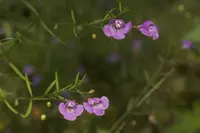
slenderleaf false foxglove
Agalinis tenuifolia
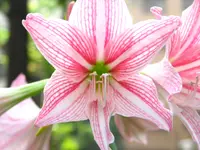
Netted-veined amaryllis
Hippeastrum reticulatum
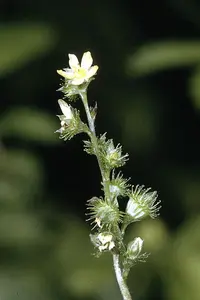
tall hairy agrimony
Agrimonia gryposepala
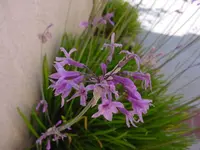
Society garlic
Tulbaghia violacea
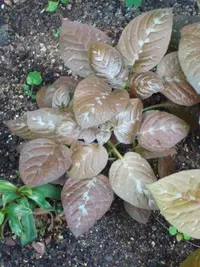
Pseuderanthemum alatum
Pseuderanthemum alatum
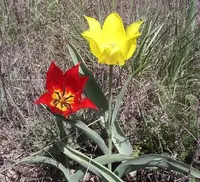
Garden tulip
Tulipa gesneriana
Tuberous Hawk's-beard
Aetheorhiza bulbosa
Costa Rican skullcap
Scutellaria costaricana