orange lily Care (Lilium bulbiferum)

Also known as: fire lily
orange lily

About orange lily

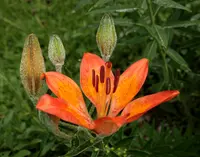
Orange lily, Lilium bulbiferum, is a hardy, herbaceous perennial bulb known for its bright, upright, orange flowers with dark speckling. Stems grow in dense clumps, topped with star-shaped blooms that give a strong vertical accent in borders and mixed plantings.

This species is native to parts of central and southern Europe, where it grows in meadows, open woodlands, and sunny slopes. It tends to be straightforward to grow when planted in well-drained, moderately fertile soil with good light and steady moisture.

For gardeners learning how to care for orange lily, its main needs are a bright position, protection from waterlogged soil, and enough space for bulbs to multiply over time.

Main Plant Requirements

Care Difficulty

Moderate Care

Light Preference

Full Sun

Water Requirements

Moderate Water

Temperature Preference

Cold Hardy

Hardiness Zone

4–8

Soil Texture

Sandy, Loamy, Organic-rich

Soil pH

Acidic (5.5–6.5), Slightly acidic (6.5–7.0)

Soil Drainage

Well-drained

Fertilization

Light (every 4–6 weeks)

Get Personalized Care Plan

Scan your plant to receive care tips personalized for your specific plant

Available on iOS and Android

How to Care for the orange lily

This species prefers bright, direct sun in most temperate gardens for strong flowering.

  • Provide 6–8 hours of direct sun daily; full morning and midday sun is ideal, with light afternoon shade in hotter regions.
  • Tolerates light partial shade (3–4 hours sun), but flowering of orange lily decreases and stems may stretch and lean toward light.
  • In summer heat, protect from intense late-afternoon sun to reduce leaf scorch; in early spring, choose an open site so emerging shoots receive maximum light.

This bulb prefers consistently moist but not waterlogged soil during its active growth period.

  • Water when the top 3–5 cm of soil feel dry, soaking the root zone deeply so moisture reaches the bulbs, then allow excess water to drain away.
  • In spring and flowering season, monitor closely during dry spells; in late fall and winter, reduce watering so dormant bulbs sit in slightly moist, never soggy, soil.
  • Ensure well-drained soil or raised beds; yellowing, limp leaves and soft bulbs suggest overwatering, while crisp, drooping foliage indicates underwatering, especially in Lilium bulbiferum.

This hardy lily grows best in cool to mild climates with moderate summer temperatures.

  • Active growth and flowering are strongest at 60–77°F (16–25°C), with cooler nights helping maintain sturdy stems and vivid blooms.
  • Established bulbs tolerate winter lows down to about 5–10°F (-15 to -12°C) under mulch, but emerging spring shoots are sensitive to late frosts and may need protection.
  • In hot summers above 86°F (30°C), provide afternoon shade and a mulch layer to keep soil cooler and protect bulbs from heat stress and premature dormancy.

This species grows best in moderate ambient humidity but does not require special air moisture management in most homes.

This bulb prefers loose, well-drained, moderately fertile soil to prevent rot and support upright stems.

  • Use a loamy mix with 30–40% compost or well-rotted leaf mold to provide nutrients and moisture retention without becoming heavy.
  • Aim for slightly acidic to neutral pH around 6.0–7.0, avoiding strongly alkaline conditions that can limit nutrient uptake.
  • Improve drainage and aeration by blending in coarse sand or fine grit plus perlite at roughly 20–30% of the total mix.
  • Avoid compacted clay or waterlogged beds, which greatly increase the risk of bulb and root rot in Lilium bulbiferum.

This species is suitable for container growing when bulbs are given enough depth and fast drainage.

  • Choose a tall, stable pot at least 30 cm deep so roots and stems have enough vertical support and do not topple in wind.
  • Use a free-draining mix of garden loam, compost, and coarse grit or perlite so water moves quickly past the bulbs.
  • Select a heavier material such as ceramic or thick terracotta to keep the container steady as the flowering stems become top-heavy.

Lilium bulbiferum responds well to moderate, structured feeding during the active growing season.

  • Apply a balanced, slow-release fertilizer (around 10-10-10) or light compost in early spring as shoots emerge.
  • Supplement with a half-strength balanced liquid feed every 4–6 weeks until flowering finishes for healthy stems and blooms.
  • Avoid high-nitrogen products, which can cause soft, floppy growth and fewer flowers.
  • Stop feeding once foliage begins yellowing and during winter dormancy to allow bulbs to rest.

Pruning needs for Lilium bulbiferum are simple and focus on cleaning rather than reshaping the plant.

  • Deadhead spent flowers promptly, cutting just above a leaf node to prevent unwanted seed formation and conserve energy.
  • Leave green stems and leaves until they yellow and dry, then cut them back to soil level with clean, sharp pruners.
  • Remove any dead, diseased, or storm-damaged stems at the base whenever noticed to reduce disease risk.
  • Avoid cutting healthy foliage in summer, as it is essential for rebuilding bulb reserves and next year’s flowering.

Orange lily is usually grown in garden beds, so care focuses on lifting and transplanting crowded bulbs rather than frequent repotting.

  • Check clumps every 3–4 years; signs for lifting include reduced flowering, congested shoots, or bulbs pushing to the surface.
  • Plan transplanting for late summer to early fall, after foliage has fully died back and bulbs are dormant.
  • Lift bulbs carefully with a fork, shake off loose soil, and separate offsets by hand, keeping roots and basal plates intact.
  • Replant bulbs at roughly 2–3 times their height deep in well-drained soil, water gently, and avoid heavy disturbance afterward.

Lilium bulbiferum is commonly propagated by bulbs, offsets, and bulbils rather than by cuttings.

  • Divide mature clumps in late summer or early fall, separating firm, healthy offsets and replanting them immediately.
  • Collect stem bulbils, if present, when they detach easily, then plant them shallowly in loose, well-drained mix.
  • Grow bulbils or small offsets in a sheltered, bright, frost-free frame or cold greenhouse until strong enough for beds.
  • Use seed mainly for breeding; sow fresh seed in trays outdoors for natural cold stratification and slower, multi-year development.

Lilium bulbiferum is generally cold hardy in temperate climates and needs only modest winter attention in the ground.

  • In regions with freezing winters, allow stems to die back naturally, then cut to soil level once fully brown.
  • Apply a 5–7 cm layer of loose mulch over the root zone in late fall to buffer temperature swings and maintain soil structure.
  • Ensure beds drain well; avoid waterlogged soil around dormant bulbs, which increases rot risk in cold weather.
  • Move container-grown plants to a sheltered, unheated but frost-free spot, keeping the soil barely moist, not wet.

Care Tips

Bulbil propagation

Collect the small bulbils that form in the leaf axils in late summer, dry them for 1–2 days, then pot them shallowly in a gritty mix to start new plants with the same traits as the parent.

Sturdy stem support

Install discreet single-stem stakes or a low peony ring early in the season, before stems elongate, to prevent wind damage and keep tall flower stalks upright and straight.

Rotation for vigor

Lift and divide crowded clumps every 3–4 years in early autumn, replanting only firm, healthy bulbs to maintain flower size and reduce disease buildup in one spot.

Sanitary bloom removal

Remove spent flowers promptly by snapping or cutting off the faded blooms while leaving the green stem and leaves so the plant can still photosynthesize and recharge the bulb.

Fungal risk management

When caring for orange lily in damp climates, water at soil level and increase plant spacing or airflow, especially around the lower 20–30 cm of stems, to lower the risk of botrytis and other fungal leaf spots.

Common Pests and Diseases

Lily beetle

This pest feeds on leaves, buds, and flowers, causing ragged holes and defoliation, and its larvae cover themselves in their own excrement. Symptoms include rapidly skeletonized foliage and chewed buds, especially in late spring and summer.

Solution

Hand-pick and destroy adults, eggs, and larvae as soon as they are seen, checking plants daily in peak season. For heavier infestations, use a targeted insecticide containing spinosad or a pyrethroid labeled for lilies, applied thoroughly to foliage and repeated according to label directions while also removing heavily damaged leaves or buds.

Aphids

These insects cluster on young stems, buds, and the undersides of leaves, sucking sap and excreting sticky honeydew that can attract sooty mold. New growth often appears curled, distorted, or stunted.

Solution

Rinse colonies off with a strong but controlled stream of water, focusing on shoot tips and leaf undersides. If populations persist, apply insecticidal soap or a light horticultural oil, repeating every 5–7 days as needed and improving plant vigor through proper watering and fertilization to reduce susceptibility.

Botrytis blight

This disease causes brown, water-soaked spots on leaves and flowers that enlarge rapidly in cool, humid weather, often followed by a gray, fuzzy mold. Symptoms include premature leaf yellowing and flower spotting that ruins the ornamental display.

Solution

Remove and discard affected leaves, buds, and spent flowers promptly, and avoid overhead watering to keep foliage dry. Improve spacing and airflow around plants, mulch the soil to reduce splash, and, in wet seasons or severe cases, use a fungicide labeled for Botrytis on lilies, applied preventively at the first sign of spots.

Basal rot

This disease attacks the base of the bulb, leading to yellowing, wilting leaves and poor or collapsed stems, often starting on one side. Symptoms include brown, soft, or dry-rotted bulb scales and a failure of bulbs to sprout strongly in spring.

Solution

Lift and discard severely affected bulbs along with surrounding contaminated soil, and avoid replanting lilies in the same spot for several years. Plant only healthy, firm bulbs in well-drained soil, avoid overwatering, and consider a preventive fungicidal bulb dip before planting if disease pressure has been high previously, which supports long-term Lilium bulbiferum plant care.

Interesting Facts

Bulbils in leaf axils

Lilium bulbiferum forms small aerial bulbs, called bulbils, in the axils where leaves join the stem, which can drop to the ground and grow into new plants, giving it an efficient vegetative reproduction strategy compared with many other lilies.

Native to European mountains

This species is naturally distributed in montane and subalpine meadows and forest edges across parts of central and southern Europe, especially in the Alps and surrounding ranges, where it is adapted to cool summers and well-drained, often calcareous soils.

Insect-pollinated orange flowers

The upright, bright orange, unscented flowers are primarily pollinated by diurnal insects such as bees and beetles, which are attracted by the strong color contrast of the tepals and anthers rather than by fragrance.

Botan icon

Did you know?

In several European regions, wild populations of Lilium bulbiferum have declined due to habitat loss and collection, leading to legal protection in some countries where picking the flowers or digging bulbs from the wild is restricted or prohibited.

FAQs about orange lily

Lack of flowering usually comes from bulbs planted too shallow, insufficient sun during spring, or nutrient imbalance from high-nitrogen fertilizer. Crowded clumps may also stop producing buds and should be divided every few years to restore bloom.

Grow Healthy Plants with Botan Care

Keep your plants happy and healthy with plant identification, disease detection, and easy care guidance.


Botan plant care app — identify plants on mobile

Explore More Plants