Provide climbing support
Install a sturdy trellis or net at planting time and gently tie young vines with soft ties so the stems can climb vertically without kinking or snapping.

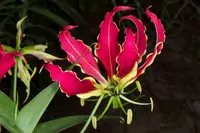
Flame lily, Gloriosa superba, is a tropical climbing perennial grown from tubers. It produces striking, wavy-edged petals in red, orange, or yellow, often with a flame-like look.
In its natural habitat, it occurs in parts of Africa and Asia, scrambling through shrubs and low trees using tendrils at the leaf tips. The plant has a seasonal growth cycle, with active summer growth and a dry resting period.
It can be moderately challenging, as it needs warmth, a support to climb, and careful handling of its fragile tubers. Light, free-draining soil and moderate moisture help when learning how to care for flame lily.

Care Difficulty
Moderate Care

Light Preference
Partial Sun

Water Requirements
Moderate Water

Temperature Preference
Tropical / Frost Sensitive

Hardiness Zone
9–11

Soil Texture
Sandy, Loamy, Organic-rich

Soil pH
Acidic (5.5–6.5), Slightly acidic (6.5–7.0)

Soil Drainage
Well-drained

Fertilization
Light (every 4–6 weeks)
Scan your plant to receive care tips personalized for your specific plant
Available on iOS and Android
This climbing tuber needs bright light to flower well without scorching its foliage.
This species prefers evenly moist, well-drained soil during active growth but is not tolerant of waterlogging.
This tropical vine grows best in warm, stable conditions without frost exposure.
This species prefers moderate humidity but usually adapts to typical indoor levels if not too dry.
Gloriosa superba grows best in light, airy, sharply drained soil that still holds some moisture.
This species is suitable for container growing when the pot supports its climbing, tuberous habit.
Balanced feeding supports strong growth and flowering in Gloriosa superba without overloading the soil.
Pruning Gloriosa superba focuses on tidying vines and preserving the tubers’ energy for future growth.
Tubers of Gloriosa superba benefit from periodic division and fresh soil when container grown or relocated.
Multiplying Gloriosa superba is most reliable through careful division of dormant tubers.
Cold-season care for Gloriosa superba focuses on protecting the frost-sensitive tubers.

Plant Health Check
Not sure what's wrong with your plant? Check your plant's health inside the app.
Instead of separate tendrils, this species uses the tips of its leaves to coil and climb, allowing the vine to anchor onto supports while keeping leaf surface available for photosynthesis.
The flowers typically open yellow or yellow-orange and gradually turn deep red as they age, a color shift that helps signal maturity and pollen availability to pollinators.
The underground tubers contain potent alkaloids such as colchicine, making all parts of the plant poisonous if ingested and requiring careful handling, especially around children and pets.

Gloriosa superba has naturalized beyond its native African and Asian range and is considered an invasive species in parts of Australia and some islands in the Indian and Pacific Oceans, where it can displace native vegetation and alter local plant communities.
Lack of blooms usually comes from insufficient warmth, low light, or a tuber that is too young or weak. Overly rich nitrogen fertilizer and cramped containers also reduce flowering. Balanced feeding and patience are key for growing flame lily successfully.
Keep your plants happy and healthy with plant identification, disease detection, and easy care guidance.