Sacred flower of the Incas Care (Cantua buxifolia)

Also known as: Qantuta
Sacred flower of the Incas

About Sacred flower of the Incas

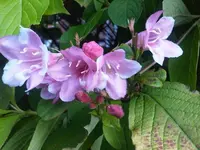
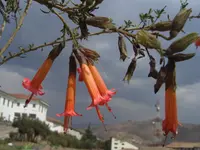
Sacred flower of the Incas (Cantua buxifolia) is an evergreen shrub known for its long, tubular flowers in bright pink, red, or yellow tones. It forms a bushy plant with slender branches and narrow green leaves.

This species is native to the high valleys of the Andes in Peru, Bolivia, and nearby regions, where it grows in cool, sunny mountain conditions. In gardens, it is valued for its ornamental display and can be trained as a shrub or small patio specimen.

It is moderately demanding, as it prefers mild temperatures, good light, and protection from hard frost, so it is often grown in containers in cooler climates. Understanding how to care for Sacred flower of the Incas helps keep it healthy and flowering well.

Main Plant Requirements

Care Difficulty

Moderate Care

Light Preference

Full Sun

Water Requirements

Regular Water

Temperature Preference

Warm Climate

Hardiness Zone

8–10

Soil Texture

Loamy, Sandy, Organic-rich

Soil pH

Acidic (5.5–6.5), Slightly acidic (6.5–7.0)

Soil Drainage

Moist but well-drained

Fertilization

Light (every 4–6 weeks)

Get Personalized Care Plan

Scan your plant to receive care tips personalized for your specific plant

Available on iOS and Android

How to Care for the Sacred flower of the Incas

This shrub thrives with abundant light and cool, bright conditions suited to its Andean origins.

  • Provide 6–8 hours of sun daily, ideally with morning sun and light afternoon shade, especially in hot summers.
  • Tolerates light or dappled shade, but flowering drops if grown in less than 4–5 hours of direct sun.
  • In very strong sun, use overhead shade cloth or plant near taller shrubs to prevent leaf scorch on Sacred flower of the Incas.

This plant prefers evenly moist, well‑drained soil and does not tolerate prolonged drought or waterlogging.

  • Water when the top 3–5 cm of soil feel dry, soaking the root zone, then let excess drain away.
  • Reduce watering in cool seasons, but do not allow the root ball to dry out completely; wilted, dull leaves indicate underwatering.
  • Yellowing lower leaves, soft stems, or a sour smell in the soil suggest overwatering, so improve drainage and extend the drying interval for Cantua buxifolia.

This species prefers cool to mild temperatures with protection from frost and extreme heat.

  • Optimal growth occurs at 55–75°F (13–24°C), with slightly cooler nights promoting strong flowering.
  • Plants are damaged near 30°F (−1°C) and can be killed by hard frost; protect with covers or move to shelter before freezes.
  • In heat above 85–90°F (29–32°C), provide afternoon shade and maintain soil moisture to reduce stress and prevent leaf drop.

This species prefers moderately humid air and reacts to prolonged dryness.

  • Aim for 40–60% humidity, especially during active growth and flowering of Sacred flower of the Incas.
  • Crisping leaf edges, shriveling buds, and slower growth indicate air that is too dry.
  • Increase humidity with nearby water trays, grouped plants, or a room humidifier rather than misting foliage directly.

This shrub performs best in loose, well-drained, fertile soil that stays evenly moist but not wet.

  • Use a loamy mix containing roughly 40% compost, 40% peat or coco coir, and 20% perlite or coarse sand for structure and drainage.
  • Target a slightly acidic to neutral pH around 6.0–7.0 for reliable nutrient availability in Cantua buxifolia.
  • Incorporate coarse materials such as perlite, pumice, or fine bark chips to improve aeration around the root zone.
  • Avoid compacted clay, heavy peat-only mixes, or waterlogged spots, which promote root rot and nutrient imbalances.

This species adapts well to container growing when given a stable, deep pot.

  • Choose a heavy, wide-based container to prevent wind tipping as the shrub becomes tall and branching.
  • Select a pot deep enough to support a moderately strong taproot and allow vertical root development.
  • Use a container material with moderate porosity, such as thick-walled terracotta, to balance moisture retention with steady evaporation.

Cantua buxifolia benefits from moderate feeding to support flowering but does not need heavy fertilizer inputs.

  • Use a balanced liquid fertilizer (e.g. 10-10-10) at half strength every 4–6 weeks during the growing season for caring for Sacred flower of the Incas.
  • In spring, apply a thin layer of compost over the root zone to improve soil structure and nutrient availability.
  • For containers, incorporate a slow-release granular fertilizer at label rates at the start of spring.
  • Suspend feeding or reduce to very light applications in fall and winter when growth slows.

Cantua buxifolia responds well to light structural pruning that maintains shape and flowering wood.

  • Carry out main pruning in late winter or very early spring before strong new growth begins.
  • Remove dead, damaged, or crossing stems first, cutting back to healthy wood with clean, sharp bypass pruners.
  • Thin congested interior shoots to improve air flow and light penetration, which supports better flowering.
  • Shorten overly long stems by up to one-third to control size and keep a balanced, bushy framework.

Cantua buxifolia is often grown in the ground but can adapt to containers if transplanted with care.

  • Check for roots circling the pot drainage holes, soil drying very quickly, or stunted growth as signs it needs a larger container.
  • Plan repotting or transplanting in early spring, every 2–3 years for potted plants, when active growth is about to start.
  • Water thoroughly the day before, then gently loosen and tease out circling roots without tearing the root ball.
  • Replant at the same soil depth in a slightly larger pot or prepared ground, firm gently, and keep evenly moist until re-established.

Cantua buxifolia is most commonly propagated from semi-ripe cuttings, with seeds as a slower alternative.

  • Take 7–10 cm semi-ripe stem cuttings in late spring to summer from non-flowering shoots.
  • Remove lower leaves, dip the cut end in rooting hormone, and insert into a free-draining mix of perlite and peat-free compost.
  • Maintain high humidity and warmth (65–75°F) with bright, indirect light until roots form.
  • Sow fresh seed in spring on the surface of a light seed mix, keep slightly moist, and provide gentle bottom heat for better germination.

Cantua buxifolia is frost-sensitive and needs specific winter protection in most temperate climates.

  • In regions below about 25–30°F, grow in containers and move plants indoors to a bright, cool, frost-free room before first frost.
  • In mild climates, apply 5–8 cm of organic mulch around the root zone, keeping it slightly away from the main stem.
  • Wrap exposed stems in breathable horticultural fleece during hard frosts to reduce tissue damage.
  • Reduce watering in winter, keeping soil just barely moist to prevent cold, soggy conditions around the roots.

Care Tips

Early structural staking

Install a sturdy stake or narrow trellis when the plant is still young and loosely tie main stems every 20–30 cm with soft ties so upright growth is supported before branches become brittle and prone to wind damage.

Cool-night flower boost

If possible, place outdoor containers or choose a planting spot where nights stay 45–55°F during bud formation, since this mild temperature drop improves flowering and color intensity.

Wind and weight management

In windy sites, pinch out the very tips of long, whippy shoots and lightly thin overcrowded branches so the canopy catches less wind and heavy blooms do not snap branches.

Root-zone mulching

Apply a 5–8 cm layer of composted bark or leaf mold over the root zone, keeping it a few cm away from the stem, to buffer soil temperature, reduce evaporation, and protect shallow feeder roots from drying out or freezing.

Seasonal container shifting

For potted plants, rotate the container 90° every 2–3 weeks and shift it slightly with the seasons so light reaches all sides evenly, which keeps the shrub balanced and reduces leaning when growing Sacred flower of the Incas in exposed spots.

Common Pests and Diseases

Aphids

This pest feeds on tender shoots and flower buds, sucking sap and causing distorted new growth and sticky honeydew on stems. Symptoms include curling leaves, reduced flowering, and sooty mold growing on the honeydew in humid conditions.

Solution

Remove heavily infested shoot tips and buds, then wash the plant with a strong but controlled stream of water to dislodge insects. If needed, apply insecticidal soap or a light horticultural oil to all leaf surfaces, repeating every 7–10 days until populations are controlled, and avoid overfertilizing with high-nitrogen products that promote soft, aphid-prone growth.

Spider mites

These insects are tiny sap feeders that thrive in hot, dry conditions, causing fine stippling on leaves, dull foliage, and in severe cases, webbing between stems and leaves. Symptoms include premature leaf drop and a general decline in plant vigor outdoors or in containers.

Solution

Increase humidity around the plant with regular overhead rinsing of the foliage and hose down both sides of leaves to physically remove mites. For persistent infestations, use insecticidal soap or a neem oil spray, applied thoroughly and repeated at 5–7 day intervals, and reduce heat and drought stress by maintaining even soil moisture and some shelter from reflected heat when possible for Sacred flower of the Incas indoor care.

Leaf spot

This disease causes small brown to dark purplish spots on leaves that may enlarge and coalesce, sometimes with yellow halos. Symptoms include premature leaf yellowing and drop, especially in crowded, poorly ventilated plantings or during prolonged wet weather.

Solution

Prune out and discard affected leaves and any congested interior branches to improve airflow, and avoid overhead watering that keeps foliage wet for long periods. If spots continue to spread, apply a copper-based or chlorothalonil fungicide labeled for ornamental shrubs, following label intervals, and maintain a clean mulch layer to reduce splash of spores from soil to foliage.

Botrytis blight

This disease produces gray, fuzzy mold on fading flowers and sometimes on young shoots, especially in cool, damp conditions. Symptoms include browning petals, blighted tips, and soft, decaying tissue during extended periods of rain or poor air circulation.

Solution

Remove and dispose of all faded flowers and any gray, moldy tissue as soon as it appears, and thin nearby vegetation to increase light and airflow around the shrub. In persistently wet climates or seasons, consider using a preventative ornamental fungicide labeled for botrytis on vulnerable flower buds and shoots, while keeping irrigation directed at the soil surface rather than the flowers.

Interesting Facts

National symbol of Peru

This species, known as the Sacred flower of the Incas, is one of the national flowers of Peru and features prominently in Andean legends and traditional ceremonies.

High Andean specialist

The shrub is naturally adapted to high elevations in the Andes, often growing above 2,500 m where it tolerates strong light, cool nights, and seasonally dry slopes.

Tubular hummingbird flowers

Its long, pendulous tubular flowers in bright pink, red, or bi‑colored forms are highly specialized for pollination by hummingbirds, which can easily access the nectar while transferring pollen between blooms.

Botan icon

Did you know?

Archaeological and historical sources indicate that Inca nobility valued this species so highly that its flowers were used in important state and religious rituals, giving rise to its enduring name Sacred flower of the Incas.

FAQs about Sacred flower of the Incas

This shrub is highly attractive to hummingbirds due to its tubular flowers and vivid colors. Bees and other nectar-feeding insects also visit. Positioning it in a sunny, sheltered spot helps maximize pollinator activity when growing Sacred flower of the Incas.

Grow Healthy Plants with Botan Care

Keep your plants happy and healthy with plant identification, disease detection, and easy care guidance.

Botan plant care app — identify plants on mobile

Explore More Plants