Maxillaria picta Care

Maxillaria picta

About Maxillaria picta

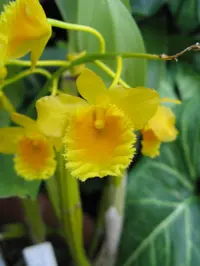
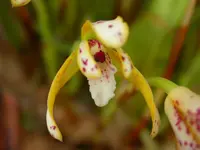
Maxillaria picta is a compact epiphytic orchid that usually grows on trees, forming small clumps of pseudobulbs with narrow leaves. It produces waxy, often yellow to cream flowers marked with darker spots, giving it a distinctive, speckled look. This species occurs naturally in southeastern Brazil and nearby regions, in humid forests with filtered light and good air movement. It is considered moderately easy for growers who can provide stable conditions and avoid extremes in temperature or dryness. In general, it prefers bright shade, consistent but not soggy moisture, and a very airy orchid mix. Understanding how to care for Maxillaria picta starts with mimicking these mild, humid forest conditions indoors or in a greenhouse.

Main Plant Requirements

Care Difficulty

Moderate Care

Light Preference

Bright Indirect Light

Water Requirements

Keep Soil Moist

Temperature Preference

Tropical / Frost Sensitive

Hardiness Zone

Unknown

Soil Texture

Peaty, Organic-rich, Loamy

Soil pH

Acidic (5.5–6.5)

Soil Drainage

Moist but well-drained

Fertilization

Light (every 4–6 weeks)

Get Personalized Care Plan

Scan your plant to receive care tips personalized for your specific plant

Available on iOS and Android

How to Care for the Maxillaria picta

This orchid prefers bright, filtered light that mimics dappled forest conditions.

  • Provide 6–8 hours of bright, indirect light daily, such as under shade cloth or beneath high tree canopies, to support compact growth and flowering in Maxillaria picta.
  • Allow gentle morning sun but avoid strong midday and afternoon sun, which can scorch leaves; pale, yellowing foliage often indicates excess light.
  • In darker seasons, move plants to a brighter position or use supplemental grow lights, keeping leaves just warm to the touch, not hot, to prevent stress.

This species prefers evenly moist, airy media and does not tolerate prolonged drought or waterlogging.

  • Water when the top 2–3 cm of the potting mix or bark feels just barely dry, using thorough watering that drains completely from the container or bed.
  • In active growth and warmer weather, expect to water more often, while in cooler months reduce frequency but never allow the roots to become bone dry.
  • Watch for soft, blackened roots and a sour smell as signs of overwatering, while wrinkled pseudobulbs and dry, papery roots indicate underwatering in Maxillaria picta.

This orchid thrives in intermediate conditions with mild days and cooler nights.

  • Aim for 65–80°F (18–27°C) by day and 55–65°F (13–18°C) at night for steady growth and reliable flowering.
  • Protect the plant from temperatures below 45°F (7°C); short dips may be tolerated but frost quickly damages leaves and pseudobulbs.
  • During hot spells above 85°F (29°C), increase shade, air movement, and humidity to reduce heat stress, and avoid placing plants near hot, reflective surfaces.

This orchid prefers moderately high humidity for steady growth and flowering.

  • Aim for 50–70% humidity, with consistent levels rather than sharp daily swings.
  • It tolerates brief dips to 40%, but prolonged very dry air leads to shriveled pseudobulbs and crispy leaf tips.
  • Increase humidity with a pebble tray, grouped plants, or a room humidifier while keeping leaves well ventilated to prevent fungal issues.

Maxillaria picta needs a very airy, fast-draining medium rather than compact potting soil.

  • Use a mix of medium orchid bark, sphagnum moss, and perlite or pumice to provide both aeration and slight moisture retention.
  • Aim for a slightly acidic to neutral pH around 5.5–6.5, which suits most orchid-grade bark mixes.
  • Keep the structure loose; large pores around the roots are essential to prevent suffocation and root rot.
  • Avoid dense peat-based mixes or garden soil, which hold water too long and collapse, reducing air spaces.

This species is well suited to container growing when moisture and stability are managed carefully.

  • Choose a squat, wider-than-deep pot to stabilize the creeping rhizomes and reduce tipping as new growth spreads outward.
  • Select plastic if extra moisture retention is needed, or clay/terracotta if the medium stays wet for too long in your conditions.
  • Ensure rapid runoff by using multiple unobstructed drainage holes so irrigation water exits within seconds rather than pooling at the base.

This orchid benefits from modest, consistent feeding during active growth while resting on a leaner diet in cooler, darker months.

  • Use a balanced orchid fertilizer (around 20-20-20) or similar NPK, always diluted to 1/4–1/2 strength.
  • Feed Maxillaria picta every 2–3 weeks in spring and summer, when new roots and pseudobulbs develop.
  • In autumn and winter, reduce feeding to monthly or pause if growth stops, to prevent salt buildup.
  • Flush the potting mix with plain water every 4–6 weeks to remove excess fertilizer residues.

This species needs only light, hygienic pruning to keep the plant healthy and flowering well.

  • Best timing is after main flowering, when spent spikes and clearly dead tissue are easy to see.
  • Remove dry flower spikes, brown or mushy pseudobulbs, and shriveled leaves with sterilized scissors or pruners.
  • Cut close to the base of dead material without injuring firm green pseudobulbs or healthy roots.
  • Light thinning of crowded, old growth improves air flow and can support better blooming on younger growths of Maxillaria picta.

This orchid prefers slightly snug conditions but benefits from periodic repotting to refresh its airy medium.

  • Plan to repot every 2–3 years, or when roots circle the pot, growth slows, or the medium breaks down and compacts.
  • Best season is spring, just as new root tips emerge, which helps the plant reestablish more quickly.
  • Gently remove old bark from roots, trim only dead, hollow, or mushy roots, and keep firm white or green roots intact.
  • Place Maxillaria picta into a slightly larger pot with fresh, coarse orchid mix, then keep shaded, evenly moist, and sheltered from heat for 1–2 weeks to limit transplant stress.

Division is the standard method for increasing this species, as seed propagation is specialized and slow.

  • Divide established clumps in spring when repotting, once the plant has several healthy pseudobulbs.
  • Use a sterile knife to separate sections with at least 3–4 plump pseudobulbs and active eyes for reliable regrowth.
  • Pot divisions into fresh orchid mix, keep humidity high, and provide bright, indirect light to encourage new roots.
  • Avoid overwatering newly divided Maxillaria picta; allow the mix to approach dryness between waterings to prevent rot.

This orchid is not frost hardy and needs cool but frost-free conditions during winter.

  • Keep temperatures around 55–65°F indoors or in a greenhouse, avoiding drops below 45°F.
  • Move container plants indoors before first frost, into bright, indirect light with good air movement.
  • Water less often in winter, allowing the medium to dry slightly more between waterings while preventing complete desiccation.
  • Use a thin layer of orchid bark or sphagnum on top of the medium to buffer root temperature around Maxillaria picta.

Care Tips

Mounting for airflow

Consider mounting the plant on cork or tree fern with a thin pad of sphagnum to give roots excellent air circulation and faster drying, which reduces rot risk in humid growing spaces.

Cool-night drop

Provide a consistent 10–15°F drop between day and night for several weeks in late fall by slightly lowering room temperature or moving the plant to a cooler spot indoors to encourage reliable flowering.

Targeted root inspection

Unpot or unmount a small section of the plant once a year to check for firm, white to tan roots, trimming only soft or black areas and refreshing just the outer layer of medium to avoid disturbing healthy roots.

Division timing

Divide only well-established clumps with at least 5–7 healthy pseudobulbs per division, doing so right as new root tips emerge so the plant can reestablish quickly.

Stabilizing new growth

Gently secure wobbly pseudobulbs or new leads to a small stake or tie-in point on the mount so that new roots make firm contact with the medium or mount surface, improving establishment when growing Maxillaria picta.

Common Pests and Diseases

Scale insects

This pest attaches to pseudobulbs and leaf bases, sucking sap and causing yellowing, shriveling, and sticky honeydew on the plant. Symptoms include weakened growth and a sooty black film developing on the honeydew in humid growing areas.

Solution

Isolate the plant, then wipe affected areas with cotton pads dipped in 70% isopropyl alcohol, paying close attention to the ridged pseudobulbs and leaf sheaths. Repeat weekly until no new insects appear and improve air movement and light so the plant can recover, using a labeled systemic insecticide only if manual removal is not enough.

Spider mites

These insects favor the relatively thin leaves in warm, dry conditions, causing fine stippling, dull foliage, and fine webbing along leaf undersides and between pseudobulbs. This pest can quickly weaken plants grown in low humidity or near heating vents.

Solution

Increase humidity to 50–70%, rinse foliage thoroughly under a gentle shower, and wipe leaf undersides to remove mites and eggs. For persistent infestations, apply a miticide or insecticidal soap labeled for orchids, repeating every 7–10 days while keeping the plant out of direct sun until leaves dry.

Mealybugs

This pest hides in the tight spaces between pseudobulbs, roots, and leaf axils, appearing as white cottony clusters and causing distorted new growth and sticky residue. These insects often arrive with new plants or contaminated potting media and spread quickly in collections.

Solution

Inspect all crevices, then dab visible mealybugs with 70% isopropyl alcohol and flush the plant and potting mix with lukewarm water to dislodge hidden insects. Repeat inspections weekly and consider a systemic insecticide if the infestation is heavy, while quarantining the plant away from other orchids during treatment.

Bacterial brown spot

This disease produces soft, water-soaked lesions on leaves or pseudobulbs that turn brown and may exude liquid in warm, wet conditions. Symptoms include rapid tissue collapse, especially if water sits in leaf axils or on new shoots.

Solution

Immediately remove affected tissue with a sterile blade, cutting well into healthy tissue and discarding all infected parts. Keep foliage dry, increase air circulation, avoid overhead watering late in the day, and apply a bactericide labeled for orchids if new spots continue to form.

Fungal leaf spot

This disease shows as small, dark, often circular spots on leaves that can slowly enlarge, especially under cool, stagnant, or overly humid conditions. Symptoms include cosmetic damage that can reduce photosynthesis if many spots merge.

Solution

Trim off heavily spotted leaves with sterile tools and improve spacing and airflow around plants, avoiding constant leaf wetness. If spotting continues, use a preventative fungicide suitable for orchids and adjust watering so the potting mix stays slightly moist but not wet for extended periods, which supports healthier overall Maxillaria picta care.

Interesting Facts

Speckled waxy flowers

This species produces relatively small but thick, waxy flowers with cream to yellow petals heavily speckled or blotched with dark red to maroon, a pattern that helps it blend into the dappled light of its native forest habitat.

Cool-growing epiphyte

It naturally grows as an epiphyte on trees in cooler, montane forests of southern Brazil, Uruguay, and nearby regions, where it experiences bright but filtered light and significant temperature drops at night.

Fragrant winter bloomer

In cultivation and in habitat, it often flowers in the cooler months, and many clones emit a noticeable sweet or spicy fragrance that is stronger in the morning hours.

Botan icon

Did you know?

The species was first described in the 19th century and has since become a reference plant in orchid collections for studying variation in flower color and pattern within a single species, because different wild populations show stable but distinct speckling and blotching styles.

FAQs about Maxillaria picta

Lack of blooms often comes from insufficient light, overly warm nights, or skipping a slight winter rest. Cooler, brighter, but not hot conditions and steady, moderate feeding usually trigger reliable flowering in this species.

Grow Healthy Plants with Botan Care

Keep your plants happy and healthy with plant identification, disease detection, and easy care guidance.

Botan plant care app — identify plants on mobile

Explore More Plants