Mexican Pony Tail Palm Care (Beaucarnea gracilis)

Mexican Pony Tail Palm

About Mexican Pony Tail Palm

The Mexican pony tail palm, Beaucarnea gracilis, is a slow-growing succulent tree with a distinctive swollen base that stores water. Its long, narrow leaves arch from the top like a fountain, giving it a ponytail-like look.

This species is native to arid regions of Mexico, where it survives strong sun and long dry periods. Its water-storing trunk and tough leaves make it a durable choice for indoor and patio containers.

It prefers bright light, well-drained soil, and infrequent watering, which makes it suitable for owners who tend to underwater. Understanding how to care for Mexican Pony Tail Palm is mainly about avoiding overwatering and providing enough light.

Main Plant Requirements

Care Difficulty

Easy Care

Light Preference

Full Sun

Water Requirements

Low Water

Temperature Preference

Tropical / Frost Sensitive

Hardiness Zone

10–11

Soil Texture

Sandy, Loamy, Rocky

Soil pH

Slightly acidic (6.5–7.0), Neutral (7.0)

Soil Drainage

Well-drained

Fertilization

Minimal (feed rarely)

Get Personalized Care Plan

Scan your plant to receive care tips personalized for your specific plant

Available on iOS and Android

How to Care for the Mexican Pony Tail Palm

This desert species prefers bright, direct sun but tolerates some light shade, especially in hot climates.

  • Outdoors, provide 6–8 hours of direct sun daily, ideally strong morning to early afternoon light, with slight afternoon shade in very hot regions.
  • Mexican Pony Tail Palm grown in partial shade (3–4 hours of direct sun plus bright ambient light) will survive but may grow slower and form a thinner caudex.
  • Too little light causes lanky, weak growth, while intense reflected midday sun on dark surfaces can scorch leaves; adjust exposure seasonally as sun angle shifts.

This species stores water in its swollen base and needs thorough but infrequent watering.

  • Allow the top 5–8 cm of soil to dry before watering; in warm growing seasons this often means watering only after leaves lose some firmness or soil feels dusty-dry.
  • In cool seasons, reduce watering sharply and let soil dry much deeper, since Beaucarnea gracilis slows growth and uses less moisture.
  • Use very free-draining, gritty soil; signs of overwatering include a soft or collapsing base and yellowing leaves, while crisp leaf tips and curling indicate prolonged dryness.

This drought-adapted plant prefers warm, dry air and does poorly in prolonged cold or frost.

  • Optimal growth occurs at 70–90°F (21–32°C), with good tolerance of dry heat if soil is fast-draining and roots are not kept wet.
  • Protect from temperatures below 40°F (4°C); brief dips to 32°F (0°C) may be survived but can scar foliage and damage young tissue.
  • In regions with cold winters, keep it above 50°F (10°C) during dormant months and avoid sudden swings near heaters, cold drafts, or unventilated hot patios.

This species handles typical indoor humidity well and rarely needs special humidity management.

  • Ideal humidity is 30–50%, matching most heated and air-conditioned homes.
  • Dry air is tolerated, but very prolonged levels below 25% can cause brown, crispy leaf tips.
  • If tips brown, reduce nearby heat drafts and optionally place the pot on a pebble tray with water below the pot base.

Beaucarnea gracilis prefers very fast-draining, mineral-rich soil similar to a cactus or succulent mix.

  • Use a sandy, gritty mix such as 40% cactus soil, 40% coarse mineral material (pumice, perlite, or grit), and 20% inorganic sand.
  • Aim for slightly acidic to neutral pH around 6.0–7.0, as strongly acidic or alkaline conditions can limit nutrient availability.
  • Ensure the mix feels loose and airy; large mineral particles create air pockets that prevent root suffocation and rot.
  • Avoid dense, peat-heavy or clay-based soils that stay wet for longer than 2–3 days after watering.

This species is well-suited to container growing due to its slow growth and compact root system.

  • Choose a heavy, wide-based pot to counterbalance the swollen trunk and prevent tipping as the plant gains height.
  • Use a pot with shallow to moderate depth so the mix dries evenly; deep narrow pots can trap moisture around lower roots.
  • Unglazed terracotta is useful because it allows moisture to evaporate through the sides, reducing the risk of prolonged wet conditions.

This drought-adapted species needs modest feeding, but thoughtful fertilization supports steady growth in containers.

  • Use a balanced liquid fertilizer (for example 10-10-10) at 1/4–1/2 strength for Mexican Pony Tail Palm during active spring–summer growth.
  • Apply every 6–8 weeks, never more often than the watering schedule requires.
  • Skip or greatly reduce feeding in fall–winter when growth slows.
  • Avoid organic compost-heavy mixes in pots; choose low-salt, synthetic or resin-coated slow-release granules sparingly.

Beaucarnea gracilis needs very little pruning and is usually shaped most by its natural caudex and rosette form.

  • Best time for any pruning is late spring to midsummer, when the plant is actively growing.
  • Remove only dead, brown, or damaged leaves, cutting close to the base without injuring the swollen stem.
  • Thin congested foliage sparingly to improve light and air flow, which also keeps the outline cleaner.
  • Use clean, sharp scissors or hand pruners and disinfect blades before and after to limit disease spread.

This slow-growing caudiciform prefers to stay slightly root-bound and dislikes frequent disturbance.

  • Repot only when roots circle the pot or emerge from drainage holes, or when growth and water uptake slow noticeably.
  • Plan repotting for late spring, using a pot only 2–5 cm wider with very sharp drainage and a gritty, cactus-style mix.
  • Lift the plant gently, loosen circling roots minimally, and keep the caudex top above the soil line to prevent rot.
  • Water lightly after repotting and keep in bright, indirect light for 1–2 weeks to limit root stress before returning to full sun.

New plants are most often raised from seeds or from carefully removed basal offsets, but success rates can be modest.

  • Sow fresh seed in late spring in a warm (70–80°F), bright, and evenly moist but free-draining sandy mix.
  • Press seeds lightly into the surface and keep humidity stable until germination, which may take several weeks.
  • For offsets, wait until pups have formed their own roots, then cut cleanly with a sterile knife at the base.
  • Allow cut surfaces to dry and callus for several days, then pot in a gritty mix and water sparingly until established.

Cold sensitivity means this species needs thoughtful winter handling in most climates.

  • Plant tolerates brief dips only slightly below freezing; sustained temperatures below 28–30°F can damage tissue.
  • In-ground plants in mild climates benefit from a dry, well-drained site and a light, dry mulch around the root zone.
  • Wrap the caudex and lower leaves with breathable frost cloth during hard freezes to limit damage.
  • Move containers indoors or to a bright, cool (50–60°F), dry spot before the first serious frost, reducing watering substantially.

Care Tips

Caudex Health Check

Inspect the swollen base every few months and adjust care if it begins to wrinkle deeply (usually under-watering) or feel soft and mushy (often over-watering or rot).

Controlled Pot Sizing

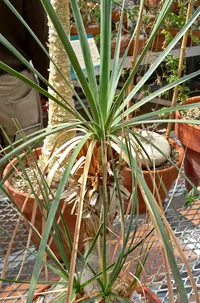
Use a pot only 2–4 cm wider than the caudex to keep roots slightly confined, which supports a sturdy base and reduces the risk of waterlogging in excess soil volume.

Top-Dressing With Grit

Apply a 1–2 cm layer of coarse gravel or pumice on the soil surface to keep the base dry at the neck, reduce fungus gnat breeding, and visually signal where not to splash water.

Rot Prevention After Damage

If roots or the base are accidentally damaged during repotting, let the plant and exposed tissues dry in bright shade for 24–48 hours before watering again to lower the risk of rot.

Seasonal Light Rotation

Rotate the pot 90° every 2–3 weeks in the growing season so the canopy develops evenly and the caudex stays balanced, which is especially useful for Mexican Pony Tail Palm indoor care.

Common Pests and Diseases

Spider mites

This pest often appears on plants kept in very dry, warm indoor air, causing fine speckling and a dull, dusty look on the leaves. Symptoms include very fine webbing in leaf bases and tips and gradual yellowing or browning of foliage.

Solution

Rinse the foliage and leaf bases thoroughly with a strong but controlled stream of lukewarm water, then increase humidity slightly and reduce heat stress. For persistent infestations, use repeated applications of insecticidal soap or a neem oil solution, making sure to reach into the leaf rosettes and around the swollen stem base.

Scale insects

These insects attach firmly to the trunk and leaf bases, appearing as small brown or gray bumps that excrete sticky honeydew. Symptoms include sticky surfaces around the plant, sooty mold on leaves, and slowed growth.

Solution

Manually remove visible scales with a cotton swab dipped in isopropyl alcohol, paying attention to crevices on the caudex and at leaf bases. Follow with several treatments of horticultural oil or insecticidal soap at 7–10 day intervals to target newly hatched crawlers, and isolate the plant from others until the infestation is under control.

Mealybugs

This pest hides in leaf bases and the rough areas of the swollen trunk, forming white, cottony clusters. Symptoms include distorted new growth, sticky residue, and slow decline over time.

Solution

Use a cotton swab or small brush dipped in isopropyl alcohol to dab and remove all visible colonies, especially in tight leaf rosettes and cracks in the caudex. Repeat spot treatments weekly and, if needed, apply insecticidal soap or neem oil, improving light and airflow to make conditions less favorable for reinfestation.

Soft rot

This disease causes the caudex and lower stem tissues to become soft, discolored, and sometimes foul smelling after chronic overwatering or cold, wet conditions. Symptoms include a collapsing trunk, mushy areas at the base, and rapid decline.

Solution

Immediately remove the plant from its pot, cut away all soft, discolored tissue with a sterile tool, and allow healthy remaining tissue to dry and callus in a warm, airy place. Repot into a very fast-draining, gritty mix, reduce watering to thorough but infrequent soakings, and avoid letting water sit around the base, which is critical for Beaucarnea gracilis care in indoor conditions.

Interesting Facts

Massive water reservoir

The swollen trunk base of this species is a true caudex that stores substantial water, allowing the plant to withstand long dry periods in its native arid habitats of Oaxaca and Puebla in Mexico.

Night-active photosynthesis

Like many desert succulents, this plant uses crassulacean acid metabolism (CAM) photosynthesis, opening stomata mostly at night to reduce water loss while still taking in carbon dioxide for growth.

Slow, long-lived growth

In habitat, individuals grow slowly but can live for many decades, developing multiple slender stems above the swollen base and forming small tree-like clumps over time.

Botan icon

Did you know?

In the wild, mature plants of this species can produce large, branched flowering structures called panicles that rise above the foliage and bear many small, nectar-rich flowers, which attract diverse insect pollinators in its native dry forest environment.

FAQs about Mexican Pony Tail Palm

Yellowing usually comes from chronic overwatering, compacted or poorly drained soil, or cold stress. Older leaves naturally yellow and dry with age. Check the base for softness, improve drainage, and remove only fully dry, spent foliage.

Grow Healthy Plants with Botan Care

Keep your plants happy and healthy with plant identification, disease detection, and easy care guidance.

Botan plant care app — identify plants on mobile

Explore More Plants