guaria morada Care (Guarianthe skinneri)

guaria morada

About guaria morada

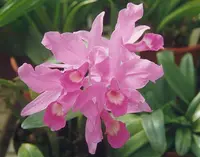
Guaria morada, Guarianthe skinneri, is an epiphytic orchid that often grows on trees, forming clumps of upright pseudobulbs with narrow leaves. It produces showy clusters of purple to lavender flowers that can cover the plant when in full bloom.

This species is native to Central America, where it grows in warm, bright, humid forests with good air movement. It is considered moderately easy for growers who can provide stable warmth, bright filtered light, and regular moisture with good drainage.

Understanding how to care for guaria morada starts with recognizing that it prefers conditions similar to many Cattleya-type orchids rather than typical houseplants.

Main Plant Requirements

Care Difficulty

Moderate Care

Light Preference

Partial Shade

Water Requirements

Moderate Water

Temperature Preference

Tropical / Frost Sensitive

Hardiness Zone

11–12

Soil Texture

Sandy, Peaty, Organic-rich

Soil pH

Acidic (5.5–6.5)

Soil Drainage

Well-drained

Fertilization

Moderate (every 2–4 weeks)

Get Personalized Care Plan

Scan your plant to receive care tips personalized for your specific plant

Available on iOS and Android

How to Care for the guaria morada

This orchid prefers bright, filtered light that mimics high tree canopies in its native range.

  • Provide 4–6 hours of bright, indirect light daily, with gentle morning sun and protection from harsh midday rays.
  • Tolerates light partial shade, but very low light reduces flowering in guaria morada and produces weak, dark, floppy growth.
  • Outdoors, use dappled shade under trees or 40–60% shade cloth; watch for yellowing, scorched patches, or red-purple leaves as signs of excess sun.

Guarianthe skinneri prefers moist but fast-draining conditions with a distinct wet–dry rhythm.

  • Water when the top 2–4 cm of the mix feels dry, allowing roots to turn silvery before soaking thoroughly and draining completely.
  • In active growth and warm weather, expect more frequent watering; in cooler months or rest periods, let the mix stay dry slightly longer.
  • Watch for shriveled pseudobulbs and wrinkled leaves as signs of underwatering, and black, mushy roots or sour smell as signs of overwatering.

This species thrives in intermediate to warm conditions with mild seasonal swings.

  • Aim for 65–80°F (18–27°C) by day and 58–65°F (14–18°C) at night for steady growth and flowering.
  • Short dips to 50°F (10°C) are usually tolerated if dry and protected, but frost quickly damages leaves and pseudobulbs.
  • In heat above 85–90°F (29–32°C), increase shade, air movement, and humidity; avoid sudden drafts or temperature drops greater than 10–15°F (6–8°C) overnight.

This orchid prefers consistently moist air to support healthy roots and flower production.

  • Aim for 50–70% humidity, as guaria morada struggles if air stays below ~40%, especially in heated homes.
  • Crisp leaf tips, accordion-like new growth, and buds that shrivel before opening indicate humidity stress.
  • Increase humidity with a pebble tray under the pot, grouping plants, or a cool-mist humidifier placed nearby but not blowing directly on leaves.

This epiphytic orchid needs a very airy, fast-draining medium rather than regular potting soil.

  • Use a chunky mix of medium orchid bark, perlite, and a little sphagnum moss to hold some moisture without becoming dense.
  • Ensure the mix drains freely within seconds after watering while still leaving air pockets around the roots.
  • A slightly acidic to neutral range around pH 5.5–7 suits Guarianthe skinneri and helps nutrient uptake.
  • Avoid fine peat-based potting mixes or compacted media, which suffocate roots and encourage rot in the root zone.

This species grows very well in containers, including baskets and orchid pots.

  • Choose a stable, relatively heavy pot or basket so the tall, cane-like growths do not tip the container as they mature.
  • Select a pot that is just large enough for the root mass, since excess empty mix holds water and reduces air around roots.
  • Use orchid pots with side slits or mesh-style baskets to increase airflow and speed surface drying of the medium.

This orchid benefits from modest, regular feeding during active growth to support flowering and healthy pseudobulbs.

  • Use a balanced orchid fertilizer (around 20-20-20) diluted to 1/4–1/2 strength for guaria morada during the growing season.
  • Feed every 2–3 weeks in spring and summer, alternating with plain water flushes to prevent salt buildup.
  • Reduce feeding to once a month at very low strength in fall and winter when growth slows.
  • Avoid heavy compost or rich slow-release pellets that can burn roots; use well-drained orchid media instead.

Guarianthe skinneri needs only light, targeted pruning to maintain health and flowering performance.

  • Best time for pruning is after flowering, once spent blooms fade and sheaths dry.
  • Remove dead or shriveled pseudobulbs, yellow leaves, and dry flower spikes with clean, sharp scissors or pruners.
  • Do not cut green pseudobulbs, as they store water and nutrients and support future flowering.
  • Trim only obviously damaged or crowded growths to improve air flow and reduce disease risk without reshaping the plant heavily.

This epiphytic orchid prefers infrequent repotting, only when the potting mix breaks down or the plant outgrows its container.

  • Check for tight, circling roots, declining vigor, or soggy, decomposed bark as signs that repotting is needed.
  • Repot every 2–3 years in late winter or early spring, just before new roots and shoots begin.
  • Gently remove old medium, trim dead roots, and place the plant in fresh orchid bark mix, keeping new growths near the pot edge.
  • Water lightly for 7–10 days after repotting to reduce root stress, then resume normal watering and feeding as new growth establishes.

Division is the most reliable method for propagating Guarianthe skinneri in home conditions.

  • Plan divisions in late winter or early spring, timed with the start of new root growth.
  • Remove the plant from its pot and gently separate clumps, keeping at least 3–4 healthy pseudobulbs per division.
  • Dust cut surfaces with powdered sulfur or cinnamon to lower infection risk and allow them to dry briefly.
  • Pot divisions in fresh orchid bark, keep in bright, filtered light, and maintain slightly higher humidity until new roots form.

This tropical orchid is frost-sensitive and needs warm, sheltered conditions through winter in temperate regions.

  • Keep plants indoors or in a heated greenhouse when outdoor temperatures drop below 55°F, as light frost can kill pseudobulbs.
  • Maintain indoor temperatures around 60–70°F with bright, indirect light and good air movement.
  • Reduce watering in winter, allowing the medium to dry slightly more between waterings while avoiding complete desiccation.
  • Avoid cold drafts from windows or doors, and do not allow pots or mounts to remain in contact with cold surfaces.

Care Tips

Provide firm mounting

Mount plants on cork or hardwood slabs with a thin layer of sphagnum only at the roots, keeping rhizomes exposed so new growths can attach firmly and dry quickly between waterings.

Manage rapid drainage

Use a double-pot setup with a coarse bark mix inside and a few drainage holes enlarged with a drill to prevent media from staying wet around the roots after heavy watering.

Rotate for even spikes

Turn the plant 90° every 1–2 weeks while new pseudobulbs develop so flower spikes form evenly around the plant and do not lean strongly toward one side.

Time repotting correctly

Repot only when new roots just start to emerge from the newest growth, trimming dead roots and positioning the oldest pseudobulbs at the pot rim so fresh growths have space to fill the container.

Cool-season adjustment

In late autumn, give a slight drop in night temperatures and a modest reduction in watering while still keeping pseudobulbs firm, which supports reliable flowering when growing guaria morada.

Common Pests and Diseases

Scale insects

These insects attach tightly to pseudobulbs and leaves, sucking sap and causing yellowing, shriveling, and sticky honeydew on Guarianthe skinneri. Infestations often begin in leaf sheaths and at the base of pseudobulbs where airflow is poor.

Solution

Remove affected sheaths and wipe visible scale with cotton pads dipped in 70% isopropyl alcohol, then rinse the plant with lukewarm water. Improve light and air movement, avoid overfertilizing with high nitrogen, and use a horticultural oil spray labeled for orchids, repeating at 7–10 day intervals to target newly hatched crawlers.

Spider mites

These insects thrive on Guarianthe skinneri grown in hot, dry indoor conditions, causing fine stippling on leaves, dull coloration, and eventual bronzing or leaf drop. Symptoms include fine webbing along the underside of leaves and between pseudobulbs, especially in bright, warm spots.

Solution

Shower the plant thoroughly, focusing on leaf undersides, then increase humidity and airflow to discourage reinfestation. For persistent problems, apply a miticide or insecticidal soap safe for orchids every 5–7 days for several cycles, keeping the plant out of direct sun until leaves are dry to avoid burning.

Brown leaf spot

This disease often appears as small, sunken, dark brown to black spots on leaves that may enlarge and merge in humid or stagnant air conditions. Symptoms include yellow halos around spots and eventual cracking or tissue collapse on older Guarianthe leaves.

Solution

Cut off badly affected leaves with sterile tools, and discard all debris away from other orchids. Improve spacing and airflow, avoid wetting foliage late in the day, and apply a copper-free fungicide labeled for orchids as a preventive spray, repeating according to label directions if conditions remain humid.

Bacterial soft rot

This disease causes rapidly spreading, water-soaked, foul-smelling areas on pseudobulbs, leaf bases, or crowns, which turn mushy and collapse. Symptoms include sudden yellowing and drooping of leaves attached to affected pseudobulbs, especially after water has stood in the crown or sheath pockets.

Solution

Immediately remove and discard all infected tissue well into healthy, firm tissue using sterilized tools, and dust cut surfaces with powdered cinnamon or a bactericide labeled for orchids. Keep water out of the crown and leaf axils, increase air movement, reduce overhead watering, and isolate the plant until no new lesions appear.

Interesting Facts

National symbol status

This orchid is the national flower of Costa Rica, chosen in 1939 for its abundance in the wild and its flowering peak around the country’s traditional coffee harvest season.

Dry-season flowering cue

In its native range, this species typically initiates flowering at the end of the dry season, responding to a shift from drier, brighter conditions to the first increases in moisture.

Epiphytic lifestyle

The plant usually grows as an epiphyte on trees, anchoring to bark with its roots and absorbing moisture and nutrients from rain, debris, and the surrounding humid air rather than from soil.

Botan icon

Did you know?

This species is naturally pollinated by specific bee visitors that are attracted to its large, showy lavender to magenta flowers, which offer both visual cues and floral fragrance adapted to bee vision and scent detection.

FAQs about guaria morada

Lack of flowers usually comes from insufficient light, too-warm nights, or no winter rest. This orchid needs bright conditions, a slight temperature drop and a short drier period to trigger flower spikes instead of only leafy growth.

Grow Healthy Plants with Botan Care

Keep your plants happy and healthy with plant identification, disease detection, and easy care guidance.

Botan plant care app — identify plants on mobile

Explore More Plants