Drymonia coccinea Care

Drymonia coccinea

About Drymonia coccinea

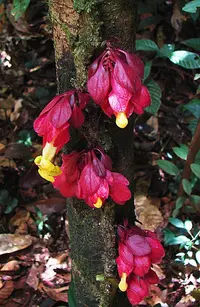
Drymonia coccinea is a tropical evergreen shrub-like gesneriad grown mainly for its bright tubular red flowers and softly textured foliage. It is usually grown as a compact, trailing or slightly climbing plant suitable for hanging baskets or shelves indoors.

In nature, it occurs in humid forests of Central and South America, where it grows as an understory plant in warm, filtered light. Its need for consistent moisture, higher humidity, and stable warmth makes it moderately challenging for beginners, but manageable in typical indoor conditions. Understanding how to care for Drymonia coccinea starts with providing gentle light, evenly moist but well-drained soil, and protection from cold drafts.

Main Plant Requirements

Care Difficulty

Moderate Care

Light Preference

Bright Indirect Light

Water Requirements

Keep Soil Moist

Temperature Preference

Tropical / Frost Sensitive

Hardiness Zone

11–12

Soil Texture

Loamy, Peaty, Organic-rich

Soil pH

Acidic (5.5–6.5)

Soil Drainage

Moist but well-drained

Fertilization

Light (every 4–6 weeks)

Get Personalized Care Plan

Scan your plant to receive care tips personalized for your specific plant

Available on iOS and Android

How to Care for the Drymonia coccinea

This rainforest gesneriad prefers bright, gentle light rather than harsh sun.

  • Provide bright, filtered light or dappled shade, with 2–4 hours of soft morning sun and protection from strong midday and afternoon rays.
  • Outdoors, place Drymonia coccinea under high canopy, shade cloth (40–60%), or an east-facing exposure to mimic understory conditions.
  • If leaves pale, stretch, or lose color, increase light; if they scorch, curl, or show bleached patches, reduce direct sun or move farther from the window or light source.

This species thrives in evenly moist, airy substrate that never stays saturated for long periods.

  • Water when the top 2–3 cm of soil feels dry, using enough water to moisten the root zone, then let excess drain completely.
  • In warm active growth, drying will happen faster; in cooler seasons, extend the interval and check soil by touch instead of following a fixed schedule.
  • Wilting, crisp edges, and very light pots suggest underwatering, while yellowing leaves, mushy stems, or a sour smell indicate overwatering and poor drainage.

This plant prefers stable, warm conditions similar to a tropical understory.

  • Aim for 65–80°F (18–27°C) for best growth, with only brief exposure below 60°F (16°C).
  • Protect from cold; growth slows below about 60°F (16°C), and tissue damage can occur if temperatures drop near 40–45°F (4–7°C).
  • It tolerates short heat spells up to about 85–88°F (29–31°C) if shaded and well hydrated, but sustained extremes or hot, dry air can cause leaf scorch and stress.

This species prefers consistently moist air and reacts quickly to dry indoor conditions.

  • Aim for 60–80% humidity, as Drymonia coccinea comes from humid forest understories and dislikes prolonged levels below 40%.
  • Crisping leaf edges, curled tips, and stalled growth indicate humidity stress rather than underwatering alone.
  • Increase humidity with a nearby humidifier, a pebble tray under the pot, or grouping plants closely without misting leaves heavily for long periods.

This plant grows best in a loose, airy, organic-rich substrate that drains quickly yet holds some moisture.

  • Use a mix of roughly 50% peat or coco coir, 25% fine bark, and 25% perlite to mimic a light, humus-rich forest floor.
  • Ensure the mix is free-draining so water runs through in a few seconds while the particles still feel slightly spongy, not dense or pasty.
  • Aim for slightly acidic to neutral pH around 5.8–6.8, which supports nutrient uptake and avoids micronutrient lockout.
  • Avoid heavy garden soil, unamended potting soil that compacts, or mixes dominated by sand that dry out unevenly and stress Drymonia coccinea.

This species is very suitable for container growing, especially in hanging baskets or decorative pots.

  • Choose a broad, shallow pot that matches its spreading, trailing root system so the upper mix dries evenly between waterings.
  • Select plastic or glazed ceramic if slower moisture loss is needed, or unglazed terracotta if the home is naturally humid and the mix stays wet too long.
  • Anchor trailing stems with the container rim or a small support so the plant’s weight does not pull shallow roots away from the substrate over time.

This plant benefits from light, consistent feeding during the active growing season.

  • Use a balanced liquid fertilizer (for example 10-10-10 or 20-20-20) at 1/4–1/2 strength for Drymonia coccinea.
  • Apply every 3–4 weeks in spring and summer when growth is active.
  • Reduce feeding to 1 light application in fall and stop in winter dormancy.
  • Flush the pot with plain water every few months to prevent salt buildup.

Pruning helps maintain a compact, flowering habit for this vining species.

  • Carry out light pruning in late winter or early spring before vigorous new growth starts on Drymonia coccinea.
  • Remove dead, damaged, or crossing stems with clean, sharp scissors or small pruners.
  • Tip back overly long shoots to encourage branching and a fuller shape.
  • After flowering, trim spent flowering stems to tidy the plant and direct energy to new growth.

This plant prefers slightly snug pots but benefits from periodic repotting to refresh the substrate.

  • Check for roots circling the pot, emerging from drainage holes, or slowed growth as cues to repot Drymonia coccinea.
  • Plan repotting in spring every 1–2 years, moving to a pot only 2–4 cm wider with good drainage.
  • Gently loosen circling roots, remove some old soil, and set the plant at the same depth in fresh airy mix.
  • Water thoroughly after repotting, then keep in bright, indirect light and slightly higher humidity to limit transplant shock.

This species is commonly propagated from softwood stem cuttings under warm, humid conditions.

  • Take 7–10 cm non-flowering stem cuttings in spring or early summer from healthy Drymonia coccinea shoots.
  • Remove lower leaves, leaving 2–3 at the top, and optionally dip the cut end in rooting hormone.
  • Insert cuttings into a moist, well-drained mix and keep at 70–75°F in bright, indirect light.
  • Maintain high humidity with a clear cover or propagator, venting daily to prevent rot until roots form.

This tropical plant is frost-sensitive and requires warm, stable indoor conditions in winter.

  • Move container-grown Drymonia coccinea indoors before temperatures drop below 55°F.
  • Keep winter temperatures around 65–75°F and avoid cold drafts or sudden temperature swings.
  • Reduce watering slightly, allowing the top layer of mix to dry, while maintaining moderate humidity.
  • Do not fertilize in winter, resuming light feeding only when active growth restarts in spring.

Care Tips

Encourage Bushy Growth

Pinch back the soft shoot tips above a leaf pair every 4–6 weeks during active growth to keep the plant compact and stimulate more flowering side shoots.

Support Trailing Stems

Guide longer stems onto a small trellis, hoop, or hanging basket rim so the brittle shoots are supported and do not kink or snap under their own weight.

Use Tepid Water

Irrigate with room-temperature, dechlorinated water to avoid cold or chemical shock to the sensitive roots and reduce stress that can lead to leaf drop.

Rotate For Even Shape

Turn the pot 90° every 1–2 weeks so all sides receive similar light, preventing lopsided growth and helping maintain an even dome of foliage and flowers.

Inspect Fuzzy Leaves

Check the undersides of leaves and along the hairy stems every 1–2 weeks for early signs of mites or mealybugs, and spot-treat promptly with a gentle insecticidal soap suitable for caring for Drymonia coccinea.

Common Pests and Diseases

Mealybugs

This pest feeds on sap and hides in leaf axils and along stems, often leaving white, cottony clusters and sticky honeydew on nearby surfaces.

Solution

Remove colonies with a cotton swab dipped in 70% isopropyl alcohol, then wash the plant under a gentle lukewarm shower and improve air movement; for persistent infestations, use a neem oil or insecticidal soap spray every 7–10 days, ensuring full coverage of leaf undersides and stem joints while following label directions for Drymonia coccinea care instructions.

Spider mites

These insects thrive in warm, dry air and cause fine stippling, dull leaves, and fine webbing between leaves and stems.

Solution

Increase humidity around the plant, rinse foliage thoroughly with a handheld shower or sink sprayer to remove mites and webs, then apply insecticidal soap or a horticultural oil to all leaf surfaces and repeat at 5–7 day intervals until new growth appears clean.

Fungal leaf spots

This disease appears as small brown, black, or purplish spots on leaves, sometimes with yellow halos, often triggered by high humidity with poor air circulation and frequent leaf wetness.

Solution

Promptly remove and discard affected leaves, avoid overhead watering, increase airflow around the plant, and, if spotting continues to spread, apply a copper-based or other broad-spectrum fungicide labeled for ornamental houseplants according to package directions.

Botrytis blight

This disease causes soft, water-soaked patches on leaves and flowers that quickly develop gray, fuzzy mold, especially in cool, humid, stagnant air.

Solution

Cut off all infected tissue back to healthy material, dispose of it in the trash, then lower humidity slightly, improve ventilation, and space the plant so leaves can dry quickly; in severe cases, use a fungicide labeled for Botrytis on ornamentals and keep foliage as dry as possible.

Interesting Facts

Rainforest ant visitor

In its native Central and South American forests, the tubular red flowers are frequently visited by small ants that collect nectar but do not reach the pollen, so they act mainly as nectar thieves rather than effective pollinators.

Fuzzy, water-shedding leaves

The leaves are covered with fine hairs (trichomes) that give them a velvety feel and help shed water quickly, which reduces the risk of fungal growth in the damp, shaded understory where the plant naturally grows.

Shade-adapted flowering

This species is able to produce bright red, tubular blooms in relatively low light compared with many other flowering plants, reflecting its adaptation to the filtered light of tropical forest understories and making it suitable for Drymonia coccinea indoor care in bright shade.

FAQs about Drymonia coccinea

This species performs best in warm, humid, sheltered conditions, so indoor or greenhouse culture is usually more reliable than outdoors in most climates. Outdoors it only suits frost-free, consistently humid, shaded locations that mimic lowland tropical forest understory.

Grow Healthy Plants with Botan Care

Keep your plants happy and healthy with plant identification, disease detection, and easy care guidance.

Botan plant care app — identify plants on mobile

Explore More Plants