
Optimized mounting surfaces
Mount plants on rough, non-resinous materials like cork bark, hardwood, or unglazed clay so roots can anchor securely and water can drain and dry quickly after each misting or dunk.

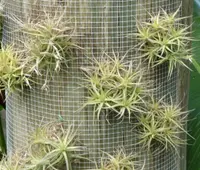
Tillandsia bergeri is a small, epiphytic air plant from Brazil that naturally grows on rocks and tree branches rather than in soil. It forms loose clumps of slender, arching leaves that are gray-green and slightly curly, creating a soft, fountain-like shape over time.
This species is adapted to bright, airy habitats and absorbs water and nutrients through tiny scales on its leaves. It is considered one of the tougher air plants, tolerating wider temperature swings and brief care lapses, which makes it suitable for beginners learning how to care for Tillandsia bergeri.
It generally prefers bright, indirect light, good air circulation, and regular moisture on the leaves rather than traditional potting soil.

Care Difficulty
Easy Care

Light Preference
Bright Indirect Light

Water Requirements
Low Water

Temperature Preference
Warm Climate

Hardiness Zone
9–11

Soil Texture
Rocky, Sandy

Soil pH
Acidic (5.5–6.5), Slightly acidic (6.5–7.0)

Soil Drainage
Well-drained

Fertilization
Minimal (feed rarely)
Scan your plant to receive care tips personalized for your specific plant
Available on iOS and Android
This species prefers bright conditions that mimic open, airy habitats.
Watering should balance thorough wetting with fast drying between soakings.
Stable, mild temperatures support healthy growth and flowering.
This air plant handles varied humidity but grows best with moderate moisture in the air.
Tillandsia bergeri is an epiphyte and should not be planted in regular potting soil.
This species is suitable for loose container display rather than conventional potting.
This air plant benefits from light, dilute feeding during active growth but does not need heavy fertilization.
Pruning Tillandsia bergeri is minimal and focuses on cleanliness rather than shaping.
This species is an epiphyte, so care centers on remounting or repositioning rather than conventional repotting.
Tillandsia bergeri is commonly propagated by separating offsets, known as pups, rather than from seed.
This air plant tolerates light cool conditions but is not fully frost hardy outdoors in most climates.

Plant Health Check
Not sure what's wrong with your plant? Check your plant's health inside the app.
This species is notably more cold-hardy than many other Tillandsia, surviving brief drops close to freezing when kept dry, which reflects its adaptation to cooler, higher-altitude habitats in southern Brazil and Argentina.
T. bergeri produces offsets quickly and forms dense, spherical clumps in a few years, a growth habit that makes it one of the most commonly used species for long-term outdoor mounting in mild climates.
In cultivation and in its native range, it tends to flower seasonally in late winter to spring, producing bluish-violet tubular flowers followed by seed capsules that release wind-dispersed seeds with silky hairs.
T. bergeri has been used for decades as a rootstock or test plant in bromeliad and air plant research, because its resilience, fast clumping, and tolerance of variable conditions make it a reliable model species for studying epiphytic adaptation and Tillandsia bergeri care instructions in controlled experiments.
Lack of blooms usually comes from insufficient light, irregular watering, or poor air movement. Provide bright, indirect light, soak and dry the plant consistently, and ensure good ventilation. Blooms are more reliable on mature, well-established clumps.
Keep your plants happy and healthy with plant identification, disease detection, and easy care guidance.
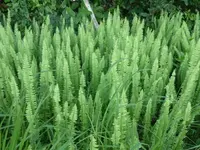
Annual Sword fern
Nephrolepis undulata var. aureoglandulosa
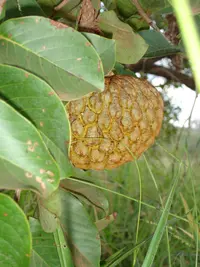
marolo
Annona crassiflora
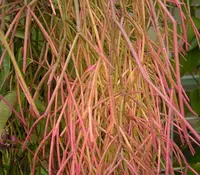
Rhipsalis burchellii
Rhipsalis burchellii
crowdipper
Pinellia ternata
vilevine
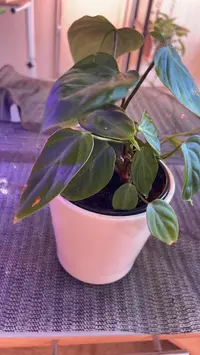
Philodendron hederaceum var. hederaceum
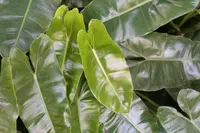
Philodendron burle-marxii
Philodendron burle-marxii
Florida arrowroot
Zamia integrifolia
batoko plum
Flacourtia inermis