Annual Sword fern Care (Nephrolepis undulata var. aureoglandulosa)

About Annual Sword fern

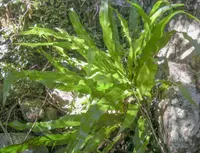
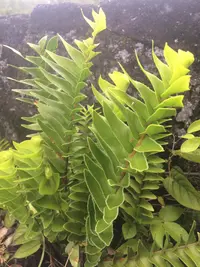
The annual sword fern, Nephrolepis undulata var. aureoglandulosa, is a graceful fern valued for its fine, arching fronds and lush, layered look. It is typically grown as a foliage plant rather than for flowers.

This fern usually forms dense clumps, with fronds that create a soft, airy texture suited to containers, hanging baskets, or shaded borders. It is native to tropical regions, where it thrives in warm, humid, sheltered locations.

The plant prefers consistent moisture, free-draining but rich soil, and protection from harsh sun or drying winds. These traits make it moderately easy to grow if its need for humidity and even moisture is respected, and understanding how to care for Annual Sword fern helps maintain healthy, full fronds.

Main Plant Requirements

Care Difficulty

Moderate Care

Light Preference

Partial Shade

Water Requirements

Keep Soil Moist

Temperature Preference

Tropical / Frost Sensitive

Hardiness Zone

10–11

Soil Texture

Loamy, Peaty, Organic-rich

Soil pH

Acidic (5.5–6.5), Slightly acidic (6.5–7.0)

Soil Drainage

Moist but well-drained

Fertilization

Light (every 4–6 weeks)

Get Personalized Care Plan

Scan your plant to receive care tips personalized for your specific plant

Available on iOS and Android

How to Care for the Annual Sword fern

This fern prefers bright, indirect light that mimics dappled woodland shade.

  • Provide 4–6 hours of bright, filtered light daily, such as near an east-facing window or under light tree cover outdoors.
  • Tolerates partial to full shade, but fronds of Annual Sword fern become sparse and pale if light is too low for long periods.
  • Avoid harsh midday and afternoon sun; direct rays can scorch fronds, especially in summer, so use sheer curtains or place in mottled shade.

This fern needs consistently moist but not waterlogged soil to maintain healthy fronds.

  • Water when the top 2–3 cm of soil feels slightly dry, aiming for evenly damp soil from spring to early fall.
  • In winter, reduce frequency so the surface dries a bit deeper between waterings, but never let Nephrolepis undulata var. aureoglandulosa dry out completely.
  • Use free-draining, humus-rich soil; yellowing, limp fronds suggest overwatering and poor drainage, while crisp, browning tips indicate underwatering.

This fern grows best in mild, stable temperatures without sudden extremes.

  • Aim for 65–80°F (18–27°C) for active growth; it performs best in consistently warm, humid conditions.
  • Protect from cold; growth slows below 55°F (13°C), and fronds can be damaged if exposed near or below 40°F (4°C).
  • In hot weather above 85°F (29°C), provide shade and higher humidity, and avoid placing the plant near heat sources or reflected heat from walls or pavement.

This fern prefers consistently moist air and reacts quickly to dry indoor conditions.

  • Aim for 50–70% humidity, using a room humidifier or grouping plants if home air is dry.
  • Crisping tips, dull fronds, and slowed new growth indicate humidity stress in Annual Sword fern.
  • Avoid direct heater or AC airflow; place the pot on a pebble tray with water, keeping the pot base above water.

This fern grows best in loose, organic-rich, evenly moist but well-drained soil.

  • Use a peat- or coco coir-based mix with 30–40% perlite and/or fine bark to keep the structure airy.
  • Ensure excess water drains freely; the mix should feel springy and never compact into a heavy mass.
  • A slightly acidic pH around 5.5–6.5 suits Nephrolepis undulata var. aureoglandulosa and supports nutrient uptake.
  • Avoid dense garden soil, high-clay mixes, or pots that stay waterlogged, which quickly lead to root and rhizome rot.

This fern is well suited to container growing due to its compact, fibrous root system.

  • Choose a wide, shallow pot to accommodate spreading rhizomes and prevent the root mass from becoming congested in depth.
  • Select a slightly heavier pot material, such as ceramic, to stabilize the arching fronds and reduce tipping risk.
  • Use a container that leaves at least 2–3 cm between root mass and walls so the soil does not dry unevenly at the edges.

This fern responds well to light, consistent feeding during its active growing season.

  • Use a balanced liquid fertilizer (such as 10-10-10) at 1/4–1/2 strength for caring for Annual Sword fern in pots.
  • Feed every 4–6 weeks in spring and summer when growth is strongest.
  • Skip or greatly reduce fertilization in fall and winter, when growth slows.
  • Organic options like dilute fish emulsion or compost tea are suitable if the potting mix drains well.

Nephrolepis undulata var. aureoglandulosa benefits from light, ongoing pruning to maintain a dense, tidy clump.

  • Best timing is throughout the growing season, with a small cleanup in late winter or early spring.
  • Remove dead, yellowing, or damaged fronds at their base using clean, sharp scissors or pruners.
  • Thin out a few crowded or crossing fronds to improve air flow and reduce fungal issues.
  • Shaping by selectively shortening overly long fronds keeps the plant compact without weakening it.

This fern prefers slightly root-bound conditions but benefits from periodic repotting to refresh the potting mix.

  • Look for roots circling the pot, pushing through drainage holes, or noticeably slowed growth as repotting signals.
  • Plan to repot every 2–3 years in spring, using a peat- or coir-based, airy fern mix.
  • Water well the day before, then gently loosen the root ball to limit tearing and stress.
  • After repotting, keep the plant shaded with evenly moist soil for 1–2 weeks to encourage recovery.

Propagation of this fern is most dependable by division rather than spores for home growers.

  • Divide mature clumps in spring, when active growth resumes and recovery is fastest.
  • Lift the plant from its pot and gently separate sections with healthy roots and several fronds each.
  • Plant divisions into fresh, moist, well-draining mix and firm gently around the roots.
  • Maintain high humidity, bright indirect light, and consistently moist soil until new fronds emerge.

This fern is frost sensitive and needs mild indoor or protected conditions during winter in most climates.

  • Move container plants indoors before temperatures fall below 50°F, providing bright, indirect light.
  • Keep indoor temperatures around 60–75°F and avoid cold drafts or heater blasts.
  • Water less often in winter, but prevent the root ball from fully drying out.
  • In mild regions, use a light mulch around outdoor plantings to buffer brief cool spells.

Care Tips

Frond Refreshing

Gently shower the fronds with lukewarm water every 2–4 weeks to remove dust, reduce spider mite risk, and keep new growth photosynthesizing efficiently.

Division Timing

Divide congested clumps only in late spring when roots are actively growing, and reduce frond mass by about 25% so the root system can re-establish more easily.

Runner Management

Guide or trim stolons (runners) so they root into fresh, moist mix around the pot edge instead of hanging dry, which keeps the plant dense and reduces weak, straggling growth.

Pot Selection Strategy

Use a wide, relatively shallow pot to match the fern’s fibrous, surface-oriented root system and reduce the risk of water pooling deep in the container.

Seasonal Placement Shift

In winter, move the plant slightly closer to bright windows and away from heater vents or exterior doors, then shift it back a bit in summer to avoid heat and low humidity, which supports more stable conditions when growing Annual Sword fern.

Common Pests and Diseases

Fern scale

This pest attaches to fronds and stems as small brown or off‑white bumps that suck sap, leading to yellowing, stunted growth, and weak fronds.

Solution

Isolate the plant, then gently scrape or wipe scale off fronds and midribs with a cotton pad dipped in 70% isopropyl alcohol, followed by a thorough lukewarm shower; for heavier infestations, use a horticultural oil spray labeled for indoor ferns and repeat every 7–10 days while improving light and airflow to support recovery.

Mealybugs

These insects appear as white, cottony clusters in leaflet joints and along rachises, feeding on sap and causing distorted, yellowing fronds and sticky honeydew.

Solution

Physically remove visible colonies with cotton swabs dipped in 70% isopropyl alcohol, rinse the foliage well, then apply an insecticidal soap solution to all frond surfaces, repeating weekly until no new insects appear and checking nearby plants to prevent reinfestation.

Spider mites

This pest thrives in dry indoor air, causing fine stippling, dull fronds, and delicate webbing between leaflets, especially on older fronds.

Solution

Raise humidity, then hose or shower the fern thoroughly on both sides of the fronds and apply an insecticidal soap or plant-safe miticide, repeating every 5–7 days for several cycles while keeping the plant out of direct hot sun during treatment to support Nephrolepis undulata var. aureoglandulosa care instructions.

Rhizoctonia leaf blight

This disease produces brown to dark lesions starting at the base or along the midrib of fronds, which may coalesce and cause entire fronds to collapse in humid, crowded conditions.

Solution

Remove and discard all affected fronds, improve spacing and air movement around the plant, water at the soil level to keep fronds dry, and apply a fungicide labeled for Rhizoctonia on ferns if new lesions continue to appear.

Bacterial blight

Symptoms include water-soaked, translucent spots on fronds that turn dark brown or black with a yellow halo, often spreading rapidly in warm, wet conditions or after overhead watering.

Solution

Prune and discard infected fronds with sterilized tools, avoid misting foliage, direct irrigation to the soil surface, and increase ventilation; in severe cases, discard heavily affected plants to protect nearby ferns and start fresh with clean stock and better moisture management.

Interesting Facts

Golden glandular hairs

This variety is distinguished by tiny yellowish glandular hairs on the frond surfaces and rachis, which give a subtle golden cast and separate it from the typical green Nephrolepis undulata forms.

Narrow wavy pinnae

Its leaflets (pinnae) are noticeably narrower and more undulating than in many common sword fern relatives, producing a finer, more feathery texture that is used as a diagnostic feature in botanical identification keys.

Spores along midrib

In this variety the spore-bearing sori tend to align in neat rows close to the midrib of each leaflet, a pattern that helps botanists distinguish it from related Nephrolepis taxa with more scattered or marginal sori.

FAQs about Annual Sword fern

Brown leaf tips or fronds usually come from low humidity, missed waterings, or salt buildup from fertilizer. Increase humidity, keep the root zone evenly moist, flush the pot occasionally, and remove dead fronds to encourage fresh growth.

Grow Healthy Plants with Botan Care

Keep your plants happy and healthy with plant identification, disease detection, and easy care guidance.

Botan plant care app — identify plants on mobile

Explore More Plants