Hybrid Tea Rose Care (Rosa 'Peace')

Also known as: Rose
Hybrid Tea Rose

About Hybrid Tea Rose

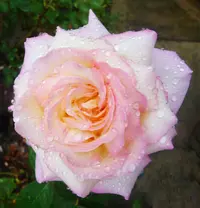
Hybrid tea rose Rosa 'Peace' is a classic garden rose known for its large, high-centered blooms and strong, upright growth. It is a cultivated variety, not a wild species, developed for ornamental use in temperate gardens. Flowers usually show soft yellow petals edged with pink, carried mostly singly on long stems that suit cutting. Foliage is glossy and medium green, forming a tidy shrub when properly pruned. This rose can be somewhat demanding, as it is prone to fungal diseases and benefits from regular monitoring. To successfully care for Hybrid Tea Rose, provide full sun, good air circulation, and well-drained, fertile soil with steady moisture but no waterlogging.

Main Plant Requirements

Care Difficulty

Moderate Care

Light Preference

Full Sun

Water Requirements

Regular Water

Temperature Preference

Cold Hardy

Hardiness Zone

5–9

Soil Texture

Loamy, Sandy, Organic-rich

Soil pH

Acidic (5.5–6.5), Slightly acidic (6.5–7.0)

Soil Drainage

Moist but well-drained

Fertilization

Moderate (every 2–4 weeks)

Get Personalized Care Plan

Scan your plant to receive care tips personalized for your specific plant

Available on iOS and Android

How to Care for the Hybrid Tea Rose

Rosa 'Peace' performs best in bright, direct outdoor sun with some protection from harsh afternoon exposure.

  • Provide 6–8 hours of direct sun daily, ideally with morning sun and light afternoon shade in hot summers to reduce leaf scorch.
  • Accepts light partial shade (3–4 hours sun), but flowering will drop and stems may stretch if sun is consistently below this level.
  • In cooler seasons and coastal areas, full sun all day is usually safe, but in very hot, dry climates use filtered light or nearby plants to soften intense afternoon rays.

Rosa 'Peace' prefers deep, infrequent watering that keeps soil moist but never saturated.

  • Water when the top 3–5 cm of soil feels dry, soaking the root zone to 20–30 cm depth, then allow the surface to dry again.
  • Increase frequency during hot, dry periods and reduce in cool or rainy weather, always adjusting to soil feel rather than a fixed schedule.
  • Watch for drooping, dry leaves and crumbly soil as underwatering signs, and yellowing leaves, soft stems, or soggy soil as indicators of overwatering; ensure soil drains freely.

This rose grows best in moderate climates with cool nights and avoids extremes of heat or cold.

  • Active growth and flowering are strongest around 65–80°F (18–27°C), with good performance in mild spring and fall conditions.
  • Established plants tolerate winter down to about 10–15°F (-12– -9°C) with proper mulching, but young plants need protection from hard frost.
  • In summer, periods above 90°F (32°C) can reduce blooms and scorch petals, so provide mulch and avoid heat-reflecting walls or paving near the plant.

Rosa 'Peace' handles typical outdoor humidity but benefits from moderate, stable levels.

  • Aim for 40–60% humidity, avoiding extreme dry or saturated air around foliage.
  • Dry air combined with heat can cause crisp leaf edges, slower bud development, and faster petal drop.
  • Increase local humidity by mulching soil and grouping roses near other plants rather than misting leaves.

Rosa 'Peace' performs best in deep, loose, nutrient-rich soil that drains freely.

  • Use a loamy mix with roughly 40% garden soil, 40% compost, and 20% coarse sand or fine bark for structure and drainage.
  • Keep pH slightly acidic to neutral, about 6.0–7.0, to support nutrient uptake and steady growth.
  • Incorporate coarse materials like grit or perlite into heavier clay to improve aeration and reduce waterlogging risk.
  • Avoid compacted, poorly drained, or constantly soggy soil, which encourages root rot and weak, disease-prone growth.

This rose is suitable for container growing when given a large, stable pot with excellent drainage.

  • Choose a container at least 40–50 cm deep to accommodate the strong root system and support tall growth.
  • Use a heavy, wide-based pot to prevent wind from tipping over the top-heavy plant as can happen when growing Rosa 'Peace'.
  • Elevate the pot slightly on feet or bricks so drainage holes do not sit flush against the ground.

Rosa 'Peace' responds well to consistent, moderate feeding during the main growing season.

  • Use a balanced rose fertilizer or slow-release granules with roughly equal NPK ratios, or supplement with well-rotted compost.
  • Feed every 4–6 weeks from early spring to mid-summer; stop feeding 6–8 weeks before expected frost.
  • Apply liquid feeds at 1/2–3/4 label strength to avoid salt buildup and leaf burn.
  • Water deeply before and after feeding to distribute nutrients and protect roots when caring for Hybrid Tea Rose.

Rosa 'Peace' benefits from structured pruning to maintain strong growth and abundant flowers.

  • Carry out main pruning in late winter or very early spring, once severe frost risk has passed.
  • Remove dead, diseased, crossing, or inward-growing stems first to open the center and improve airflow.
  • Shorten remaining healthy canes by about 1/3–1/2, shaping the bush and encouraging vigorous flowering shoots.
  • Use sharp, clean bypass pruners and make angled cuts just above outward-facing buds.

This rose is usually grown in-ground, so transplanting is more common than container repotting.

  • Plan major moves for late winter to early spring while the plant is dormant and soil is workable.
  • Look for signs such as roots circling the pot, rapid drying, or stalled growth in containers before repotting.
  • Transplant Rosa 'Peace' every several years only if crowded, ensuring a sunny site with fertile, well-drained soil.
  • Reduce root stress by watering well before digging, keeping a generous root ball, replanting promptly, and watering deeply afterward.

Rosa 'Peace' is typically propagated vegetatively to maintain the named cultivar traits.

  • Use semi-hardwood stem cuttings in late spring to summer, taken from healthy, non-flowering shoots.
  • Cut 10–15 cm sections, remove lower leaves, dip ends in rooting hormone, and insert into moist, well-draining medium.
  • Provide bright, indirect light, high humidity, and stable warmth around 68–75°F to support rooting.
  • Many garden plants are grafted, so match propagation methods to the desired rootstock and long-term vigor.

This rose is moderately cold hardy but benefits from some structured winter protection in colder regions.

  • Tolerates light to moderate frost, but repeated freezes can damage exposed canes, especially on young plants.
  • In late fall, apply 5–10 cm of organic mulch around the root zone, keeping it slightly away from stems.
  • In very cold climates, mound soil or compost around the base and consider burlap or rose cones over the plant.
  • Move container-grown plants to a sheltered, unheated but frost-free spot, watering sparingly to keep roots just moist.

Care Tips

Bud Disbudding

Remove all but 1 central bud per stem while they are still small to direct energy into fewer, larger, higher-quality blooms rather than many thin, weak flowers.

Sturdy Stem Support

Install individual cane supports or a low ring stake early in the season so heavy flower heads stay upright and stems do not snap in wind or after rain.

Targeted Airflow Management

Thin out a few inner stems in early growth to create a slightly open, vase-shaped bush that dries faster after rain and reduces the risk of black spot and mildew.

Systematic Pest Scouting

Inspect the undersides of leaves and new shoots at least weekly with a hand lens, and hose off aphids or spider mites at first sight before considering any chemical controls.

Spent Bloom Handling

Deadhead by cutting just above a 5-leaflet leaf and immediately clear fallen petals and leaves from the soil surface to limit fungal spore and insect buildup when growing Hybrid Tea Rose.

Common Pests and Diseases

Black spot

This disease causes round black spots with fringed edges on leaves, followed by yellowing and premature leaf drop, especially in humid or rainy weather.

Solution

Remove and discard affected leaves, keep foliage as dry as possible by watering at soil level, and improve air circulation; apply a preventive fungicide labeled for roses in spring and repeat as directed when conditions are warm and humid.

Powdery mildew

This disease appears as a white, powdery coating on young leaves, buds, and stems, leading to distorted growth and reduced flowering in susceptible cultivars like Rosa 'Peace'.

Solution

Prune out badly affected shoots, increase sun and airflow around the plant, avoid overhead watering in the evening, and use a rose-specific fungicide or sulfur-based product at the first sign of infection according to label directions.

Rose aphids

These insects cluster on tender shoots and buds, sucking sap and causing curled, deformed leaves and sticky honeydew that can attract sooty mold.

Solution

Wash colonies off with a strong but controlled stream of water, pinch or prune heavily infested shoot tips, and if needed apply insecticidal soap or a horticultural oil thoroughly to new growth, repeating at 5–7 day intervals until populations decline.

Thrips

This pest feeds inside rose buds and on petals, causing streaked, browned, or deformed flowers, especially on light-colored blooms like those of Rosa 'Peace'.

Solution

Remove and discard damaged buds and spent blooms, reduce plant debris around the base, and treat developing buds and surrounding foliage with insecticidal soap or a low-toxicity systemic product labeled for thrips on roses when damage first appears.

Botrytis blight

This disease causes buds to turn brown and fail to open, and petals to develop soft brown spots that may be covered by gray fuzzy mold in cool, damp conditions.

Solution

Promptly remove and discard infected buds and flowers, avoid wetting the blooms, increase spacing and airflow, and apply a fungicide labeled for botrytis on roses during prolonged cool, wet periods as part of broader Rosa 'Peace' plant care.

Interesting Facts

Symbol of postwar peace

This hybrid tea cultivar was officially named 'Peace' in 1945 to mark the end of World War II and was presented to delegates at the inaugural meeting of the United Nations as a floral symbol of hope and reconciliation.

Complex color gradients

Its large, high-centered blooms show a characteristic blend of creamy yellow petals edged with soft to deeper pink, and this bicolor effect intensifies with cooler temperatures and strong light, making each flower slightly different in appearance.

Award-winning garden standard

Introduced by French breeder Francis Meilland, this rose quickly became one of the most widely planted garden roses worldwide and received major distinctions such as the All-America Rose Selections award, helping to define modern standards for hybrid tea roses and influencing how to take care of Hybrid Tea Rose in ornamental horticulture.

Botan icon

Did you know?

The original stock of this cultivar survived wartime Europe because budwood was secretly sent to growers in several countries before World War II, so when the war ended, the same rose could be introduced almost simultaneously in the US and across Europe under different trial names before being unified under the name 'Peace'.

FAQs about Hybrid Tea Rose

Poor flowering usually comes from inadequate light, heavy or nutrient-poor soil, or old, unrenewed wood. Regular deadheading, balanced fertilization, and annual pruning to stimulate young canes are key elements of Rosa 'Peace' care.

Grow Healthy Plants with Botan Care

Keep your plants happy and healthy with plant identification, disease detection, and easy care guidance.

Botan plant care app — identify plants on mobile

Explore More Plants