Arched Cane Training
Gently arch and tie long, flexible canes to a horizontal support to encourage more flowering laterals along the stem rather than just at the tips.

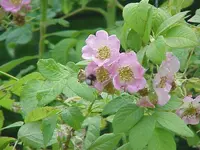
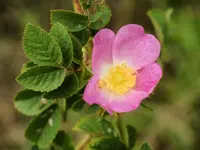
Rosa macrophylla, commonly called big-hip rose, is a deciduous shrub rose valued for its large decorative fruit (hips) that follow simple pink flowers. It typically forms an upright, bushy shape with arching stems and attractive pinnate leaves, giving a natural, slightly wild look in the garden.
This species is native to the Himalayan region, where it grows in mountain valleys and forest edges, so it adapts well to cooler climates and robust outdoor conditions. Its strong growth, general disease resistance, and tolerance of poor soils make it relatively straightforward to care for big-hip rose.
It usually performs best in full sun, with moderately moist, well-drained soil and some airflow to keep foliage healthy.

Care Difficulty
Moderate Care

Light Preference
Full Sun

Water Requirements
Regular Water

Temperature Preference
Cold Hardy

Hardiness Zone
5–8

Soil Texture
Loamy, Sandy, Clay

Soil pH
Acidic (5.5–6.5), Slightly acidic (6.5–7.0)

Soil Drainage
Moist but well-drained

Fertilization
Light (every 4–6 weeks)
Scan your plant to receive care tips personalized for your specific plant
Available on iOS and Android
Rosa macrophylla prefers bright conditions with several hours of direct sun for strong flowering and healthy growth.
Rosa macrophylla prefers evenly moist, well-drained soil rather than constant wet or very dry conditions.
This rose is cold-hardy but grows and flowers best in moderate, stable temperatures.
This rose tolerates a wide humidity range and suits most outdoor conditions in temperate climates.
Rosa macrophylla prefers deep, fertile, well-structured soil that drains freely yet holds consistent moisture.
This species can be grown in containers if given a large, stable, well-drained setup.
Rosa macrophylla benefits from modest feeding to support healthy growth and flowering, especially in poor soils.
Rosa macrophylla responds well to thoughtful pruning that maintains an open, healthy shrub and supports flowering.
This species is usually grown in the ground, so focus on careful outdoor transplanting rather than frequent repotting.
Rosa macrophylla can be propagated by seeds or vegetative methods, though success depends on consistent moisture and timing.
This rose is generally cold hardy in temperate climates but benefits from simple winter care in harsher conditions.

Plant Health Check
Not sure what's wrong with your plant? Check your plant's health inside the app.
This species produces unusually large, bright red to orange hips with thick, fleshy walls that are noticeably bigger than those of many other wild roses, which is reflected in the name macrophylla, meaning large-leaved or large-fruited.
Rosa macrophylla is naturally distributed in montane regions of the Himalayas and adjacent ranges, where it grows in cool, moist habitats such as forest edges and mountain scrub, often at relatively high elevations compared with many garden roses.
Its stems often show stout, paired prickles below the leaves rather than a dense covering of small thorns, which is a useful diagnostic feature for distinguishing this species from similar wild roses.

In parts of its native Himalayan range, the prominent hips of Rosa macrophylla contribute to local wildlife diets, providing late-season food for birds and mammals that help disperse its seeds across mountain slopes.
Poor flowering usually comes from insufficient light, nutrient imbalance, or heavy old wood. Ensure full sun, avoid high-nitrogen fertilizer, remove weak, shaded stems, and prune lightly after flowering to stimulate young, flower-producing shoots next season.
Keep your plants happy and healthy with plant identification, disease detection, and easy care guidance.