Establish deep roots
In the first 1–2 years, give one slow, thorough soak every 10–14 days in dry periods rather than frequent light watering, to encourage a deep, drought-resilient root system that anchors well in rocky soils.

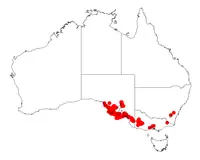
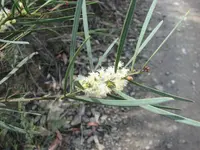
Rock wattle (Acacia rupicola) is a small to medium shrub from rocky hillsides and cliffs in eastern Australia. It naturally grows in dry, exposed habitats with thin, stony soils. The plant typically forms a dense, rounded shrub with narrow, grey-green phyllodes (leaf-like structures) and bright yellow, ball-shaped flower clusters. It is adapted to heat, sun, and low fertility, which generally makes it resilient once established. Sensitivity to prolonged waterlogging and poor drainage can make it less suitable for heavy, compacted soils. Understanding how to care for rock wattle starts with providing strong light, good air movement, and free-draining, low-nutrient soil.

Care Difficulty
Moderate Care

Light Preference
Full Sun

Water Requirements
Low Water

Temperature Preference
Warm Climate

Hardiness Zone
9–11

Soil Texture
Sandy, Loamy, Rocky

Soil pH
Slightly acidic (6.5–7.0), Neutral (7.0)

Soil Drainage
Well-drained

Fertilization
Minimal (feed rarely)
Scan your plant to receive care tips personalized for your specific plant
Available on iOS and Android
This drought-tolerant shrub prefers bright, open conditions similar to its rocky native habitats.
This species prefers to dry between waterings and is sensitive to heavy, waterlogged soil.
This Australian shrub is adapted to warm, dry climates and does best with mild winters and hot, but not extreme, summers.
This species is adapted to dry air and usually does not need special humidity management indoors or outdoors.
Acacia rupicola prefers lean, mineral, well-drained soil that prevents waterlogging around the roots.
This species can be grown in containers if the pot is chosen to support its deep, drought-tolerant root system.
Acacia rupicola grows in nutrient-poor soils and usually needs only light feeding in cultivation.
Acacia rupicola benefits from light, targeted pruning to maintain structure and plant health.
This species is most often grown in the ground, with transplanting done sparingly to avoid root disturbance.
Acacia rupicola is usually propagated from seed, which requires some preparation to break dormancy.
This species is moderately frost tolerant in mild climates and usually needs only simple winter care outdoors.

Plant Health Check
Not sure what's wrong with your plant? Check your plant's health inside the app.
This species is naturally restricted to sandstone cliff lines and rocky outcrops in parts of eastern Australia, where it anchors itself in shallow, nutrient-poor pockets of grit and crevices.
Unlike many wattles that form small trees, this species usually grows as a compact, many-stemmed shrub, an adaptation that helps it withstand exposure and wind on exposed rock faces.
Its narrow, elongated phyllodes (leaf-like leaf stalks) reduce surface area and water loss, which is advantageous in its harsh, well-drained rocky habitat.
This shrub grows at a moderate rate, typically adding around 15–30 cm of new growth per year in suitable conditions. Growth is faster in well-drained, rocky soils and full sun, and slower in heavier or shaded sites.
Keep your plants happy and healthy with plant identification, disease detection, and easy care guidance.