BotaN logo

Coastal Rosemary Care (Westringia fruticosa)

Coastal Rosemary

About Coastal Rosemary

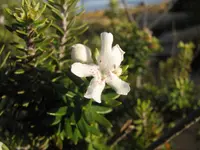
Coastal rosemary, Westringia fruticosa, is an evergreen shrub from coastal areas of eastern Australia. It is widely used in landscapes for its toughness and neat form.

The plant has small, narrow leaves in whorls around the stems, giving a fine, rosemary-like texture, and it produces soft white to pale lilac flowers for much of the year.

It naturally grows on windy cliffs and dunes, so it tolerates salt spray, pruning, and dry conditions, which makes it relatively easy to grow in many gardens.

It prefers sun, well-drained soil, and moderate watering, and these traits guide how to care for Coastal Rosemary in home landscapes or containers.

Main Plant Requirements

Care Difficulty

Easy Care

Light Preference

Full Sun

Water Requirements

Low Water

Temperature Preference

Warm Climate

Hardiness Zone

9–11

Soil Texture

Sandy, Loamy, Rocky

Soil pH

Slightly acidic (6.5–7.0), Slightly alkaline (7.0–7.5)

Soil Drainage

Well-drained

Fertilization

Minimal (feed rarely)

Get Personalized Care Plan

Scan your plant to receive care tips personalized for your specific plant

Available on iOS and Android

How to Care for the Coastal Rosemary

This coastal shrub thrives in bright conditions and handles strong light better than shade.

  • Provide 6–8 hours of direct sun daily; full sun is ideal for dense, compact growth in Coastal Rosemary hedges.
  • Accepts light or partial shade, especially with 3–4 hours of morning sun, but foliage becomes looser and flowering declines in deeper shade.
  • In very hot inland summers, protect from intense late-afternoon sun with light shade; watch for leaf scorch or bronzing as a sign of excess exposure.

This shrub is drought-tolerant once established but still benefits from structured watering in its early years.

  • In the first 1–2 years, water when the top 3–5 cm of soil are dry; deep, infrequent soaking encourages a strong root system in Westringia fruticosa.
  • Use sharply drained soil; avoid spots where water pools for more than 30–60 minutes after rain to reduce root rot risk and fungal problems.
  • In summer heat, watch for dull, drooping foliage as a sign to water; yellowing leaves, soft stems, or persistent soggy soil indicate overwatering.

This species suits mild, coastal-type climates and tolerates a fair range of outdoor temperatures.

  • Optimal growth occurs around 60–80°F (16–27°C), with best performance in climates that avoid long periods of extreme heat or cold.
  • Mature plants usually tolerate brief drops to about 25°F (-4°C), but repeated freezes or colder spells can cause tip dieback or plant loss.
  • Handles dry heat up to about 95–100°F (35–38°C) if soil is not waterlogged; in frosty areas, choose a sheltered, well-drained site and avoid frost pockets.

This shrub tolerates a wide humidity range and rarely needs special adjustment indoors or outdoors.

  • Aim for 30–60% humidity; typical indoor air is acceptable for Coastal Rosemary.
  • Dry air is usually tolerated, but prolonged heat plus very low humidity can cause browning leaf tips and slight leaf drop.
  • If air is extremely dry, group plants together or place the container on a pebble tray with water below the pot base.

This species prefers lean, fast-draining soil that mimics coastal, sandy conditions.

  • Use a sandy or gritty mix, such as 50–60% coarse sand or fine gravel blended with 40–50% loam-based potting mix.
  • Ensure very sharp drainage; the soil should wet through quickly and then drain freely without remaining soggy.
  • A slightly acidic to neutral pH around 6.0–7.0 suits Westringia fruticosa, so avoid highly alkaline, lime-heavy mixes unless the plant is already thriving there.
  • Improve aeration by adding coarse sand, fine gravel, or perlite, and avoid heavy clay or peat-heavy mixes that compact and hold water.

This species is well suited to container growing, especially in sunny, exposed positions.

  • Choose a wide, relatively heavy pot to counterbalance its dense, bushy top growth and reduce tipping in wind.
  • Select a container material that matches your climate, such as terracotta for drier roots in wet regions or thicker plastic in very hot, dry areas.
  • Fill the pot with a fast-draining, sandy mix and elevate the container slightly so drainage holes stay clear and water can escape freely.

Westringia fruticosa is a low-nutrient coastal shrub that benefits from light feeding in containers or poor soils.

  • Use a balanced slow-release fertilizer (for example 10-10-10) or thin compost layer at the start of spring.
  • Feed container plants every 6–8 weeks during the growing season, skipping feeding in late fall and winter.
  • Apply at 1/2 strength of the label rate to avoid soft, weak growth and salt buildup.
  • Water before and after feeding Coastal Rosemary to distribute nutrients and limit root burn.

Pruning supports dense, tidy growth and maintains flowering on Westringia fruticosa.

  • Carry out main pruning in late winter or early spring before strong new growth starts.
  • Remove dead, damaged, crossing, or very crowded stems with clean, sharp hand pruners.
  • Shorten shoot tips lightly to maintain a compact, rounded shape and encourage bushier side branching.
  • Avoid cutting back into bare, old wood with no leaves, as regrowth from these areas is limited.

This shrub is more often grown in the ground, but container Westringia fruticosa sometimes needs repotting or transplanting.

  • Check for roots circling the pot base, slow growth, or fast drying soil as signs a larger container is needed.
  • Plan transplanting or repotting for early spring or early fall in mild climates to reduce heat stress.
  • Move up 1 pot size every 2–3 years, using a free-draining mix and a container with ample drainage holes.
  • Water thoroughly after transplanting, keep shaded for 3–5 days, and avoid heavy pruning at the same time to limit shock.

Westringia fruticosa is commonly propagated from semi-hardwood cuttings for consistent garden performance.

  • Take 7–10 cm semi-hardwood tip cuttings in late spring or late summer from healthy, non-flowering shoots.
  • Remove lower leaves, dip bases in rooting hormone, and insert into a sharply draining mix of sand and peat or fine bark.
  • Maintain bright, indirect light, high humidity, and soil temperatures around 68–75°F until roots form.
  • For seed propagation, sow fresh seed on a sandy mix, keep just moist, and expect slower, less uniform offspring.

This shrub is moderately frost tolerant but may need some winter care in colder regions.

  • In USDA zones 9–10, plants usually overwinter outdoors without special protection.
  • In cooler areas, add a 5–8 cm mulch layer around the root zone, keeping it away from the main stems.
  • Move container plants under cover or indoors before hard frosts, placing them in bright, cool, frost-free conditions.

Care Tips

Saltwind management

In coastal plantings, hose the foliage with fresh water every few weeks during dry, windy periods to wash off salt spray and dust that can clog leaf pores and stress the plant.

Hedge density control

To maintain a tight, formal hedge, lightly shear the outer 2–3 cm of growth 2–3 times per year instead of doing one heavy cut, which encourages dense branching without leaving bare, woody sections.

Wind-shaping strategy

In very windy sites, orient new plants so their longest, strongest shoots face the prevailing wind and use low, discreet stakes for the first 6–12 months to help establish a balanced, wind-firm framework.

Renewal pruning cycle

Every 2–3 years on mature shrubs, remove 1–3 of the oldest, thickest stems at the base in late winter to stimulate new shoots from low down and keep the plant vigorous for the long term.

Mulch and root protection

Apply a 3–5 cm layer of coarse, well-drained mulch such as pine bark around but not touching the stems to buffer soil temperature, reduce weed pressure, and support root health when growing Coastal Rosemary in exposed positions.

Common Pests and Diseases

Myrtle rust

This disease causes bright yellow powdery spots and pustules on young leaves and stems, which can lead to leaf deformation and dieback in severe cases.

Solution

Remove and bag affected shoots as soon as symptoms appear and avoid overhead watering to keep foliage dry; in regions where myrtle rust is established, monitor Westringia fruticosa plant care closely during warm, humid periods and use a registered myrtle rust fungicide as per local guidelines if infection is spreading.

Webbing caterpillars

These insects create silken webs over shoot tips and foliage, skeletonizing leaves inside the webbed area and stunting new growth.

Solution

Prune off and dispose of webbed shoot tips at the first sign of damage, then inspect nearby branches regularly and, if needed, use a targeted biological control such as Bacillus thuringiensis (Bt) on actively feeding caterpillars while avoiding broad-spectrum sprays that harm beneficial insects.

Scale insects

This pest appears as small, dome-shaped bumps on stems and leaf undersides, often accompanied by sticky honeydew and sooty mold on the foliage beneath.

Solution

Wipe or gently scrub infested stems with a cloth or soft brush dipped in diluted insecticidal soap, prune heavily infested twigs, and repeat treatments every 7–10 days until new growth is clean, ensuring the plant has good light and airflow to support recovery.

Spider mites

These pests cause fine stippling and a dull, grayish cast on leaves, sometimes with fine webbing in branch crotches during hot, dry weather.

Solution

Hose down the plant thoroughly, focusing on the undersides of leaves, then maintain more even moisture and improve humidity around the shrub; if mites persist, apply a horticultural oil or insecticidal soap in the early morning, repeating as needed while monitoring with a hand lens for active mites.

Botrytis blight

Symptoms include browning of flowers and tender shoot tips, with soft, water-soaked areas that develop fuzzy gray mold in cool, damp conditions.

Solution

Cut out and discard all affected tissue, increase spacing and airflow around plants, and avoid wetting the foliage; in persistent wet climates, a protective fungicide labeled for Botrytis can be used preventively on susceptible growth, especially when caring for Coastal Rosemary in dense plantings.

Interesting Facts

Coastal wind specialist

This shrub naturally grows on exposed Australian sea cliffs and dunes, where it tolerates strong salt-laden winds and poor, sandy soils without significant leaf burn or dieback.

All-year flowering habit

In mild climates, it can produce small white to pale lilac flowers almost continuously through the year, with only slight seasonal peaks instead of a single short blooming season.

Leaf mimicry of rosemary

The narrow, grey-green leaves resemble culinary rosemary but lack its strong aroma and essential oil profile, reflecting a visual convergence rather than a close botanical relationship.

Botan icon

Did you know?

Dense stands along coastal headlands can act as natural windbreaks and low wildlife shelter, providing structure and protection in sites where few woody plants can survive persistent salt spray and high wind exposure.

FAQs about Coastal Rosemary

Poor flowering often comes from insufficient light, overly rich fertilizer, or heavy pruning at the wrong time. Ensure strong sun exposure, avoid high-nitrogen feeds, and prune lightly after main flowering flushes so buds for next season are not removed.

Grow Healthy Plants with Botan Care

Keep your plants happy and healthy with plant identification, disease detection, and easy care guidance.


Botan plant care app — identify plants on mobile

Explore More Plants