Allegheny serviceberry Care (Amelanchier laevis)

Also known as: Smooth Shadbush, Allegheny shadblow, smooth serviceberry, sarvis, sarvisberry
Allegheny serviceberry

About Allegheny serviceberry

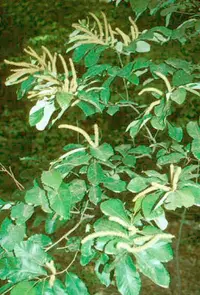
Allegheny serviceberry, Amelanchier laevis, is a small deciduous tree or large shrub prized for its early spring flowers and edible berries. It usually forms a multi-stemmed, rounded shape with smooth gray bark and fine-textured branching.

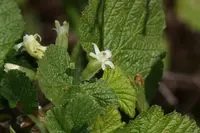
This species is native to eastern North America, where it grows along woodland edges, slopes, and stream banks. It offers four-season interest with white spring blossoms, summer fruit, clean green foliage, and orange to red fall color.

Amelanchier laevis is generally considered easy to grow, as long as it receives adequate light, moisture, and well-drained soil. Understanding how to care for Allegheny serviceberry helps it establish quickly and remain attractive with minimal pruning.

Main Plant Requirements

Care Difficulty

Easy Care

Light Preference

Full Sun

Water Requirements

Moderate Water

Temperature Preference

Cold Hardy

Hardiness Zone

4–8

Soil Texture

Loamy, Sandy, Clay

Soil pH

Acidic (5.5–6.5), Slightly acidic (6.5–7.0)

Soil Drainage

Moist but well-drained

Fertilization

Minimal (feed rarely)

Get Personalized Care Plan

Scan your plant to receive care tips personalized for your specific plant

Available on iOS and Android

How to Care for the Allegheny serviceberry

This species grows best as a small landscape tree or large shrub in bright outdoor conditions.

  • Provide full sun to light shade, ideally 4–6 hours of direct sun daily, with morning sun and light afternoon shade in hotter regions.
  • Allegheny serviceberry tolerates partial shade, but flowering and fruiting decrease if it receives less than about 3–4 hours of direct or strong filtered light.
  • In hot summers, protect from intense west-facing afternoon sun to reduce leaf scorch, while in cooler climates an open, sunny position improves fall color.

This shrub prefers evenly moist, well-drained soil rather than extremes of dryness or saturation.

  • Water when the top 3–5 cm of soil feels dry, applying a slow, deep soak to reach the rooting zone instead of frequent shallow splashes.
  • During the first 1–2 years after planting, monitor closely in spring and summer, increasing watering during hot, dry spells and reducing once autumn rains arrive.
  • Ensure soil drains freely to avoid standing water, watching for yellowing leaves or dieback from overwatering versus crisp leaf edges and wilting from drought.

This hardy deciduous shrub is well adapted to temperate outdoor climates with cold winters and warm summers.

  • Active growth is strongest in spring and early summer around 60–75°F (16–24°C), with flowering triggered by cool winter dormancy followed by gradual warming.
  • Mature plants tolerate winter lows near -20°F (-29°C) once established, but young specimens benefit from mulch to buffer rapid soil temperature swings.
  • In summer, it handles brief heat up to about 90–95°F (32–35°C) if soil moisture is maintained; prolonged extreme heat with drought can cause leaf scorch and early leaf drop.

Humidity is rarely a concern for this hardy, outdoor shrub species.

This species prefers deep, moist, well-drained mineral soils with consistent structure.

  • Use a loamy soil rich in organic matter, mixing native soil with compost at roughly 3:1 for planting holes.
  • Target a slightly acidic pH around 5.5–6.5 to support nutrient uptake and healthy Amelanchier laevis root growth.
  • Ensure drainage by avoiding compacted sites; loosen soil 30–40 cm deep to improve aeration and root penetration.
  • Avoid heavy, waterlogged clay or very dry, shallow, stony soils that cause root stress and poor establishment.

This species can be grown in large containers for several years but performs best in the ground long term.

  • Choose a deep, heavy container to anchor the developing woody root system and reduce tipping in wind.
  • Use a slightly acidic, loam-based potting mix with added compost and coarse bark to balance moisture retention and drainage.
  • Raise the container on pot feet so drainage holes stay clear and excess water can exit quickly after rainfall or irrigation.

This native shrub or small tree needs only light feeding in most garden soils.

  • Apply a thin layer of compost or well-rotted manure around the root zone once in early spring for Allegheny serviceberry.
  • Use a balanced slow-release fertilizer (around 10-10-10) at half label rate if growth or foliage color seems weak.
  • Do not place fertilizer against the trunk; keep granules 10–15 cm away to avoid root and bark burn.
  • Avoid feeding in late fall or winter, when the plant is dormant and nutrient uptake is low.

Pruning Amelanchier laevis focuses on safety, structure, and good light penetration.

  • Carry out main pruning in late winter to very early spring, before bud break.
  • Remove dead, diseased, crossing, or storm-damaged branches with clean bypass pruners or a sharp pruning saw.
  • Thin crowded interior shoots to create an open canopy that supports strong flowering and air flow.
  • Shape lightly by shortening long, awkward branches, maintaining the plant’s natural multi-stemmed form.

This species is usually grown in the ground, so care centers on careful transplanting rather than frequent repotting.

  • Transplant in early spring or early fall, when temperatures are mild and soil is workable.
  • Look for signs such as circling roots, pot-bound root mass, or stunted growth before moving container-grown plants.
  • Dig a wide planting hole, disturb circling roots gently, and set the root flare at soil level to reduce stress.
  • Water deeply after planting, then keep soil evenly moist for the first growing season to support root establishment.

Amelanchier laevis is propagated mainly from seeds or softwood cuttings by growers with some experience.

  • Collect ripe berries, clean seeds, and cold stratify for 2–3 months at about 35–40°F to improve germination.
  • Sow stratified seeds in a free-draining, slightly acidic mix and keep consistently moist until seedlings establish.
  • Take softwood cuttings in late spring to early summer, use rooting hormone, and place in high humidity with bright shade.
  • Simple layering of low, flexible branches into the soil can also root over a season, then be separated the following year.

This species is fully hardy in most temperate climates and usually needs minimal winter care.

  • Tolerates typical winter lows in much of the US once established, with no wrapping of branches required.
  • Apply 5–8 cm of mulch over the root zone in late fall, keeping it a few cm away from the trunk.
  • Water young plants well before ground freeze if autumn has been dry, to reduce winter desiccation.
  • Move container-grown plants into a sheltered, unheated space or bury pots to insulate roots in very cold regions.

Care Tips

Sucker Management

Inspect the base of the plant several times per season and promptly remove root suckers with clean, sharp pruners at ground level to maintain a single-stem tree form and prevent overcrowding.

Airflow Around Canopy

When planting near other shrubs or structures, allow at least 1.5–2 m of open space around the canopy so leaves dry quickly after rain, which helps limit fungal leaf spots and rust.

Mulch for Root Comfort

Maintain a 5–8 cm layer of shredded bark or wood chip mulch in a wide ring around the plant, keeping it 5–8 cm away from the trunk, to moderate soil temperature, conserve moisture, and protect shallow feeder roots.

Bird Netting Timing

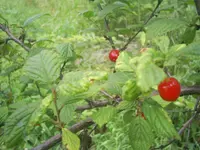
If fruit harvest is desired, install lightweight bird netting just as berries begin to turn from green to red, then remove it promptly after picking to avoid branch damage and allow good airflow.

Winter Rodent Protection

In cold regions, wrap the lower trunk with a breathable tree guard or hardware cloth in late fall and remove it in early spring to protect bark from vole and rabbit girdling when caring for Allegheny serviceberry.

Common Pests and Diseases

Pear leaf blister mite

This pest causes tiny raised blisters on young leaves that may turn reddish or brown and distort the foliage. Damage is mostly cosmetic but can become unsightly on heavily infested trees.

Solution

Prune and discard heavily affected shoots during dormancy to reduce overwintering mites, and avoid moving infested material to other plants. For repeated, severe infestations, apply a horticultural oil spray in late winter or very early spring before budbreak, coating branches thoroughly to smother overwintering mites.

Cedar-apple rust

This disease produces bright orange to yellow leaf spots that may enlarge, cause early leaf drop, and sometimes blemish fruit. Symptoms include spore-producing structures on the underside of leaves that spread the fungus between junipers and serviceberry.

Solution

Remove and discard infected leaves and fruit from the tree and ground to lower spore levels, and avoid planting junipers that host rust in close proximity. In areas with a history of rust, apply a labeled preventive fungicide at early leaf emergence and during wet spring periods, and maintain good air circulation by light thinning of crowded interior branches.

Fire blight

This disease causes sudden wilting and blackening of blossoms and shoots, which often appear scorched and may bend into a characteristic shepherd’s-crook shape. Infections can spread down twigs and branches, killing young growth and, in severe cases, larger limbs.

Solution

Prune out infected shoots 20–30 cm below visible symptoms during dry weather, disinfecting pruning tools between cuts with alcohol or a 10% bleach solution. Avoid high-nitrogen fertilization and late-summer pruning that encourage soft, susceptible growth, and in areas with a history of fire blight, consider a preventative bloom-time bactericide according to local extension guidance as part of broader Amelanchier laevis care instructions.

Pear slug (sawfly larvae)

These insects skeletonize leaves, eating the soft tissue between veins and leaving a lace-like appearance. This pest often appears as small, dark, slimy larvae feeding on upper leaf surfaces in mid to late summer.

Solution

Spray affected foliage with a strong jet of water to dislodge larvae, and hand-pick or shake them onto a sheet for disposal where practical. For heavier infestations, use insecticidal soap or a spinosad-based product directed to the undersides and tops of leaves, and encourage birds and predatory insects by avoiding broad-spectrum insecticides.

Entomosporium leaf spot

This disease causes small purple to reddish-brown spots on leaves that may merge into larger blotches and lead to premature leaf drop, especially in wet seasons. Symptoms include heavier spotting on lower, inner foliage where air movement is limited.

Solution

Rake and remove fallen leaves to limit fungal carryover, and thin dense branches slightly to improve airflow and faster leaf drying. In landscapes with recurring problems, use a labeled fungicide beginning at budbreak and repeating during extended wet weather, focusing on thorough coverage of young, newly expanding foliage.

Interesting Facts

Early spring bloomer

This species flowers very early in spring, often before its leaves fully expand, providing one of the first nectar and pollen sources for native bees and early-emerging pollinators in eastern North America.

Shade-tolerant understory tree

In the wild it naturally occurs as an understory tree in moist, shaded woodlands and along forest edges, showing higher shade tolerance than several other serviceberry species.

Edible blueberry-like fruit

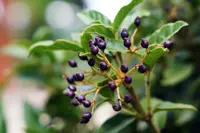
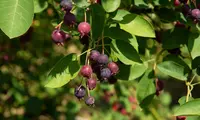
Its dark purple pomes are botanically similar to tiny apples but are often compared in flavor to blueberries and have long been used fresh or cooked by Indigenous peoples and later by European settlers.

Botan icon

Did you know?

This species is a key host plant for the larvae of several native Lepidoptera, including the red-spotted purple and viceroy butterflies, which rely on its foliage as a food source during their caterpillar stage.

FAQs about Allegheny serviceberry

The berries are edible and often compared to blueberries in flavor. They can be eaten fresh, frozen, or used in jams and baked goods. Only harvest fully ripe, dark purple fruits from plants that have not been chemically treated.

Grow Healthy Plants with Botan Care

Keep your plants happy and healthy with plant identification, disease detection, and easy care guidance.

Botan plant care app — identify plants on mobile

Explore More Plants