Nana Currantrhus Care (Searsia dentata)

Also known as: Nana-berry, Nana Kunirhus, Nana-berry-rhus, Nana-berry Karree
Nana Currantrhus

About Nana Currantrhus

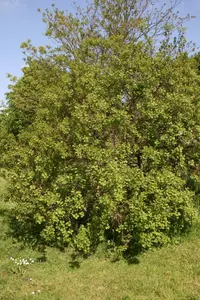
Nana Currantrhus is a compact form of Searsia dentata, a small, multi-stemmed shrub or tree valued for its dense branching and fine-textured foliage. It often develops a rounded, bushy shape that suits foundation plantings and informal hedges.

In nature, S. dentata occurs in southern Africa, where it grows in rocky slopes, woodland margins, and other sunny, well-drained sites. This background gives the plant good tolerance to sun, wind, and periods of dryness.

Its resilience, moderate growth rate, and pruning tolerance make it relatively easy to manage in gardens, especially if the soil drains well. A position with good light, occasional deep watering, and free-draining soil usually provides a solid base to care for Nana Currantrhus.

Main Plant Requirements

Care Difficulty

Easy Care

Light Preference

Full Sun

Water Requirements

Low Water

Temperature Preference

Warm Climate

Hardiness Zone

9–11

Soil Texture

Sandy, Loamy

Soil pH

Acidic (5.5–6.5), Slightly acidic (6.5–7.0)

Soil Drainage

Well-drained

Fertilization

Minimal (feed rarely)

Get Personalized Care Plan

Scan your plant to receive care tips personalized for your specific plant

Available on iOS and Android

How to Care for the Nana Currantrhus

This sun-loving shrub thrives in open, bright positions with only light shade.

  • Provide 6–8 hours of direct sun daily; morning sun with some afternoon shade in very hot regions reduces leaf scorch risk.
  • Plant in a site that receives at least 3–4 hours of direct sun even in winter, as deep shade leads to weak, leggy growth and sparse foliage.
  • Nana Currantrhus tolerates light, dappled shade from trees, but avoid dense, all-day shade or harsh, reflected midday sun from walls or paving.

This drought-tolerant shrub prefers deep, infrequent watering once established.

  • In the first growing season, water when the top 5–7 cm of soil is dry, aiming for a slow, deep soak that moistens the full root zone.
  • Once established in the ground, Searsia dentata usually needs supplemental water only during prolonged dry spells; leaves curling or dulling signal thirst.
  • Use sharply draining soil; yellowing leaves, soft stems, or sour-smelling soil indicate overwatering, while brittle twigs and dry, crispy leaves indicate underwatering.

This hardy shrub suits mild to warm climates with moderate seasonal variation.

  • Optimal growth occurs around 65–80°F (18–27°C), where shoot and root development remain active and foliage stays dense.
  • Mature plants tolerate brief drops to about 20–25°F (-6 to -4°C), but young plants benefit from protection during hard frosts.
  • Heat tolerance is good up to 95–100°F (35–38°C) if soil is not waterlogged; mulch and occasional deep watering reduce stress in extended hot, dry spells.

This shrub handles a wide humidity range and usually does not need special humidity management outdoors.

This shrub prefers lean, well-drained mineral soils and tolerates relatively poor ground if drainage is strong.

  • Use a gritty, sandy or sandy-loam mix with 20–30% coarse sand and 10–20% fine gravel to prevent waterlogging.
  • In containers, blend roughly 60% inorganic material (sand, grit, fine gravel) with 40% composted bark-based potting mix for structure.
  • Aim for slightly acidic to neutral pH around 6.0–7.0, avoiding strongly acidic or alkaline mixes that can limit nutrient uptake.
  • Improve aeration by avoiding heavy clay and peat-heavy mixes, which compact and hold moisture around roots for too long.

This species can be grown in containers for patios or small gardens if the pot is prepared for its woody root system.

  • Choose a deep, heavy pot that resists tipping once the shrub develops a woody framework and canopy sail in strong wind.
  • Select thick-walled terracotta or concrete if extra moisture loss and stability are desired in hot, exposed positions.
  • Raise the pot on feet or spacers so drainage holes remain clear and runoff leaves the container base quickly after heavy rain.

Searsia dentata generally needs modest feeding, especially in poor or disturbed soils, and caring for Nana Currantrhus focuses on supporting steady, not lush, growth.

  • Apply a balanced slow-release fertilizer or light compost layer in early spring to support new growth.
  • Feed once more in midsummer if growth is weak, avoiding more than 2 applications per year.
  • Use fertilizer at 50% label strength to limit soft, pest-prone growth.
  • Stop feeding in late summer so new shoots harden before winter.

Searsia dentata responds well to light structural pruning that maintains a strong framework and healthy canopy.

  • Carry out main pruning in late winter or very early spring before active growth starts.
  • Remove dead, crossing, and storm-damaged branches first to reduce disease entry points.
  • Thin crowded interior shoots to improve light penetration and airflow, keeping a natural outline.
  • Use clean, sharp bypass pruners or loppers and make cuts just above outward-facing buds or branch collars.

Searsia dentata is usually grown in the ground, so transplanting young plants correctly is more important than frequent repotting.

  • Transplant in late winter to early spring while dormant, avoiding hot, dry periods.
  • Look for roots circling the container or slow, stunted growth as signs a nursery plant needs a larger hole or pot.
  • Loosen or tease outward circling roots before planting, then set at the same soil level as in the container.
  • Water deeply after planting and keep soil evenly moist for 2–3 weeks to reduce transplant shock.

Searsia dentata is commonly propagated from semi-hardwood cuttings or seeds when establishing new landscape plants.

  • Take semi-hardwood cuttings in late summer, 10–15 cm long, from healthy non-flowering shoots.
  • Dip cut ends in rooting hormone and insert into a well-drained, sandy propagation mix kept slightly moist.
  • Provide bright, indirect light and warm temperatures around 70–75°F to support rooting.
  • Sow fresh seeds in autumn or spring in a gritty mix, lightly covered, and keep cool to moderately warm until germination.

Searsia dentata is moderately cold hardy in mild-winter regions and usually needs only basic winter care in the landscape.

  • In zones near its hardiness limit, apply a 5–8 cm mulch layer around the root zone, keeping mulch off the trunk.
  • Water deeply before prolonged freezes if the soil is very dry, then allow it to drain.
  • Move container plants to a sheltered, frost-free spot such as an unheated garage or cold greenhouse.

Care Tips

Wind-hardening young plants

During the first growing season, expose young shrubs gradually to stronger wind by reducing shelter over several weeks so they develop sturdier stems and a deeper root system before facing full-site conditions.

Encourage dense hedging

For hedge use, pinch or lightly tip-prune new shoots several times in late spring and early summer to promote multiple side branches and create a thicker, more wind-resistant screen.

Mulch to protect roots

Apply a 5–8 cm layer of coarse organic mulch around, but not touching, the base to stabilize soil temperature, suppress weeds, and reduce competition for moisture on dry, exposed sites.

Spot-check for scale

Inspect older stems and the undersides of leaves a few times each season for scale insects and, if found early, remove affected twigs or wipe colonies with a cloth dipped in mild soapy water before populations build up.

Storm-damage management

After heavy storms, remove torn or split branches back to a clean lateral or main stem to prevent decay, then monitor regrowth to select a few strong replacement shoots that will restore a balanced framework.

Common Pests and Diseases

Aphids

This pest feeds on young shoots and leaf undersides, sucking sap and causing curling, distortion, and sticky honeydew that can lead to sooty mold on foliage. Symptoms include slowed growth and clusters of small green, black, or brown insects on fresh growth and flower or fruit clusters.

Solution

Prune and discard heavily infested shoot tips, then wash remaining foliage thoroughly with a strong but gentle stream of water to dislodge insects. For continued control on growing Nana currantrhus hedges or specimens, use insecticidal soap or a light horticultural oil sprayed to coat leaf undersides, repeating every 7–10 days until populations decline, and encourage natural predators such as lady beetles by avoiding broad-spectrum chemicals.

Scale insects

These insects appear as small, rounded or oval bumps on stems and leaf veins and remain immobile while feeding on sap. Symptoms include yellowing leaves, dieback of fine twigs, and sticky honeydew on lower branches and nearby surfaces.

Solution

Scrape off individual scales from small plants using a gloved fingernail or soft brush, and prune out heavily infested twigs. For larger shrubs, apply horticultural oil thoroughly over stems and leaf undersides during mild weather, repeating as needed, and improve plant vigor through correct watering and light to help the shrub outgrow minor damage.

Leaf spot

This disease produces small dark brown to black spots on leaf surfaces that may enlarge, merge, and cause premature leaf drop, especially in humid or crowded plantings. Symptoms include thinning foliage on lower and inner branches while stems remain alive.

Solution

Remove and dispose of affected fallen leaves to reduce fungal spores, and thin or prune the canopy to improve airflow and light penetration. If spotting is severe and recurring, apply a copper-based or other labeled fungicide at the first sign of new spots in spring, and avoid overhead watering that leaves foliage wet for long periods.

Powdery mildew

This disease forms a white to gray powdery coating on leaf surfaces, mainly on shaded or densely packed branches. Symptoms include distorted new leaves, reduced vigor, and premature leaf aging on affected shoots.

Solution

Increase light and airflow by selective pruning of congested branches and avoiding overhead irrigation late in the day. Where needed, treat new infections early with a sulfur-based or potassium bicarbonate fungicide labeled for ornamental shrubs, and repeat at label intervals until new growth emerges clean.

Interesting Facts

Deciduous bushy shrub

Searsia dentata is a medium-sized, multi-stemmed shrub or small tree native to southern Africa, notable for its finely toothed leaf margins that give the species its name (dentata means toothed). It is typically found on rocky hillsides, forest margins, and open woodland rather than deep forest or very dry desert habitats.

Important bird food

The small, whitish fruits are produced in dense clusters and are eaten by many bird species, which disperse the seeds over wide areas. This bird-mediated seed dispersal helps maintain plant diversity and natural regeneration in its native ecosystems.

Dioecious flowering system

The species is usually dioecious, meaning individual plants bear either male or female flowers but not both. Only female plants produce fruit, and this separation of sexes encourages cross-pollination and maintains genetic diversity in wild populations.

Botan icon

Did you know?

In some parts of southern Africa, S. dentata is one of the earlier woody species to flush new leaves after winter, and these fresh leaves can host large numbers of caterpillars, providing a seasonal food pulse for insectivorous birds as spring conditions improve.

FAQs about Nana Currantrhus

Yes, this shrub adapts well to containers if the pot is large, heavy, and well-drained. Use a gritty mix, avoid chronic waterlogging, and repot every few years to prevent it from becoming rootbound.

Grow Healthy Plants with Botan Care

Keep your plants happy and healthy with plant identification, disease detection, and easy care guidance.

Botan plant care app — identify plants on mobile

Explore More Plants