Mexican bush sage Care (Salvia leucantha)

Also known as: Curacao Sage
Mexican bush sage

About Mexican bush sage

Mexican bush sage (Salvia leucantha) is a shrubby perennial in the mint family, grown mainly for its long-lasting, velvety flower spikes. It forms soft, arching clumps of gray-green foliage topped with purple and white blooms that attract bees, butterflies, and hummingbirds. Native to Mexico and Central America, it thrives in warm, sunny, relatively dry climates with well-drained soil. This species is generally considered low-maintenance, as it tolerates heat and short dry periods once established. Understanding how to care for Mexican bush sage mainly means providing plenty of sun, good drainage, and avoiding waterlogged conditions.

Main Plant Requirements

Care Difficulty

Easy Care

Light Preference

Full Sun

Water Requirements

Low Water

Temperature Preference

Warm Climate

Hardiness Zone

8–10

Soil Texture

Sandy, Loamy, Rocky

Soil pH

Acidic (5.5–6.5), Slightly acidic (6.5–7.0)

Soil Drainage

Well-drained

Fertilization

Minimal (feed rarely)

Get Personalized Care Plan

Scan your plant to receive care tips personalized for your specific plant

Available on iOS and Android

How to Care for the Mexican bush sage

This sun-loving shrub flowers best with strong light and moderate summer protection.

  • Provide 6–8 hours of direct sun daily, ideally with morning sun and light afternoon shade in hot summer regions for Mexican bush sage.
  • In very hot, dry climates, give filtered light after 2–3 p.m. to reduce leaf scorch and premature flower decline.
  • If stems stretch, flop, or flowering is sparse, the plant is not getting enough light; move or prune nearby shade-casting plants.

This drought-tolerant perennial prefers deep, infrequent watering in well-drained soil.

  • Outdoors in the ground, water when the top 5–8 cm of soil are dry, soaking the root zone rather than giving light sprinkles.
  • Reduce watering in cool seasons or when Salvia leucantha is not actively growing, but do not allow prolonged bone-dry soil in very sandy beds.
  • Watch for wilted, crisp leaves and dry stems as signs of underwatering; yellowing, soft stems or persistent soggy soil indicate overwatering or poor drainage.

This warm-temperate shrub thrives in mild conditions and dislikes hard frost.

  • Best growth occurs around 65–80°F (18–27°C), with flowering strongest where summers are warm but not extremely humid.
  • Plants are typically root-hardy to about 20–25°F (-6 to -4°C); top growth usually dies back after the first hard frost.
  • In regions above 90–95°F (32–35°C), provide mulch and some afternoon shade to limit heat stress and reduce moisture loss from the soil.

This species handles typical home and outdoor humidity well and rarely needs special humidity management.

  • Aim for 30–50% humidity; Mexican bush sage stays healthy in relatively dry air compared to many ornamentals.
  • Watch for limp, curling leaves and stalled new growth as possible signs of combined humidity and water stress, especially in heatwaves.
  • Increase local humidity only during extreme dry spells by grouping plants, mulching the soil surface, or using a nearby water tray without wetting foliage.

This species prefers loose, well-drained, moderately fertile soil that never stays waterlogged.

  • Use a sandy or loamy structure, such as 50–60% garden loam with 20–30% coarse sand and 10–20% compost for Salvia leucantha.
  • Ensure rapid drainage; mix in coarse sand or fine gravel if water still sits on the surface after thorough watering.
  • Aim for slightly acidic to neutral pH around 6.0–7.0, avoiding strongly acidic or alkaline conditions that limit nutrient availability.
  • Avoid heavy clay or compacted sites; improve aeration by working in coarse organic matter and avoiding treading on the root zone when soil is wet.

This species grows well in containers when the pot is stable and drains very freely.

  • Choose a wide, relatively heavy pot to counter the top-heavy, arching growth that can tip lightweight containers in wind.
  • Fill with a gritty mix, such as 60–70% peat-free potting mix plus 30–40% perlite or coarse sand, to keep roots aerated.
  • Raise the container on pot feet or bricks outdoors so drainage holes stay clear and excess water runs off quickly after rain or irrigation.

Salvia leucantha benefits from light, targeted feeding during its active growing season.

  • Use a balanced, slow-release granular fertilizer (around 10-10-10) or well-aged compost worked lightly into the soil in spring.
  • Feed every 6–8 weeks during warm growth, avoiding fertilizer during winter dormancy.
  • Apply at half the label-recommended strength for container plants to reduce salt buildup and root burn.
  • Water thoroughly after feeding to help nutrients move into the root zone and prevent localized concentration.

Pruning Salvia leucantha maintains a compact shape and encourages abundant flowering.

  • In late winter or very early spring, cut back old stems to 10–20 cm above the ground to stimulate fresh growth.
  • During the season, remove dead, damaged, or crossing stems with clean, sharp pruners to improve air flow.
  • Deadhead spent flower spikes to extend blooming and keep the plant tidy.
  • Lightly shape the plant after the main flush of flowers, avoiding hard cuts in late fall in colder climates.

Mexican bush sage is usually grown in the ground, but container plants or young stock sometimes need transplanting.

  • Transplant or up-pot in spring when roots circle the pot, growth slows, or watering frequency increases noticeably.
  • Move to a container 2–5 cm wider, using a well-drained mix with added perlite or coarse sand.
  • Handle the root ball gently, loosening only tight circling roots to limit transplant shock.
  • Water thoroughly after planting, then keep evenly moist and shaded from intense sun for 3–5 days while roots re-establish.

Salvia leucantha is most commonly propagated by softwood cuttings and division.

  • Take 7–10 cm non-flowering stem cuttings in late spring or early summer, removing lower leaves.
  • Insert cuttings into a moist, free-draining mix under bright, indirect light; maintain high humidity and 65–75°F.
  • Division of well-established clumps in spring renews vigor and yields multiple plants.
  • Seeds are less reliable; if used, sow fresh seed in warm conditions and keep only lightly covered.

Salvia leucantha is frost-tender, so winter care is important in cooler climates.

  • In USDA zones 8–9, plants often survive mild frosts but stems may die back to the base.
  • After the first hard frost, cut back blackened stems and apply a 5–10 cm mulch over the root zone.
  • In colder zones or containers, move plants indoors to a bright, cool, frost-free spot for winter.

Care Tips

Staggered Renewal

Every 2–3 years, remove and replace about one-third of the oldest, woodiest stems at ground level in late winter to keep the clump vigorous and reduce flopping in the growing season.

Discreet Support Stakes

Install low, twiggy brushwood or short ring supports around young plants in late spring so stems grow through the support and stay upright when heavy with late-season flowers.

Pinch For Bushiness

When stems reach 15–20 cm in late spring, lightly pinch out just the soft tip of each stem to encourage branching and create a denser plant with more flowering shoots later in the season.

Mulch For Winter

In regions with cold winters, apply a 5–8 cm layer of dry, loose mulch around but not touching the crown after the first light frost to protect basal buds and improve chances of regrowth.

Targeted Pest Scouting

Once a week during warm weather, check new growth and the undersides of leaves for aphids and whiteflies, and if found, wash them off with a firm stream of water before they build large colonies when caring for Mexican bush sage.

Common Pests and Diseases

Spider mites

This pest often appears in hot, dry weather and feeds on leaf sap, causing fine stippling and a dull, dusty look on foliage. Symptoms include tiny webs between leaves and stems and gradual leaf yellowing.

Solution

Rinse foliage thoroughly with a strong stream of water, focusing on leaf undersides, and repeat every few days. If populations persist, apply insecticidal soap or a neem oil spray in the early morning, and increase humidity and air movement around plants to make conditions less favorable for mites.

Aphids

These insects cluster on soft shoot tips and flower stems, sucking sap and excreting sticky honeydew that can attract sooty mold. New growth may appear distorted, curled, or stunted.

Solution

Prune off heavily infested tips and hose down plants to remove colonies. For ongoing infestations, use insecticidal soap or a neem-based spray, and encourage natural predators such as lady beetles by avoiding broad-spectrum insecticides in the garden when possible.

Botrytis blight

This disease thrives in cool, damp conditions and causes browning and collapse of flower spikes and young shoots. Symptoms include fuzzy gray mold on affected tissues, especially where spent flowers are left on the plant.

Solution

Remove and discard all infected stems and spent flower spikes promptly, and avoid overhead watering that keeps foliage wet. Improve spacing and airflow, and in persistent cases apply a labeled fungicide during extended cool, wet periods as part of broader Salvia leucantha care instructions.

Powdery mildew

This disease shows as white, powdery patches on leaves and stems, often during warm days and cool, humid nights. Affected leaves may yellow, curl, and drop prematurely.

Solution

Increase air circulation by spacing and light pruning, and avoid overhead watering late in the day. Remove heavily affected leaves and use a sulfur or potassium bicarbonate fungicide labeled for ornamentals if the disease progresses, applying at the first signs of infection.

Leaf spot

This disease causes small brown or purplish spots that can merge into larger blotches on leaves, sometimes leading to early leaf drop. Symptoms include more severe spotting on lower, older foliage in dense or wet plantings.

Solution

Trim and discard affected lower leaves and any plant debris on the soil surface, then adjust watering so foliage dries quickly. Improve airflow with judicious thinning, and if leaf spot recurs each season, consider a preventive application of a copper-based fungicide at the start of warm, wet weather.

Interesting Facts

Origin in Mexican highlands

This species is native to the warm, seasonally dry highlands of central and eastern Mexico, where it grows on slopes and open scrub, which explains its strong tolerance of sun and drought once established.

Velvety bicolored flowers

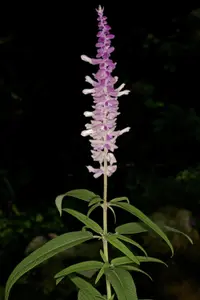
Its flowering spikes have a distinctive texture and color pattern: a velvety, hairy purple calyx surrounds smoother white (or sometimes purple) corollas, an example of pubescent floral structures that may help protect nectar and pollen from rain and small herbivores.

Late-season pollinator magnet

In mild climates it flowers heavily from late summer into fall, providing abundant nectar for hummingbirds, butterflies, and bees at a time when many other nectar sources in gardens and natural areas are already declining.

Botan icon

Did you know?

In regions with USDA zone 8 or warmer, this subshrub can develop a woody framework and persist for many years, allowing gardeners to grow Salvia leucantha as a long-lived structural plant rather than a short-term ornamental.

FAQs about Mexican bush sage

Lack of blooms usually comes from insufficient light, excess nitrogen fertilizer, or pruning too late in the season. Poor drainage, overcrowding, or severe drought stress can also reduce flowering. Adjust these factors to restore reliable late-season blooms.

Grow Healthy Plants with Botan Care

Keep your plants happy and healthy with plant identification, disease detection, and easy care guidance.

Botan plant care app — identify plants on mobile

Explore More Plants