Staking Tall Clumps
Install slender stakes or short plant hoops early in the season and loosely tie stems with soft garden ties to keep the upright clumps from flopping after rain or strong wind.

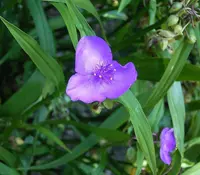
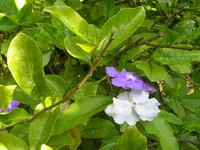
Bluejacket, or Tradescantia ohiensis, is a clump-forming perennial wildflower in the dayflower family. It produces upright, grasslike foliage and loose clusters of blue to violet, three-petaled blooms. Each flower lasts only a day, but many buds open over a long period. In nature it grows in prairies, open woodlands, and roadsides across central and eastern North America. This background makes it fairly adaptable in gardens and restoration plantings. It prefers full sun to light shade, with moderately moist, well-drained soil. Those learning how to care for bluejacket usually find it undemanding if given enough light and not allowed to dry out for long periods.

Care Difficulty
Easy Care

Light Preference
Full Sun

Water Requirements
Moderate Water

Temperature Preference
Cold Hardy

Hardiness Zone
4–9

Soil Texture
Sandy, Loamy, Clay

Soil pH
Acidic (5.5–6.5), Slightly acidic (6.5–7.0)

Soil Drainage
Moist but well-drained

Fertilization
Minimal (feed rarely)
Scan your plant to receive care tips personalized for your specific plant
Available on iOS and Android
Tradescantia ohiensis grows best in full sun to light shade, with sun exposure shaping its height and flowering.
Tradescantia ohiensis prefers evenly moist but not saturated soil during active growth.
This hardy perennial tolerates a wide temperature range but performs best in moderate warmth.
This species handles a wide humidity range but benefits from moderately moist air.
Tradescantia ohiensis prefers loose, well-drained, moderately fertile soil.
This species is suitable for container growing outdoors on patios, balconies, or near garden beds.
This native perennial needs modest feeding, as it is adapted to lean soils and overfertilizing can reduce flowering in bluejacket.
Pruning helps maintain compact growth and encourages heavier blooming in Tradescantia ohiensis.
This species is most often grown in the ground, with transplanting every few years more common than frequent repotting.
New plants are most often produced by division, but seed and soft division from offsets also work well.
This cold-hardy perennial usually needs minimal winter care in typical USDA zones where it is grown.

Plant Health Check
Not sure what's wrong with your plant? Check your plant's health inside the app.
Flower buds often appear pink to violet but open into clear blue to blue-violet flowers, a shift caused by changing pigment chemistry and light conditions as the bud matures.
The pollen has been used in genetic and environmental research because its cells can develop easily visible triangular micronuclei after radiation or chemical exposure, making this species a natural bioindicator of mutagens.
Each individual flower typically opens in the morning and withers by early afternoon, but the plant produces many buds over several weeks, so the clump can appear to bloom continuously during its flowering season.

This species was one of the early model organisms in plant cytogenetics, and its large, easily observed chromosomes in hair cells of the flower buds helped researchers understand basic principles of chromosome behavior and mutation in plants.
Sparse flowering usually comes from too little sun, nutrient-poor soil, or overcrowded clumps. Division every 3–4 years, moderate fertilization, and adequate light typically restore good bloom; this is a common focus in Tradescantia ohiensis care.
Keep your plants happy and healthy with plant identification, disease detection, and easy care guidance.