Timely Deadheading
Remove spent blooms down to a strong leaf node every few days in peak season to direct energy into new flower buds instead of seed production.

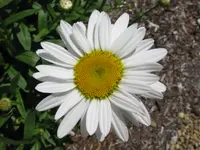
Shasta daisy, Leucanthemum × superbum, is a herbaceous perennial known for its large white petals around a yellow center. It forms neat clumps and produces many upright flowering stems. Originally bred from European daisy species, it is now widely grown in gardens across temperate regions. Plants are typically used in borders, cottage gardens, and cutting gardens. This species is valued for its long blooming period, relatively low maintenance, and good cold tolerance. It prefers full sun, moderately moist but well-drained soil, and benefits from regular deadheading. These traits make it straightforward for many gardeners who want to learn how to care for Shasta Daisy.

Care Difficulty
Easy Care

Light Preference
Full Sun

Water Requirements
Moderate Water

Temperature Preference
Cold Hardy

Hardiness Zone
4–9

Soil Texture
Sandy, Loamy, Organic-rich

Soil pH
Slightly acidic (6.5–7.0), Neutral (7.0)

Soil Drainage
Well-drained

Fertilization
Light (every 4–6 weeks)
Scan your plant to receive care tips personalized for your specific plant
Available on iOS and Android
Leucanthemum × superbum grows best in bright, direct outdoor light for strong flowering.
Watering should keep the soil for this perennial evenly moist but never saturated.
This hardy perennial handles a wide temperature range when grown outdoors in the ground.
Humidity is rarely a concern for Leucanthemum × superbum grown outdoors.
Leucanthemum × superbum prefers moderately fertile, well-drained, slightly moist soil for reliable flowering and root health.
This species grows reliably in containers when given enough root space and firm support.
Leucanthemum × superbum benefits from modest, targeted feeding to support abundant flowering without producing lush, floppy foliage.
Thoughtful pruning keeps Leucanthemum × superbum compact, tidy, and flowering well.
This perennial is usually grown in garden beds, with transplanting or division more common than frequent repotting.
Leucanthemum × superbum is commonly propagated by division, with cuttings or seeds used in some cases.
This perennial is generally cold hardy in much of the US and needs only light winter care in the ground.

Plant Health Check
Not sure what's wrong with your plant? Check your plant's health inside the app.
This plant is a complex hybrid developed by crossing several European oxeye daisy relatives to create larger, whiter, longer-lasting flowers than those of its wild ancestors.
Under good conditions, it can flower repeatedly from early summer into early fall, because the stems readily branch and produce new buds after deadheading, extending the display well beyond that of most wild daisies.
Its flat, open flower heads provide accessible nectar and pollen for many insects, especially bees and hoverflies, making it a useful ornamental in pollinator-focused plantings.
The cultivated forms of this plant were standardized and popularized in the late 19th and early 20th centuries by American plant breeder Luther Burbank, who selected for unusually large, bright white flower heads that helped turn the Shasta daisy into a classic cottage-garden perennial.
Poor flowering often comes from too much shade, excess nitrogen fertilizer, or crowded, old clumps. Ensure full sun, avoid high-nitrogen lawn fertilizers nearby, and divide congested plants every 2–3 years to restore strong blooming.
Keep your plants happy and healthy with plant identification, disease detection, and easy care guidance.