Rock crevice planting
Tuck plants into narrow rock crevices or between stable stones so roots stay cool and anchored, which closely mimics their natural alpine habitat and improves long-term survival.

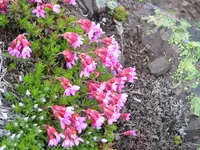
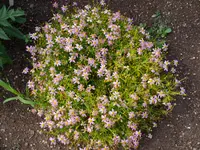
Cliff douglasia (Androsace laevigata) is a small alpine perennial in the primrose family, forming low, tight cushions or mats close to the ground. Its tiny rosettes of leaves and delicate white to pale pink flowers give it a fine, compact look.
This species is native to rocky slopes and cliffs in western North America, where it anchors in thin, well-drained crevices. It can be challenging outside specialized rock gardens because it dislikes heat, waterlogged soil, and high humidity.
Gardeners who want to care for Cliff Douglasia should aim to mimic its cool, bright, and gritty mountain habitat as closely as possible.

Care Difficulty
Hard Care

Light Preference
Full Sun

Water Requirements
Moderate Water

Temperature Preference
Cold Hardy

Hardiness Zone
4–8

Soil Texture
Sandy, Loamy, Rocky

Soil pH
Acidic (5.5–6.5), Slightly acidic (6.5–7.0)

Soil Drainage
Well-drained

Fertilization
Minimal (feed rarely)
Scan your plant to receive care tips personalized for your specific plant
Available on iOS and Android
Androsace laevigata prefers bright, cool conditions that mimic open alpine slopes.
This alpine species needs moisture at the roots but is sensitive to waterlogging.
This plant prefers cool conditions and tolerates significant cold when drainage is excellent.
This alpine species handles low humidity well, so indoor air is usually adequate for Cliff Douglasia.
Androsace laevigata requires sharply drained, mineral-rich soil that mimics alpine scree or rocky slopes.
This species is well suited to container growing, especially in alpine troughs or pans.
Androsace laevigata is a low-feeding alpine that benefits from light nutrition in lean soils.
Androsace laevigata needs only minimal pruning to keep the mat compact and healthy.
This alpine species is more often transplanted in rock gardens than grown in large containers.
Androsace laevigata is usually propagated from seed or by carefully dividing small clumps.
This alpine is fairly cold hardy but benefits from protection against excessive winter wet.

Plant Health Check
Not sure what's wrong with your plant? Check your plant's health inside the app.
This species is naturally restricted to very thin, stony soils in open, rocky habitats, often in montane or subalpine zones, where its compact growth helps it tolerate strong wind and temperature fluctuations.
It forms dense, low rosettes that create small cushions, a growth form that reduces water loss and protects the central buds from mechanical damage by ice or moving debris.
In its native range it typically flowers early in the growing season, taking advantage of cool temperatures and ample meltwater before taller vegetation shades its habitat.
This alpine species performs best outdoors in cool, rocky, well-drained conditions and full light. Indoors it is short-lived and difficult to maintain. For long-term success, treat it as a specialized outdoor rock garden plant, not a houseplant.
Keep your plants happy and healthy with plant identification, disease detection, and easy care guidance.