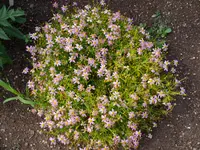
Controlled groundcover spread
Edge beds with a shallow spade cut or plastic edging once or twice a season to keep runners from overtaking neighboring plants while still allowing a dense, weed-suppressing mat to form.

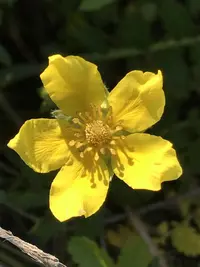
Common silverweed (Argentina anserina) is a low-growing perennial herb in the rose family, often found forming mats along paths, fields, and damp open ground. It is native to temperate regions of Europe, Asia, and North America, where it often appears in coastal areas, meadows, and roadside verges.
Plants have silky, silver-backed leaves arranged along creeping runners that root at the nodes, creating dense ground cover over time. In the growing season it produces small, bright yellow, five-petaled flowers that rise slightly above the foliage.
Argentina anserina is generally easy to grow, especially in cool climates with moist, well-drained soil and full sun to light shade. For gardeners, understanding how to care for common silverweed mainly involves managing its spreading habit and moisture needs.

Care Difficulty
Easy Care

Light Preference
Full Sun

Water Requirements
Regular Water

Temperature Preference
Cold Hardy

Hardiness Zone
2–9

Soil Texture
Sandy, Loamy, Silty

Soil pH
Slightly acidic (6.5–7.0), Neutral (7.0)

Soil Drainage
Moist but well-drained

Fertilization
Minimal (feed rarely)
Scan your plant to receive care tips personalized for your specific plant
Available on iOS and Android
This low-growing perennial prefers cool, bright conditions without intense midday heat.
This species favors consistently moist but not stagnant soil, reflecting its natural streamside habitats.
This hardy species tolerates a wide temperature range but grows best in cool to mild conditions.
This species prefers moderate ambient humidity but adapts well across a broad range.
Argentina anserina prefers moist, well-aerated soil that does not stay waterlogged.
This species can grow successfully in containers when moisture and spread are managed carefully.
Argentina anserina is a tough, spreading perennial that benefits from light feeding but does not need heavy fertilization.
Pruning Argentina anserina helps manage spread, keep foliage tidy, and maintain good flowering.
This species is more often transplanted in the garden than repotted, as it spreads by surface runners and roots shallowly.
Argentina anserina is commonly propagated to expand groundcover or to share plants.
Common silverweed is cold hardy in much of the US and usually needs minimal winter care outdoors.

Plant Health Check
Not sure what's wrong with your plant? Check your plant's health inside the app.
The leaves have a dense covering of silky, silvery hairs on their undersides, which helps reduce water loss and reflects excess sunlight in open, exposed habitats.
This species creeps along the ground by long stolons (above-ground runners) that root at the nodes, allowing it to form extensive mats along shorelines, paths, and disturbed soils.
Common silverweed naturally occurs on brackish coasts, salt marsh edges, and road verges, showing notable tolerance to salinity compared with many other members of the rose family.

In traditional northern European agriculture, the starchy, fleshy roots of Argentina anserina were sometimes collected and eaten as a minor wild food, especially in coastal and subarctic regions where few other root crops thrived.
Young leaves and roots are edible and have a long history of use as a wild food. Roots can be roasted or boiled; leaves are sometimes eaten cooked. Only harvest from clean, uncontaminated sites away from roads or pollution.
Keep your plants happy and healthy with plant identification, disease detection, and easy care guidance.