Manage spreading habit
Install shallow root barriers or edging 15–20 cm deep in open beds to prevent this rhizomatous plant from spreading into areas where it is not wanted while still allowing a dense, attractive patch to form.

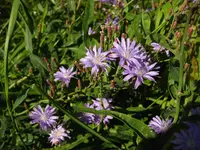
Blue lettuce, Lactuca tatarica, is a hardy perennial herb in the daisy family. It forms low clumps or spreading patches with blue-green, often toothed leaves. Tall, branched stems carry pale blue to lilac daisy-like flowers, giving the plant a soft, airy look. It naturally occurs in Eurasia, often on sandy or rocky soils and coastal habitats, and has become established in some parts of North America. This species tolerates poor, dry soils and wind, which can make it easier to manage in low-maintenance landscapes. It generally prefers full sun, well-drained soil, and moderate moisture, and understanding these basics helps when learning how to care for blue lettuce.

Care Difficulty
Easy Care

Light Preference
Full Sun

Water Requirements
Moderate Water

Temperature Preference
Cold Hardy

Hardiness Zone
3–8

Soil Texture
Sandy, Loamy, Rocky

Soil pH
Slightly acidic (6.5–7.0), Neutral (7.0)

Soil Drainage
Well-drained

Fertilization
Minimal (feed rarely)
Scan your plant to receive care tips personalized for your specific plant
Available on iOS and Android
This species prefers bright, open conditions similar to its native steppe and coastal habitats.
Lactuca tatarica prefers moderately moist, fast-draining soil and does not tolerate prolonged saturation.
This species is adapted to cool and temperate climates with noticeable seasonal change.
This species handles a wide humidity range and rarely needs special humidity management.
This species prefers mineral, well-drained soil that does not stay wet for long.
This species can be grown in containers if the pot is prepared to stay free-draining and relatively dry.
This drought-tolerant wild lettuce needs only modest feeding in most soils.
Lactuca tatarica benefits from light, targeted pruning to stay tidy and productive.
This species is more often transplanted outdoors than grown long term in containers.
Lactuca tatarica is commonly propagated by seed and by division of established clumps.
This cold-hardy perennial usually needs minimal winter care in most temperate climates.

Plant Health Check
Not sure what's wrong with your plant? Check your plant's health inside the app.
This species is native to dry steppe, sandy, and shingle habitats from Eastern Europe through Central Asia, often forming scattered colonies on disturbed or mobile substrates where many other broadleaf herbs struggle to establish.
Its characteristic bluish leaves come from a waxy coating called epicuticular wax, which reduces water loss and reflects excess sunlight in open, wind-exposed sites.
The plant spreads efficiently through creeping underground rhizomes, allowing single individuals to form loose patches that can quickly recolonize disturbed ground such as riverbanks or coastal dunes.

Genetic and morphological studies place this species within the wild lettuce complex related to cultivated lettuce (Lactuca sativa), making it a useful wild relative for breeders interested in drought tolerance and stress-resistance traits.
Lack of flowering usually comes from too much shade, nutrient-poor or very dry soil, or plants that are still immature. Ensure enough sun exposure, moderate moisture, and avoid frequent disturbance of roots during the growing season.
Keep your plants happy and healthy with plant identification, disease detection, and easy care guidance.