Snake's-head Iris Care (Iris tuberosa)

Also known as: Widow Iris
Snake's-head Iris

About Snake's-head Iris

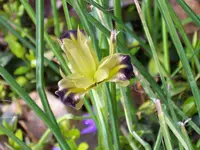
Snake's-head Iris, Iris tuberosa, is a small bulbous perennial from the Mediterranean region, where it grows in dry, open grasslands and rocky slopes. It produces narrow, grass-like leaves and distinctive dark purple to almost black flowers with greenish markings, usually appearing in late winter or early spring. The plant has a compact, upright habit and tends to form small clumps over time rather than spreading aggressively. It prefers sunny, well-drained sites and tolerates relatively poor, stony soils, which makes it sensitive to heavy or waterlogged ground. These traits mean it is not difficult but does require careful site selection and some attention to how to care for Snake's-head Iris.

Main Plant Requirements

Care Difficulty

Moderate Care

Light Preference

Full Sun

Water Requirements

Moderate Water

Temperature Preference

Cool Climate

Hardiness Zone

6–9

Soil Texture

Sandy, Loamy, Rocky

Soil pH

Slightly acidic (6.5–7.0), Neutral (7.0)

Soil Drainage

Well-drained

Fertilization

Minimal (feed rarely)

Get Personalized Care Plan

Scan your plant to receive care tips personalized for your specific plant

Available on iOS and Android

How to Care for the Snake's-head Iris

This Mediterranean bulb prefers bright, open conditions to flower reliably outdoors.

  • Provide 6–8 hours of direct sun daily, ideally with morning to early afternoon sun and only light shade later in the day.
  • Tolerates light partial shade (3–4 hours sun), but Snake's-head Iris may produce fewer, weaker flowers and taller, floppier foliage in low light.
  • Avoid deep afternoon shade and dense overstory; in winter and early spring ensure the planting site is not shaded by evergreen shrubs or structures.

Iris tuberosa grows best in soil that dries slightly between waterings, especially during its summer rest period.

  • During active growth in fall to spring, water only when the top 3–5 cm of soil feel dry, allowing excess to drain freely to protect the bulb from rot.
  • In summer dormancy, keep soil almost dry in the top layer, giving only light watering during prolonged drought to prevent complete desiccation of the bulb.
  • Watch for yellowing, mushy leaf bases as a sign of overwatering and crisp, folding leaves as an indication the plant has been left too dry for too long.

This species prefers mild, Mediterranean-type conditions with cool, moist winters and warm, dry summers.

  • Ideal growth occurs around 50–65°F (10–18°C) in fall to spring; flowers tolerate brief dips slightly below this range if soil is well drained.
  • Established clumps usually survive down to about 10–15°F (-12 to -9°C) outdoors, but repeated freeze–thaw in wet soil greatly increases rot risk.
  • Handles dry summer heat up to about 85–90°F (29–32°C) if bulbs are dormant and soil is not watered heavily during the hottest period.

Humidity is rarely a limiting factor for Iris tuberosa, which prefers relatively dry air similar to outdoor garden conditions.

Iris tuberosa prefers light, sharply drained soil that does not remain wet around the bulbs.

  • Use a sandy or gritty loam with 30–50% mineral material such as coarse sand or fine gravel to prevent waterlogging.
  • Aim for slightly alkaline to neutral pH around 6.8–7.5, avoiding very acidic mixes that can weaken bulbs.
  • Incorporate a modest amount of fine compost to add structure, but avoid heavy peat-based mixes that hold persistent moisture.
  • On heavy clay sites, plant in raised beds or mounds amended with grit to improve aeration and runoff.

This species grows reliably in containers when drainage and bulb position are managed carefully.

  • Choose a pot at least 20–25 cm deep so bulbs can sit 8–10 cm below the rim with space for root extension.
  • Use a heavy terracotta or stone container to reduce tipping in windy sites and to allow faster evaporation from the mix.
  • Elevate the pot on feet or spacers so drainage holes stay clear and excess water leaves quickly after rain or irrigation.

Iris tuberosa needs only light feeding, as excessive nutrients reduce flowering and weaken growth.

  • Apply a balanced, slow-release granular fertilizer (around 8-8-8 to 10-10-10) at 1/2 label rate in early spring as new shoots emerge.
  • In richer garden soil, use a thin topdressing of compost instead of synthetic fertilizer to avoid overly lush, floppy leaves.
  • Do not feed during summer dormancy or winter; active growth, not resting periods, is the time for nutrients.
  • For container-grown Snake's-head Iris, use a diluted balanced liquid feed at 1/4–1/2 strength every 4–6 weeks in spring only.

Pruning needs for Iris tuberosa are minimal and focus on hygiene rather than shaping.

  • Deadhead spent flowers in bloom season by cutting flower stems at the base to prevent unwanted self-seeding and tidy the clump.
  • Allow foliage to yellow and dry naturally, then remove it at the base in late summer to support bulb energy storage.
  • Cut away any diseased or damaged leaves as soon as seen, using clean, sharp scissors or hand pruners to limit infection spread.
  • Avoid cutting green leaves hard, since this reduces photosynthesis and can weaken next season’s flowering.

Iris tuberosa is usually grown in beds and moved only when overcrowded or declining in vigor.

  • Look for tight clumps, reduced flowering, or corms pushing to the surface as signs it needs lifting and transplanting.
  • Plan to divide and transplant every 3–5 years, in late summer to early fall, after foliage has fully died back.
  • Lift corms gently with a fork, separate healthy offsets, and replant 7–10 cm deep in well-drained soil at similar spacing.
  • Reduce root stress by watering lightly after transplanting, keeping soil just moist, and avoiding high-nitrogen fertilizer until growth resumes.

Iris tuberosa is commonly propagated by division of corms rather than by seed for reliable flowering.

  • Divide mature clumps in late summer or early fall, once foliage has died down and the soil is workable.
  • Lift the clump carefully, separate firm, healthy corms and offsets, discarding any soft or diseased material.
  • Replant corms at the same depth they were growing, in well-drained soil and a sunny site for best flowering.
  • Seed propagation is possible but slow; sow fresh seed in trays outdoors, allow natural winter chilling, and expect variable seedlings.

Iris tuberosa is fairly cold hardy in much of the US and usually needs only simple winter care.

  • In-ground plants tolerate light to moderate frost but benefit from very free-draining soil to prevent corm rot.
  • In colder regions (below about 10–15°F), add a light mulch layer after the soil cools, then remove it in early spring.
  • Move containers to a cold but frost-free spot such as an unheated garage, and keep the potting mix slightly dry, not wet.

Care Tips

Mark Dormant Clumps

Use small, durable labels or discreet gravel markers where bulbs are planted so you do not accidentally dig them up or overplant the area while they are dormant in summer.

Encourage Naturalizing

After flowering, leave the seed pods to mature and drop if you want the plants to self-sow gently, thinning out crowded seedlings the following autumn to maintain good air flow and flowering performance.

Strategic Companion Planting

Plant low, late-emerging perennials or groundcovers around the bulbs so their foliage fills gaps after the iris leaves die back, without shading the bulbs in late winter and early spring.

Controlled Container Growing

In pots, grow Iris tuberosa in a deep, free-draining container and tip it on its side or move it under shelter during prolonged summer rain to prevent rot while the bulbs are resting.

Rotate Planting Sites

Every 4–5 years, lift and divide the bulbs after the foliage has yellowed and replant them in a fresh, well-drained spot to reduce soil-borne disease build-up and support long-term success when growing Snake's-head Iris.

Common Pests and Diseases

Iris borer

This pest is a caterpillar that tunnels into leaves and rhizomes or corms, causing yellow, streaked foliage and collapsing fans. Symptoms include foul-smelling, mushy tissue where larvae feed inside the plant base.

Solution

Cut and destroy any infested or yellow-streaked foliage in late summer and fall to remove eggs and larvae, and clean away old plant debris around the clump. In areas with a known history, inspect shoots in spring, crush visible larvae inside leaves by hand, and consider applying a targeted Bacillus thuringiensis (Bt) caterpillar treatment when new growth reaches 10–15 cm, following label directions.

Ink spot

This disease causes small, dark brown to black spots on leaves that may merge into larger blotches and lead to premature dieback. Symptoms include weak, patchy foliage that looks scorched from the tips downward.

Solution

Remove and discard affected leaves as soon as spotting is noticed, and keep the planting area free of spent foliage to reduce fungal spores. Improve air circulation, avoid overhead watering, and if the problem recurs each year, apply a labeled ornamental fungicide in early spring as new leaves emerge.

Bacterial soft rot

This disease leads to soft, foul-smelling decay at the base of the plant, often starting at wounds or insect damage. Symptoms include yellowing or collapsing leaves and a watery, slimy texture in affected corm tissue.

Solution

Dig up affected plants, cut out all soft, discolored tissue with a clean knife, and discard severely rotted corms. Replant only firm, healthy pieces in well-drained soil, avoid overwatering, and disinfect tools between plants to prevent spreading the bacteria.

Bulb mites

These insects are tiny, pale mites that feed inside corms, leading to poor emergence, stunted growth, and rotting storage tissue. Symptoms include weak, distorted shoots and crumbly or pitted corm bases.

Solution

Inspect corms before planting, discarding any that feel soft, show dry rot, or contain fine mite dust. For valuable stock, consider hot-water treatment at 104–113°F for 2–3 hours as recommended in Iris tuberosa care instructions, dry thoroughly, store in a cool, dry place, and rotate planting sites to reduce reinfestation.

Interesting Facts

Mediterranean winter grower

This species is native to the eastern Mediterranean and grows mainly during the mild, moist winter, then dies back and goes dormant in the hot, dry summer.

Corm, not a bulb

Despite often being sold as a bulb, it forms a true corm, which is a swollen stem base that stores starches and allows survival through seasonal drought.

Solitary, early flowers

Each flowering stem typically carries a single, star-shaped bloom with narrow, greenish outer segments and dark purple inner segments, appearing very early in spring before many other irises.

Botan icon

Did you know?

Iris tuberosa was long placed in its own small genus, Hermodactylus, because of its unusual flower structure and narrow, almost grass-like leaves, and older botanical literature still uses this former name.

FAQs about Snake's-head Iris

Lack of flowers usually comes from bulbs planted too deep, insufficient cold period, overcrowding, or depleted soil nutrients. Ensure the bulbs experience a cool winter, are not shaded by taller plants, and divide congested clumps every few years.

Grow Healthy Plants with Botan Care

Keep your plants happy and healthy with plant identification, disease detection, and easy care guidance.

Botan plant care app — identify plants on mobile

Explore More Plants