giant snowdrop Care (Galanthus elwesii)

Also known as: greater snowdrop
giant snowdrop

About giant snowdrop

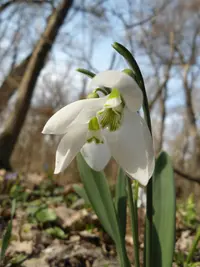
Giant snowdrop, Galanthus elwesii, is a small bulbous perennial grown mainly for its early spring white flowers. It often blooms when little else is flowering, sometimes through melting snow. The nodding, bell-shaped flowers have inner petals marked with green and sit above narrow, gray-green leaves. Native to parts of Turkey, the Balkans, and surrounding regions, it naturalizes well in cool temperate climates with cold winters. This species is generally reliable and long lived when planted in humus-rich, well-drained soil that stays evenly moist in spring. Once established, it needs little intervention, so learning how to care for giant snowdrop mainly involves choosing a suitable site and avoiding disturbance of the bulbs.

Main Plant Requirements

Care Difficulty

Easy Care

Light Preference

Partial Shade

Water Requirements

Moderate Water

Temperature Preference

Cold Hardy

Hardiness Zone

3–8

Soil Texture

Loamy, Sandy, Organic-rich

Soil pH

Acidic (5.5–6.5), Slightly acidic (6.5–7.0)

Soil Drainage

Moist but well-drained

Fertilization

Minimal (feed rarely)

Get Personalized Care Plan

Scan your plant to receive care tips personalized for your specific plant

Available on iOS and Android

How to Care for the giant snowdrop

This bulb prefers cool, bright conditions with gentle sun during its winter and early spring growth.

  • Provide 3–5 hours of soft morning sun with light or open shade the rest of the day; dappled light under deciduous trees suits giant snowdrop well.
  • Allow partial shade in warmer zones, especially protection from strong midday and afternoon sun that can scorch foliage and shorten flowering.
  • In late winter and early spring, ensure unobstructed light before trees leaf out; later canopy shade helps keep soil cooler and prolongs dormancy.

This species needs steadily moist but not saturated soil during active growth, then drier conditions in summer dormancy.

  • Water when the top 2–3 cm of soil feel barely moist, aiming for even moisture from autumn sprouting through post-flowering leaf growth.
  • Use sharply draining soil or amended garden beds so water does not pool around the bulbs, which increases risk of rot and yellowing, floppy leaves.
  • Reduce or stop watering once leaves yellow and die back in late spring, keeping the soil only lightly moist to slightly dry through summer dormancy.

This hardy bulb is adapted to cool winters and mild springs, tolerating significant cold when planted at proper depth.

  • Optimal growth and flowering occur around 35–55°F (2–13°C) during late winter and early spring, with cool, moist conditions supporting sturdy stems.
  • Established bulbs tolerate freezes down to about 0°F (-18°C) or slightly lower under mulch or snow cover, but new plantings benefit from extra mulch protection.
  • In late spring, rising temperatures above 70°F (21°C) naturally trigger dormancy; prolonged heat over 85°F (29°C) is tolerated if soil stays shaded and not waterlogged.

This bulb tolerates a wide humidity range and usually does not need special adjustment outdoors in temperate regions.

  • Target 40–60% relative humidity, similar to most outdoor spring conditions in temperate climates.
  • Leaves may develop brown tips and flower stems may flop if exposed to prolonged, very dry heated indoor air.
  • If grown in pots under cover, group containers together on a gravel tray with water beneath to slightly raise humidity for giant snowdrop without wetting bulbs.

This species prefers cool, moist but sharply drained soil that never stays waterlogged.

  • Use a loose, crumbly loam enriched with organic matter such as leaf mold or compost to mimic woodland soil structure.
  • Ensure strong drainage by incorporating coarse sand or fine grit, especially in heavier clay-based garden beds.
  • Aim for slightly acidic to neutral pH around 6.0–7.0, which supports nutrient uptake for Galanthus elwesii roots.
  • Improve aeration and prevent compaction by mulching with leaf mold or fine bark rather than cultivating deeply over the bulbs.

This species can be grown successfully in containers when drainage and root space are managed carefully.

  • Choose a deep, narrow pot so bulbs can sit at their proper planting depth while roots explore cooler lower layers.
  • Use a heavy terracotta or clay container to reduce overheating and allow gradual evaporation through the pot walls.
  • Place the container on pot feet or bricks so drainage holes stay clear and excess water escapes quickly after rain.

This bulb performs well in average garden soil, so giant snowdrop fertilizing needs are modest.

  • Apply a light top-dressing of compost or well-rotted manure in early autumn to support root and shoot development.
  • In poor soils, use a balanced, slow-release fertilizer (around 5-5-5 or 10-10-10) once as leaves emerge in late winter or early spring.
  • Keep fertilizer at half the label strength and avoid direct contact with bulbs to prevent burn.
  • Do not feed during summer dormancy; excess nutrients during this period can weaken bulbs and reduce flowering.

Galanthus elwesii needs minimal pruning, focused on post-flowering clean-up rather than shaping.

  • Use clean, sharp scissors or hand pruners to remove spent flower stems at the base once they fade.
  • Leave green foliage intact until it yellows naturally; early removal reduces bulb energy storage and next year’s flowering.
  • Cut away damaged, diseased, or badly tattered leaves only, to limit pathogen spread while preserving photosynthesis.
  • Avoid cutting back healthy clumps for tidiness; dense leaves help feed and multiply the bulbs over time.

These bulbs are usually grown in the ground, with moving or dividing only when flowering declines or clumps become crowded.

  • Transplant or divide every 4–6 years, ideally ‘in the green’ just after flowering while leaves are still present.
  • Lift and move bulbs in late winter to early spring, keeping root systems and moist soil together to reduce stress.
  • Replant at the same depth in well-drained soil, spacing bulbs 7–10 cm apart for long-term clump health.
  • For containers, shift to a slightly larger pot only if roots circle the drainage holes or growth becomes noticeably weaker.

New Galanthus elwesii plants are most reliably produced by division, with seed used mainly by specialist growers.

  • Divide dense clumps in late winter to early spring, lifting bulbs carefully while foliage remains green.
  • Gently tease apart natural bulb offsets, keeping roots as intact as possible, and replant them immediately at original depth.
  • Water newly divided bulbs well and maintain evenly moist, cool soil to support rapid re-establishment.
  • Seed propagation needs fresh seed, cool moist shade, and patience, as flowering may take several years.

This species is cold hardy in much of the US and generally requires little special winter care in the ground.

  • Bulbs tolerate freezing soil, but benefit from 2–5 cm of loose organic mulch to buffer temperature swings.
  • In very cold or exposed sites, avoid heavy, waterlogged soils that can cause bulb rot over winter.
  • Move container-grown plants into a cold but sheltered spot, such as an unheated garage, to prevent pots from freezing solid.

Care Tips

Post-bloom marking

As soon as the flowers fade, discreetly mark clumps with durable labels so you can accurately find and divide or move bulbs while they are dormant in late spring or summer.

Green-tip planting

If possible, buy and plant bulbs ‘in the green’ (while foliage is still present) to achieve higher establishment rates and faster clump formation than with dry stored bulbs.

Gentle clump division

Divide congested clumps immediately after flowering while leaves are still green, replanting small groups at the same depth and watering once to settle soil and reduce transplant shock.

Leaf-litter mulching

Apply a thin, loose layer of shredded leaf litter over the bulbs in autumn to mimic woodland conditions, conserve moisture, and protect from freeze–thaw heaving without burying emerging shoots.

Naturalizing strategy

To support natural drift formation when growing giant snowdrop, replant offsets in small irregular groups 10–15 cm away from the parent clump instead of in straight rows.

Common Pests and Diseases

Narcissus bulb fly

This pest targets the bulbs, where larvae tunnel inside and hollow them out, leading to weak, yellowing, or collapsing foliage. Symptoms include poor emergence in spring and bulbs that feel soft or empty when pressed.

Solution

Lift and inspect suspect bulbs, discarding any that are soft, hollow, or show clear tunneling. For Galanthus elwesii care in gardens where this fly is present, replant only firm bulbs, plant slightly deeper, cover newly planted bulbs with fine mesh over the soil surface in summer to reduce egg-laying, and rotate planting sites to reduce repeated attacks.

Slugs and snails

These pests chew young shoots and leaves, often leaving ragged edges and slime trails, and can destroy emerging flowers in damp springs. Damage is most severe on new growth shortly after emergence.

Solution

Hand-pick slugs and snails in the evening, use physical barriers such as copper tape or sharp grit around clumps, and avoid leaving dense debris that provides shelter. In high-pressure areas, place beer traps or targeted slug pellets labeled for garden use, keeping them away from pets and wildlife.

Gray mold (Botrytis)

This disease develops in cool, damp conditions and causes spotting, soft rotting of leaves and flowers, and a gray, fuzzy mold on affected tissues. Symptoms include collapse of foliage from the tips downward and premature flower loss.

Solution

Remove and dispose of all affected plant parts and any heavily infested leaf litter around the bulbs. Improve air movement, avoid overhead watering, and if the problem recurs in wet springs, apply a labeled ornamental fungicide preventively just as leaves emerge, following all product directions carefully.

Snowdrop smut

This disease causes dark, sooty streaks or spots on leaves and sometimes flower stalks, leading to distorted, weakened growth. Symptoms include stunted clumps that decline over time while neighboring plants may appear healthy.

Solution

Dig up and discard heavily affected clumps, including as much surrounding soil and bulb material as possible, to limit spread. Replant only clean, symptom-free bulbs in fresh ground and rotate planting sites every few years, practicing good hygiene by cleaning tools after handling infected plants.

Basal bulb rot

This disease starts at the basal plate of the bulb, causing browning, soft rot, and eventual collapse of shoots, often with poor or patchy emergence in spring. Symptoms include bulbs that are discolored, watery, or emit a sour smell when cut open.

Solution

Lift and inspect any failing clumps, discarding all soft, discolored, or foul-smelling bulbs and any obviously affected surrounding soil. Replant only firm, healthy bulbs into a site with free-draining soil, avoid overwatering during dormancy, and do not replant snowdrops in the same spot for several years to reduce residual infection.

Interesting Facts

Early-flowering snowmelt specialist

This species often pushes through partially frozen ground and blooms very early in the year, sometimes when snow still covers much of its foliage. Its native range in Turkey and surrounding regions exposes it to cold winters, so its bulbs and emerging shoots are adapted to brief frost and light snow cover.

Distinctive broad foliage

Compared with most other snowdrops, this species has noticeably broader, glaucous (blue-green) leaves, often in a V- or U-shaped cross-section. This leaf morphology is one of the key field characters used by botanists to separate it from Galanthus nivalis and other close relatives.

Variable inner tepal markings

The inner tepals (petal-like flower segments) usually show a bold green mark at the tip, but the pattern is naturally variable in size and shape. This variation has led to the selection of many garden forms and cultivars valued by collectors for their distinctive markings and subtle differences in floral shape.

Botan icon

Did you know?

This species was first described scientifically in 1875 by the botanist John Gilbert Baker, who named it in honor of the plant collector Henry John Elwes, recognizing Elwes’s role in bringing living bulbs from southwestern Asia into cultivation in Europe.

FAQs about giant snowdrop

Lack of flowers usually comes from insufficient cold period, planting bulbs too deep or too shallow, or overcrowded clumps. Nutrient-poor, dry soil after flowering also weakens next year’s buds. Divide congested clumps and maintain steady post-bloom care.

Grow Healthy Plants with Botan Care

Keep your plants happy and healthy with plant identification, disease detection, and easy care guidance.

Botan plant care app — identify plants on mobile

Explore More Plants