calicobush Care (Lantana urticoides)

Also known as: West Indian shrubverbena, Texas lantana
calicobush

About calicobush

Calicobush, Lantana urticoides, is a sun-loving, shrubby perennial native to Texas and surrounding regions of the southern United States and northern Mexico. It is often grown as a landscape ornamental in warm climates.

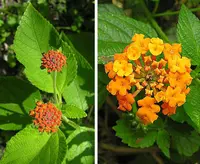
The plant forms a bushy mound with rough, nettle-like leaves and clusters of small, bright flowers in warm shades of yellow, orange, and red. These flower heads attract butterflies and other pollinators over a long blooming season.

This species is relatively tough, tolerating heat, drought, and poor soils once established, which makes it easier to maintain than many flowering shrubs. To care for calicobush successfully, provide plenty of sun, well-drained soil, and avoid consistently wet conditions.

Main Plant Requirements

Care Difficulty

Easy Care

Light Preference

Full Sun

Water Requirements

Low Water

Temperature Preference

Tropical / Frost Sensitive

Hardiness Zone

8–11

Soil Texture

Sandy, Loamy, Rocky

Soil pH

Slightly acidic (6.5–7.0), Slightly alkaline (7.0–7.5)

Soil Drainage

Well-drained

Fertilization

Minimal (feed rarely)

Get Personalized Care Plan

Scan your plant to receive care tips personalized for your specific plant

Available on iOS and Android

How to Care for the calicobush

Lantana urticoides grows best in strong, direct sun for dense foliage and heavy flowering.

  • Provide 6–8 hours of full sun daily; morning and midday sun are ideal, while intense late-afternoon sun is usually tolerated in the ground if soil does not dry to dust.
  • Plant in an open, unshaded spot; light, dappled shade for up to 2–3 hours is acceptable but may reduce blooms on calicobush.
  • Watch for leggy, sparse growth and few flowers in too much shade, and for crisped leaves only if extreme heat combines with severe drought.

This species prefers thorough but infrequent watering once established, with time to dry between soakings.

  • Let the top 5–8 cm of soil dry before watering; in hot, dry weather this may mean deep watering roughly every 5–10 days in the ground.
  • Use sharply draining soil so water runs through quickly; standing water or heavy clay strongly increases risk of root rot in Lantana urticoides.
  • Overwatering shows as yellowing, soft leaves and dieback, while underwatering shows as limp, folding leaves and very dry, pale soil that pulls from the edges.

This heat-tolerant shrub thrives in warm conditions but is damaged by frost and prolonged cold.

  • Aim for active growth in 70–95°F (21–35°C); flowering is strongest with warm days and nights above about 60°F (16°C).
  • Tolerates heat up to 100–105°F (38–41°C) if soil is not bone-dry, but blooms may pause during extreme heat waves.
  • Treat it as frost-tender; foliage is injured near 32°F (0°C) and the top often dies back below 25°F (−4°C), though roots may survive brief light freezes in mild climates.

This species handles a wide humidity range and usually does not need special humidity management outdoors.

  • Target 30–60% humidity; typical outdoor air in much of the US suits calicobush without adjustment.
  • Dry indoor air below 30% can cause slight leaf edge browning and faster leaf drop, especially near heating vents.
  • If grown in a very arid microclimate, group pots together and use a pebble tray to modestly boost local humidity.

Lantana urticoides prefers lean, well‑drained, slightly dry soil rather than rich, moisture‑holding mixes.

  • Use a sandy or sandy‑loam mix; combine roughly 2 parts cactus or succulent mix with 1 part coarse sand or fine gravel for sharper drainage.
  • Aim for slightly acidic to slightly alkaline conditions, around pH 6.0–7.5, which most commercial mixes naturally provide.
  • Improve aeration by adding extra perlite or pumice if water lingers on the surface longer than a few minutes after watering.
  • Avoid heavy clay, peat‑heavy, or compacted soils that stay wet, since persistent saturation encourages root rot and weak, lush growth.

This species adapts well to container growing when drainage and root space are carefully managed.

  • Choose a wide, relatively heavy pot to counterbalance the spreading canopy and reduce tipping in strong winds.
  • Select a container material with moderate moisture loss, such as unglazed terracotta, to prevent water from lingering around the roots.
  • Raise the pot on feet or bricks so drainage holes stay clear and excess water can escape quickly after rain or watering.

Lantana urticoides grows well in lean soils but benefits from light feeding in containers or poor ground conditions.

  • Apply a balanced slow-release fertilizer (around 10-10-10) at the start of spring for calicobush in pots or nutrient-poor beds.
  • Use a light top-dressing of compost once in spring to support flowering without making growth excessively lush.
  • During the main growing season, feed every 6–8 weeks at half the label rate if growth looks weak or leaves pale.
  • Stop fertilizing in late summer; do not feed in winter or dormancy to avoid soft, frost-sensitive growth.

Lantana urticoides responds well to periodic pruning that maintains shape and encourages flowering.

  • In late winter or very early spring, cut back stems by about one-third to refresh growth and keep a compact mound.
  • During the growing season, shear lightly after a flowering flush to promote new blooms and reduce legginess.
  • Remove dead, diseased, or crossing branches with clean bypass pruners, cutting just above a healthy node.
  • Deadhead spent flower clusters if seed production is not desired and to keep the shrub looking tidy.

This species is most often grown in beds, where transplanting is more relevant than frequent repotting.

  • Transplant in spring after frost risk passes, choosing a sunny, well-drained site that will not need moving again soon.
  • In containers, consider shifting to a slightly larger pot every 2–3 years if roots circle the pot or growth slows markedly.
  • Water thoroughly 1 day before moving, then slide the root ball out gently and disturb roots as little as possible.
  • After transplanting, water deeply, shade from harsh sun for 3–5 days, and keep soil evenly moist until new growth resumes.

Lantana urticoides is commonly propagated from semi-woody cuttings and sometimes from seed for larger plantings.

  • Take 7–10 cm semi-hardwood tip cuttings in late spring to summer, removing lower leaves.
  • Insert cuttings into a sterile, free-draining mix, optionally using rooting hormone, and keep at 70–75°F with bright, indirect light.
  • Maintain slightly moist but not soggy conditions and moderate humidity until firm roots form in 3–6 weeks.
  • Sow fresh seed in spring on the surface of a well-drained mix, providing warmth and light to encourage germination.

This plant is moderately frost tolerant in mild climates but may die back or need protection in colder regions.

  • In USDA zones 8–9, top growth often dies back after hard frost while roots survive and resprout in spring.
  • Apply a 5–8 cm mulch layer over the root zone in late fall to buffer soil temperature fluctuations.
  • In colder zones or containers, move plants indoors to a cool, bright spot before hard frost and water sparingly.

Care Tips

Shear For Rebloom

Use clean shears to lightly trim back spent flower clusters and 5–8 cm of stem in midsummer to trigger a fresh flush of blooms and keep the plant compact.

Heat-Hardening Seedlings

When transplanting nursery starts, gradually expose them to full sun and heat over 5–7 days to prevent leaf scorch and help roots establish more deeply in hot sites.

Prevent Woody Gaps

Every 2–3 years, remove 1–3 of the oldest, thickest stems at the base in late winter so younger shoots fill in and the plant does not become bare and woody in the center.

Salt And Wind Tolerance

In coastal or exposed sites, place plants slightly back from the harshest wind corridor and use a 5–8 cm gravel or stone mulch, which tolerates salt and heat better than bark.

Wildlife-Friendly Placement

Site plants at least 1–1.5 m from doors, play areas, and narrow paths so the dense flowers can attract pollinators and butterflies without crowding daily human traffic while growing calicobush.

Common Pests and Diseases

Lantana lace bug

This pest feeds on the underside of leaves, causing pale stippling, bronzing, and eventual leaf drop, and is one of the most characteristic problems on lantana species. Symptoms include reduced flowering and an overall dull, scorched look to the foliage.

Solution

Inspect the undersides of leaves regularly and prune out heavily infested stems. For active infestations, hose down foliage to dislodge nymphs, then treat the undersides of leaves with an insecticidal soap or a light horticultural oil, repeating every 7–10 days until new growth appears clean.

Whitefly

These insects congregate on the undersides of young leaves and fly up in a small cloud when the plant is disturbed, sucking sap and leaving sticky honeydew that can lead to sooty mold. Symptoms include yellowing, curling leaves and reduced vigor in container-grown plants.

Solution

Shake stems to confirm activity, then use a strong stream of water to knock adults and nymphs off the plant. For ongoing control, place yellow sticky traps near plants and apply insecticidal soap or neem oil thoroughly to the undersides of leaves in the early morning, repeating at 5–7 day intervals until populations drop.

Powdery mildew

This disease produces white, powdery patches on leaves and stems, which can cause leaf distortion and premature leaf drop in humid or crowded conditions. Symptoms include slower growth and a dull, grayish cast to the foliage.

Solution

Improve airflow by thinning dense growth and avoiding overhead watering, especially late in the day. Remove and discard affected leaves, then treat remaining foliage with a sulfur-based fungicide or a horticultural oil labeled for powdery mildew, ensuring good coverage of both upper and lower leaf surfaces.

Sooty mold

This disease appears as a black, soot-like coating on leaves and stems that grows on the sugary honeydew excreted by sap-feeding insects such as whiteflies or aphids. Symptoms include reduced photosynthesis and a dirty, darkened appearance of the foliage, even though leaf tissue is not directly infected.

Solution

Address the underlying honeydew-producing insects first using targeted methods such as insecticidal soap or oils. Once insect activity is reduced, gently wipe or hose off affected leaves and improve light and air circulation so cleaned foliage dries quickly and remains clear.

Interesting Facts

Color-shifting flower heads

The flower clusters open yellow, then shift to orange and finally deep reddish as they age, which helps attract different pollinators over several days on the same inflorescence.

Heat and drought specialist

This species is native to hot, dry habitats of Texas and northern Mexico and maintains flowering under high heat and low rainfall by having tough, aromatic foliage that reduces water loss.

Wildlife hub in prairies

Its nectar-rich flowers support butterflies, bees, and other insects for long periods, while the small black berries are eaten by birds that help disperse the seeds across open rangelands.

Botan icon

Did you know?

In parts of its native range, this plant is one of the dominant wild lantanas in disturbed rocky soils and roadsides, where it can quickly colonize open ground and form bright, season-long displays that signal highly diverse pollinator activity to field ecologists.

FAQs about calicobush

This species is highly attractive to butterflies, native bees, and other pollinating insects due to its nectar-rich flowers and extended blooming season. Planting several together can significantly increase pollinator activity in a sunny, low-maintenance garden.

Grow Healthy Plants with Botan Care

Keep your plants happy and healthy with plant identification, disease detection, and easy care guidance.

Botan plant care app — identify plants on mobile

Explore More Plants