Blue Ridge blueberry Care (Vaccinium pallidum)

Also known as: hillside blueberry
Blue Ridge blueberry

About Blue Ridge blueberry

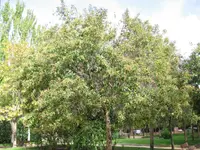
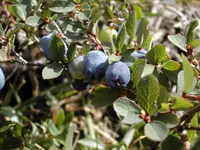
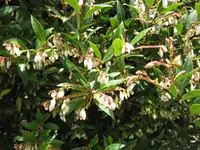
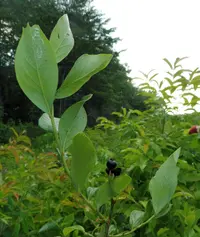
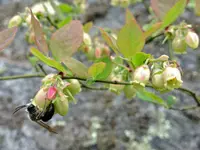
Blue Ridge blueberry, Vaccinium pallidum, is a low-growing deciduous shrub native to eastern North American woodlands and rocky slopes. It forms loose clumps and often carpets forest edges with delicate foliage. Leaves are small, bluish green, and turn attractive red tones in autumn, while the plant produces urn-shaped white to pinkish flowers in spring. These are followed by small, sweet blue berries that attract wildlife and can be eaten fresh or used in simple recipes. It prefers acidic, well-drained soil, moderate moisture, and light ranging from dappled shade to full sun. Overall, it is a relatively low-maintenance shrub once established, which makes it appealing for those learning how to care for Blue Ridge blueberry.

Main Plant Requirements

Care Difficulty

Moderate Care

Light Preference

Partial Shade

Water Requirements

Regular Water

Temperature Preference

Cold Hardy

Hardiness Zone

4–8

Soil Texture

Sandy, Loamy, Organic-rich

Soil pH

Strongly acidic (4.5–5.5), Acidic (5.5–6.5)

Soil Drainage

Moist but well-drained

Fertilization

Minimal (feed rarely)

Get Personalized Care Plan

Scan your plant to receive care tips personalized for your specific plant

Available on iOS and Android

How to Care for the Blue Ridge blueberry

Vaccinium pallidum prefers bright outdoor conditions with protection from harsh midday sun.

  • Provide 4–6 hours of direct morning sun with light shade or dappled light in the afternoon to prevent leaf scorch.
  • Tolerates partial shade, especially under open woodland canopies, but fruiting and fall color decline with less than 3–4 hours of sun.
  • In hot summers, increase filtered shade during heat waves, while in early spring and fall more open sun supports strong growth for Blue Ridge blueberry.

This species prefers consistently moist, well-drained, acidic soil rather than alternating between soggy and bone dry conditions.

  • Water when the top 2–4 cm of soil feels dry, aiming for evenly moist soil that does not stay saturated or form puddles.
  • During hot, dry periods, check soil every 2–3 days; reduce watering in cool or rainy seasons to avoid root rot and fungal issues.
  • Signs of underwatering include dull, curling leaves and shriveled berries; overwatering shows as yellowing leaves, weak growth, and sour-smelling, soggy soil around Vaccinium pallidum.

This lowbush blueberry is cold hardy yet grows best within a moderate temperature range through the growing season.

  • Ideal growing temperatures are 60–75°F (16–24°C), which support steady shoot growth, flowering, and berry development.
  • Plants tolerate winter lows near 0°F (−18°C) once established, entering dormancy and generally handling typical frost without damage.
  • Short periods up to 85–90°F (29–32°C) are tolerated if soil moisture is maintained and roots are mulched; prolonged extreme heat or drying winds can scorch leaves and reduce fruit set.

This species handles a wide humidity range but benefits from slightly moist air in hot, dry periods.

  • Aim for 40–60% humidity, similar to most outdoor conditions in its native woodland range.
  • In very dry air, leaf edges may brown and new growth can stall, especially on container-grown Blue Ridge blueberry.
  • To reduce stress during dry, windy spells, group plants together and mulch soil to limit rapid moisture loss from leaves and roots.

This shrub prefers acidic, well-aerated, freely draining soil that mimics open woodland conditions.

  • Use a mix of roughly 50–70% acidic peat or fine pine bark with the rest coarse sand or perlite for structure and aeration.
  • Target a soil pH of 4.2–5.5; avoid adding lime or alkaline tap water that will gradually raise pH and limit nutrient uptake.
  • Keep the soil loose and crumbly, never compacted, so Vaccinium pallidum roots can spread in the upper soil layer and access oxygen.
  • Avoid heavy clay, standing water, or mixes high in manure, which can cause root rot and excessive salt levels.

This species can be grown in containers when provided with a deep, stable pot and consistently acidic medium.

  • Choose a container at least 30–40 cm deep so the spreading, fibrous root system can develop without circling tightly near the base.
  • Select a heavy, frost-resistant pot material (such as thick ceramic) to reduce tipping risk when branches are loaded with fruit.
  • Raise the container slightly on pot feet or bricks to keep drainage holes clear and prevent water from pooling under the base.

Vaccinium pallidum is a light feeder that benefits from modest, targeted nutrition in poor soils.

  • Use a slow-release, acid-forming fertilizer or compost formulated for blueberries at the start of spring growth.
  • Apply a low-rate balanced NPK, such as 10-10-10, at 1/2 strength to avoid salt stress to fine roots.
  • Feed once in early spring and, if growth is weak, a second light application in late spring only.
  • Stop feeding Blue Ridge blueberry by mid-summer and do not fertilize in fall or winter dormancy.

Pruning Vaccinium pallidum is mainly about maintaining plant health and encouraging productive new shoots.

  • Carry out structural pruning in late winter to very early spring, before bud break.
  • Remove dead, diseased, crossing, or inward-growing stems using clean, sharp bypass pruners.
  • Thin out the oldest, weakest canes at the base to open the shrub and improve light penetration.
  • Light tip-pruning after fruiting can refine shape but avoid heavy summer cuts that stress the shrub.

Transplanting this woodland blueberry is done infrequently and with care to protect its fine, shallow roots.

  • Transplant in early spring or early fall when temperatures are mild and soil is moist but not waterlogged.
  • Look for slow growth, roots circling a container, or a plant drying out quickly as signs it has outgrown its space.
  • Move every 3–5 years at most, shifting to only slightly larger, acidic, well-drained soil enriched with organic matter.
  • Water thoroughly before and after transplanting, keep the root ball intact, and mulch to reduce stress and moisture loss.

Vaccinium pallidum is commonly propagated by cuttings and layering, with seeds used mainly for breeding or restoration.

  • Take semi-hardwood cuttings in mid to late summer, 8–10 cm long, from healthy, non-flowering shoots.
  • Insert cuttings into a moist, acidic, well-drained mix under high humidity and bright, indirect light until rooted.
  • Create simple layering in spring by pegging a low, flexible stem under soil and severing it once well rooted.
  • Sow stratified seeds in acidic substrate, keeping consistently moist and cool, understanding seedlings vary from the parent.

This species is naturally cold hardy across much of its range and usually needs minimal winter care.

  • Tolerates freezing temperatures typical of USDA zones 5–7 without stem dieback when sited correctly.
  • Apply a 5–8 cm layer of leaf mold or bark mulch over the root zone in late fall, keeping mulch off stems.
  • In very exposed or colder sites, windbreaks or snow cover help limit desiccation of buds and fine branches.
  • Container-grown plants benefit from moving to a sheltered, unheated area to prevent rootball freeze-thaw cycling.

Care Tips

Mulch For Wild Roots

Apply a 5–8 cm layer of pine needles or shredded pine bark out to the drip line each spring to mimic its natural leaf-litter habitat, keeping roots cool, conserving moisture, and slowly maintaining soil acidity.

Understory Positioning

Plant on the east or north side of taller shrubs or open trees to create light dappled shade that protects foliage and fruit from midday scorch while still allowing enough light for reliable flowering and berry set.

Clustered Planting Design

Install plants in loose groups of 3–7, spaced 45–90 cm apart, to improve cross-pollination, increase fruit set, and create a more natural, self-mulching thicket over time.

Low-Input Weed Control

Use a combination of mulch and hand-weeding instead of deep hoeing, since this species has shallow fibrous roots that are easily damaged by tools, which can reduce vigor and berry production.

Wildlife-Friendly Netting

If birds take most of the berries, use a light, fine-mesh net supported on simple hoops or stakes so it sits above the plant canopy, preventing tangling in branches while still allowing airflow and light for growing Blue Ridge blueberry.

Common Pests and Diseases

Blueberry maggot

This pest is a small fly whose larvae feed inside ripening berries, causing them to soften, collapse, and become unmarketable. Symptoms include prematurely soft fruit, tiny puncture marks on the skin, and larvae in the berries.

Solution

Monitor developing fruit with yellow sticky traps in early summer and remove any infested or fallen berries to break the life cycle. Where pressure is high, use fine insect netting over shrubs before berries color, and if needed apply a targeted fruit-fly bait or spinosad-based spray following local extension guidance for Vaccinium pallidum care.

Blueberry gall midge

This pest is a tiny fly whose larvae feed inside young leaf and flower buds, causing distorted, blighted shoots and reduced flowering. Symptoms include blackened or browned tips on new growth and buds that fail to open properly.

Solution

Prune out and destroy damaged shoot tips and blighted buds as soon as they are noticed to remove larvae. Encourage good air movement around plants, avoid excessive nitrogen that stimulates very soft growth, and if previous infestations were severe, consider a targeted systemic or spinosad spray at bud swell based on local extension timing recommendations.

Mummy berry

This disease is a fungal infection that affects both shoots and fruit, leading to wilted young shoots and berries that shrivel into hard, pale mummies. Symptoms include tan, wilted new leaves in spring and dried, gray or whitish fruits that fall to the ground and persist.

Solution

Collect and destroy all mummified berries on and under the shrub during and after fruiting to reduce the source of spores. Use a thick mulch layer (7–10 cm) over the soil before bud break to bury remaining mummies, prune to improve airflow, avoid overhead watering, and in high-pressure areas use a registered preventive fungicide at early bloom based on local recommendations.

Phomopsis twig blight

This disease is a canker-forming fungus that kills young twigs, causing dieback from the tips inward. Symptoms include reddish-brown lesions on stems, sudden browning of new shoots, and twig tips that die while older wood remains alive.

Solution

Prune out infected twigs well below visible lesions during dry weather and destroy the prunings to limit spore spread. Maintain moderate, not lush, growth with balanced fertilization, ensure good spacing and airflow, and in plantings with recurring problems apply a labeled fungicide at early shoot growth and after pruning if recommended by local extension services.

Leaf spot complex

This disease group involves several fungi that create small tan, red, or purplish spots on leaves, which can merge and lead to early leaf drop. Symptoms include speckled foliage, yellowing leaves, and in severe cases thinned canopies by late summer.

Solution

Rake and remove fallen leaves in autumn to reduce overwintering spores and avoid wetting foliage with overhead irrigation. Improve air circulation through light pruning, use mulch to reduce splash, and where leaf spots recur yearly, consider a protective fungicide spray at leaf emergence and again after bloom according to local guidelines for growing Blue Ridge blueberry.

Interesting Facts

Shade-tolerant blueberry

Vaccinium pallidum naturally grows in dry, open oak and pine woods, where it tolerates relatively low light compared with many other blueberry species while still fruiting well in patchy woodland shade.

Key wildlife food source

Its small, pale to dark blue berries are an important summer food for many birds and small mammals in eastern North American forests, helping support local food webs in nutrient-poor, acidic soils.

Clonal colony growth

This species often spreads by underground stems called rhizomes, forming low, extensive colonies that can dominate the understory and stabilize thin, sandy or rocky soils over time.
Botan icon

Did you know?

Vaccinium pallidum is one of the characteristic shrubs of the so‑called blueberry barrens of eastern North America, where repeated fire and nutrient-poor, acidic soils favor its dominance and create vast, low shrub landscapes that are ecologically distinct and highly adapted to periodic burning.

FAQs about Blue Ridge blueberry

The berries are edible and are considered safe for most people. They are usually small but flavorful, often used fresh or in jams, baked goods, and wildlife plantings. Avoid eating any plant material that has been treated with pesticides.

Grow Healthy Plants with Botan Care

Keep your plants happy and healthy with plant identification, disease detection, and easy care guidance.

Botan plant care app — identify plants on mobile

Explore More Plants