Cup-and-saucer vine Care (Cobaea scandens)

Also known as: Cathedral Bells
Cup-and-saucer vine

About Cup-and-saucer vine

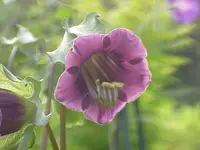
Cup-and-saucer vine (Cobaea scandens) is a fast-growing, tender perennial climber usually grown as an annual in cooler climates. It can reach several meters in a season and needs strong support. The plant produces large bell-shaped flowers with a flared, cup-like base, in shades of purple or white, and lush green foliage that creates a dense screen. Native to Mexico and Central America, it thrives in warm conditions with a long growing season. It prefers sun, evenly moist but well-drained soil, and benefits from sheltered, frost-free sites, which influences how to care for Cup-and-saucer vine.

Main Plant Requirements

Care Difficulty

Moderate Care

Light Preference

Full Sun

Water Requirements

Regular Water

Temperature Preference

Tropical / Frost Sensitive

Hardiness Zone

9–11

Soil Texture

Loamy, Sandy, Organic-rich

Soil pH

Acidic (5.5–6.5), Slightly acidic (6.5–7.0)

Soil Drainage

Moist but well-drained

Fertilization

Moderate (every 2–4 weeks)

Get Personalized Care Plan

Scan your plant to receive care tips personalized for your specific plant

Available on iOS and Android

How to Care for the Cup-and-saucer vine

Cobaea scandens grows best in bright, direct sun with some protection during the hottest hours.

  • Provide 6–8 hours of sun daily, with morning or late-afternoon sun preferred and light shade in harsh midday summer sun.
  • Tolerates light partial shade (around 3–4 hours direct sun), but flowering is reduced and vines may stretch toward brighter areas.
  • In cooler seasons or coastal climates, full sun all day is ideal; in very hot inland areas, use trellises or nearby plants to give dappled afternoon shade.

Cobaea scandens prefers evenly moist but never soggy soil during active growth.

  • Water when the top 3–5 cm of soil feels dry, soaking the root zone deeply, then allow excess water to drain away fully.
  • Use well-drained soil or raised beds to prevent waterlogging; yellowing lower leaves, soft stems, or sour smell indicate overwatering.
  • In hot, windy weather, check moisture daily; in cooler seasons reduce frequency, watching for limp, dull leaves and dry soil as signs of underwatering.

This vigorous climber prefers warm, frost-free conditions for fast growth and flowering.

  • Aim for 65–80°F (18–27°C) for active growth; flowering is strongest in consistently warm but not scorching conditions.
  • Plants are frost-tender and usually damaged below 32°F (0°C); in cooler regions they are grown as annuals or started indoors, then planted out after last frost.
  • Tolerates short heat spikes up to about 90–95°F (32–35°C) if soil moisture is stable and roots are shaded, but prolonged extreme heat can slow growth and reduce blooms.

This vine grows best in moderate humidity and usually tolerates typical home or outdoor conditions.

  • Aim for 40–60% humidity; it copes with slightly drier air but may grow more slowly.
  • Cup-and-saucer vine shows low humidity stress as crispy leaf edges and buds that dry before opening.
  • Increase humidity by grouping plants, placing containers near other vegetation, or using a nearby tray of water and stones without standing the pot in water.

Cobaea scandens prefers deep, fertile, well-structured soil that drains freely yet retains consistent moisture.

  • Use a loose loam rich in organic matter with some coarse material to prevent compaction around the roots.
  • Combine roughly 50% composted organic matter with 30–40% garden loam and 10–20% perlite or coarse sand for better drainage.
  • Keep soil pH slightly acidic to neutral, around 6.0–7.0, avoiding strongly acidic or chalky, very alkaline ground.
  • Avoid heavy, sticky clay or low spots where water pools, as persistent saturation encourages root rot and weak growth.

This species is suitable for container growing when the pot is large, stable, and drains efficiently.

  • Choose a tall, heavy container to counterbalance vigorous climbing growth and reduce tipping in windy sites.
  • Select a slightly porous material such as unglazed clay if overwatering is a risk, as it allows moisture to evaporate faster.
  • Anchor a sturdy trellis or obelisk directly in the pot so the support does not wobble or pull the container off balance as vines elongate.

Cobaea scandens benefits from moderate feeding during its fast growing season for abundant flowering.

  • Use a balanced liquid fertilizer (for example 10-10-10) at 1/2 strength every 2 weeks from late spring to early fall.
  • Alternatively, apply a slow-release balanced fertilizer or well-rotted compost at planting time in outdoor beds.
  • Water before and after feeding to reduce root burn and help nutrients reach the root zone.
  • Stop or greatly reduce feeding in late fall and winter when growth slows or the plant dies back.

Pruning supports controlled growth and better flowering in Cobaea scandens.

  • Carry out main shaping in late winter or very early spring before vigorous new growth starts.
  • Remove dead, damaged, or crossing stems with clean, sharp pruners to limit disease and improve airflow.
  • Shorten long, tangled vines to maintain size, encourage branching, and keep the plant on its support.
  • Trim spent flowering shoots during the season to tidy the vine while avoiding heavy cuts in midsummer.

Cobaea scandens is usually grown as an outdoor climber, so transplant timing and handling matter more than frequent repotting.

  • Transplant seedlings when roots lightly fill starter pots or when growth slows and roots circle the container.
  • Move plants outdoors in late spring after frost risk has passed, spacing them where supports are ready.
  • Disturb the root ball as little as possible; slide it out, set at the same depth, and firm soil gently around it.
  • Water thoroughly after transplanting, then keep soil evenly moist and shaded for a few days to reduce transplant shock.

Cobaea scandens is commonly propagated from seeds and sometimes from softwood cuttings.

  • Sow fresh seeds indoors in late winter to early spring in a warm spot at 70–75°F with bright light.
  • Scarify the tough seed coat lightly or soak seeds for several hours to improve germination.
  • Use a free-draining seed mix, keep it just moist, and provide good air circulation to limit damping-off disease.
  • Take softwood tip cuttings in late spring, use rooting hormone, and root in a humid, warm, bright but indirect light environment.

In most temperate climates Cobaea scandens behaves as a tender perennial or annual and needs frost-aware winter care.

  • The vine is frost sensitive and usually dies back in USDA zones colder than 9 without protection.
  • In mild climates, mulch 5–8 cm around the root zone in late fall to insulate crowns.
  • For container plants in cold regions, move pots indoors to a cool, bright, frost-free space until spring.

Care Tips

Early support setup

Install a sturdy trellis, fence, or netting at planting time so the vine can climb immediately, reducing breakage of young stems and preventing a tangled, ground-hugging mass that is harder to train later.

Regular tendril training

Check vines weekly and gently loop new shoots and tendrils onto the support structure in the desired direction to create an even wall of foliage and flowers instead of a dense clump at the top.

Pinch for branching

When stems reach 20–30 cm, pinch out the soft growing tips with clean fingers or pruners to encourage side shoots and a fuller, better-covered support rather than a few long, bare stems.

Targeted wind protection

In exposed sites, stretch a temporary mesh or windbreak fabric on the windward side for the first 3–4 weeks after planting to prevent wind rock that can loosen roots and slow establishment.

Season-end clean removal

After frost kills the top growth, cut stems at the base and remove all vine material from supports to reduce overwintering pests and diseases and to make reusing or replanting the structure easier for growing Cup-and-saucer vine next season.

Common Pests and Diseases

Aphids

These insects cluster on tender shoot tips and undersides of leaves, sucking sap and causing curling, distortion, and sticky honeydew that can attract sooty mold.

Solution

Spray vines with a strong stream of water to dislodge colonies, then treat remaining insects with insecticidal soap or a neem oil spray, repeating every 5–7 days until populations drop while also encouraging lady beetles and other natural predators by avoiding broad-spectrum insecticides nearby.

Spider mites

These pests thrive in hot, dry conditions, causing fine stippling on leaves, yellowing, and in heavier infestations delicate webbing between leaf stalks and tendrils.

Solution

Increase humidity around the plant, hose down foliage thoroughly (including leaf undersides), and apply insecticidal soap or a horticultural oil, repeating at intervals and monitoring closely during warm, dry weather as part of consistent Cobaea scandens care.

Powdery mildew

This disease appears as white, powdery patches on leaves and young stems, which can lead to yellowing, leaf distortion, and reduced flowering if severe.

Solution

Improve air circulation by spacing vines and training them on supports, water at the base to keep foliage dry, remove heavily infected leaves, and treat remaining foliage with a sulfur-based or potassium bicarbonate fungicide according to label directions if the infection continues to spread.

Leaf spot

Symptoms include small brown or tan spots that may enlarge and merge, sometimes with a darker margin, leading to premature yellowing and drop of older leaves on dense vines.

Solution

Remove and dispose of affected leaves, avoid overhead watering, keep foliage as dry as possible, and if spotting progresses, apply a copper-based fungicide and maintain good airflow by pruning overly congested stems.

Slugs and snails

These pests chew irregular holes in young leaves and can severely damage tender seedlings and new shoots near soil level, especially in damp, shaded conditions.

Solution

Hand-pick slugs and snails in the evening, use iron phosphate slug baits around the base of plants, and reduce hiding places by clearing debris and using coarse mulches or copper tape barriers around key planting areas.

Interesting Facts

Bell-to-cup color shift

The flowers open greenish-white and gradually change to deep purple as they mature, a process linked to pigment changes that help attract different pollinators over time.

Evening fragrance strategy

The flowers release a stronger honey-like scent in late afternoon and evening, which is thought to help attract nocturnal pollinators such as moths in its native range.

Rapid seasonal climber

In frost-free seasons this species can extend several meters in a single summer, using twining leaf tendrils to anchor itself tightly to supports like trellises and fences.

Botan icon

Did you know?

In parts of the world where it has escaped cultivation, this species can naturalize along forest edges and disturbed sites, forming dense scrambling growth that competes with local vegetation, so some regions monitor or restrict growing Cup-and-saucer vine outdoors.

FAQs about Cup-and-saucer vine

This species grows very rapidly in warm conditions, often reaching several meters in a single season. Fast growth depends on long, bright days, consistent moisture, and fertile soil with regular feeding to support vigorous vine and leaf production.

Grow Healthy Plants with Botan Care

Keep your plants happy and healthy with plant identification, disease detection, and easy care guidance.

Botan plant care app — identify plants on mobile

Explore More Plants