Philodendron warszewiczii Care

Philodendron warszewiczii

About Philodendron warszewiczii

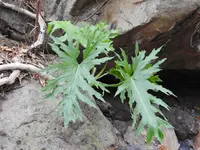
Philodendron warszewiczii is a tropical aroid grown mainly as an ornamental foliage plant. It forms dense clumps with deeply divided, feather-like leaves that can become quite large with age. In nature it occurs in humid Central and South American forests, where it often grows as an understory plant in dappled light. This background explains its preference for warm, stable conditions and moderate, even moisture. The species is considered moderately easy indoors if humidity is reasonable and the roots are kept in airy, well-drained soil. Beginners can learn how to care for Philodendron warszewiczii by focusing on consistent conditions rather than frequent changes in placement or watering.

Main Plant Requirements

Care Difficulty

Moderate Care

Light Preference

Bright Indirect Light

Water Requirements

Moderate Water

Temperature Preference

Tropical / Frost Sensitive

Hardiness Zone

10–11

Soil Texture

Loamy, Peaty, Organic-rich

Soil pH

Acidic (5.5–6.5), Slightly acidic (6.5–7.0)

Soil Drainage

Moist but well-drained

Fertilization

Light (every 4–6 weeks)

Get Personalized Care Plan

Scan your plant to receive care tips personalized for your specific plant

Available on iOS and Android

How to Care for the Philodendron warszewiczii

This species prefers bright, indirect light that mimics dappled forest canopy conditions.

  • Provide 6–8 hours of bright, filtered light daily, such as near an east-facing window or under light shade outdoors, to support steady growth.
  • Tolerates partial shade (3–4 hours of indirect light), but leaves may elongate and color may dull if light is too low.
  • Avoid harsh midday or afternoon sun, which can scorch leaves; in summer, shift to deeper shade or move slightly farther from west- or south-facing windows.

Watering should keep the root zone lightly moist but never saturated for long periods.

  • Allow the top 2–4 cm of soil to dry before watering, using a finger check rather than a fixed schedule to decide when to water Philodendron warszewiczii.
  • In warm, active growth, expect more frequent watering as drying occurs faster; in cooler months, extend the drying interval to reduce rot risk.
  • Use a free-draining mix and empty saucers or low spots after 10–15 minutes; watch for yellowing, mushy roots from overwatering, or curling, crispy edges from underwatering.

Stable, warm temperatures support healthy foliage and root activity in this tropical aroid.

  • Aim for 65–80°F (18–27°C) for best growth, with consistent conditions and minimal rapid swings across the day and night.
  • Avoid allowing temperatures to drop below 55°F (13°C); prolonged exposure near this level can slow growth and damage leaves, while light frost can kill tissue.
  • Tolerates brief heat up to 90°F (32°C) if humidity and airflow are good, but in hot spells provide shade and avoid placing near hot reflective surfaces or heating vents.

This species benefits from elevated humidity to keep foliage lush and reduce stress.

  • Aim for 50–70% humidity; below 40% increases leaf edge dryness and tip browning.
  • Watch for curling leaves, crispy margins, and slow unfurling as signs of low humidity stress.
  • Increase humidity with grouped plants, a nearby humidifier, or a pebble tray, rather than misting alone.

This aroid prefers an airy, organic-rich mix that drains quickly yet retains moderate moisture.

  • Use a loose mix such as 40% peat or coco coir, 30% fine bark, 20% perlite, and 10% compost for structure and nutrients.
  • Ensure fast drainage so water runs through in seconds; avoid dense, clay-heavy soil that stays wet for many hours.
  • Keep pH slightly acidic to neutral, around 6.0–7.0, to support nutrient uptake and reduce leaf yellowing issues.
  • Improve aeration by adding extra bark or chunky perlite if the pot feels heavy and roots stay wet after watering.

This species is well suited to container culture when the pot supports its spreading, sometimes top-heavy growth.

  • Choose a wide, stable container to counterbalance long petioles and heavy foliage that can tip light pots.
  • Select breathable materials like terracotta if extra evaporation is needed, or glazed pots if the mix dries very quickly.
  • Use a pot with large drainage holes and elevate it slightly so excess water can escape freely and not pool under the base.

Nutrient support helps Philodendron warszewiczii maintain vigorous foliage in containers.

  • Use a balanced liquid fertilizer (around 10-10-10 or 20-20-20) diluted to 1/4–1/2 strength for potted plants.
  • Feed every 4–6 weeks during spring and summer when growth is active.
  • Pause or reduce feeding to 1 light application in late winter if growth is very slow.
  • Compost or a slow-release fertilizer in the potting mix can provide a gentle, long-lasting nutrient supply.

Thoughtful pruning keeps Philodendron warszewiczii compact, tidy, and encourages fresh growth.

  • Best time is late winter to early spring before strong new growth starts.
  • Remove yellow, dead, diseased, or badly damaged leaves at the base of the petiole.
  • Thin crowded stems to open the plant, improve airflow, and guide its overall shape.
  • Use clean, sharp pruning shears and disinfect blades between cuts to limit disease spread.

Container-grown plants benefit from occasional repotting to maintain root health and steady growth.

  • Repot every 2–3 years or when roots circle the pot, emerge from drainage holes, or growth slows noticeably.
  • Plan major repotting for spring, when Philodendron warszewiczii enters its main growth phase.
  • Choose a container 2–5 cm wider with fresh, chunky, well-draining mix to avoid waterlogged roots.
  • Handle roots gently, loosen circling roots slightly, water thoroughly after repotting, and keep light bright but indirect for 1–2 weeks.

New plants are most often produced from vegetative material rather than seed.

  • Stem cuttings with at least 1 node and ideally an aerial root are the standard method for Philodendron warszewiczii plant care.
  • Take cuttings in late spring or summer when temperatures are warm and growth is active.
  • Root in moist, airy mix or water at 70–80°F with high humidity and bright, indirect light.
  • Division of a multi-stem clump is possible; separate sections with healthy roots and pot individually.

This tropical species is not frost hardy and needs protection in regions with cold winters.

  • Move container plants indoors before temperatures drop below 55°F, ideally into bright, indirect light.
  • Maintain indoor temperatures around 65–80°F with humidity near 40–60%.
  • Keep soil slightly drier in winter, allowing the top layer to dry more between waterings.
  • Avoid cold drafts, unheated windowsills, and sudden temperature swings that stress foliage.

Care Tips

Provide structural support

Install a sturdy moss pole or rough wooden stake and loosely tie mature stems to it so the plant can climb, which encourages thicker petioles and better leaf size and shape over time.

Rotate for balanced growth

Turn the pot 90° every 1–2 weeks so light reaches all sides of the plant evenly, which reduces leaning, encourages symmetrical growth, and prevents one-sided, weak stems.

Manage aerial roots

Guide aerial roots toward the support pole or into the potting mix instead of cutting them off, as they help anchor the plant and can improve water and nutrient uptake.

Seasonal repot timing

Plan any major root work or upsizing of the pot for mid to late spring, when active growth allows the plant to recover quickly and reduces the risk of stress or root rot.

Routine pest scouting

Inspect the undersides of leaves, petiole bases, and the climbing support every 1–2 weeks for scale, mealybugs, or spider mites, and treat early with insecticidal soap or horticultural oil to maintain long-term Philodendron warszewiczii plant care.

Common Pests and Diseases

Spider mites

This pest attacks plants grown in warm, dry indoor air and can be a recurring issue on finely divided philodendron foliage. Symptoms include pale stippling, fine webbing on leaf undersides, and gradual leaf yellowing or leaf edge crisping.

Solution

Rinse leaves thoroughly with a strong but gentle stream of lukewarm water, focusing on undersides, then increase humidity and reduce heat stress. For persistent infestations, wipe foliage with insecticidal soap or a dilute horticultural oil every 5–7 days for 3–4 cycles, and isolate the plant from others during treatment.

Mealybugs

These insects hide in leaf bases, along petioles, and in the crown, where they feed on sap and excrete sticky honeydew that can attract sooty mold. Symptoms include cottony white clusters, distorted new growth, and a general decline in vigor.

Solution

Physically remove visible mealybugs with cotton swabs dipped in 70% isopropyl alcohol, then thoroughly inspect and clean leaf bases and crevices. Follow up with insecticidal soap or systemic granular treatment labeled for indoor aroids, repeating every 10–14 days until no new insects appear.

Bacterial leaf spot

This disease is favored by warm temperatures and splashing water that remains on foliage, especially on dense philodendron canopies. Symptoms include small, water-soaked translucent spots that enlarge, turn tan to dark brown, and may develop yellow halos.

Solution

Promptly remove and discard affected leaves, avoid overhead watering, and keep leaves dry while maintaining moderate airflow around the plant. Disinfect cutting tools with 10% bleach or 70% alcohol between cuts, and if spread continues, isolate the plant and reduce misting or crowding with other plants.

Erwinia stem and petiole rot

This disease causes rapid soft rot in petioles and stems, often starting in the crown where moisture accumulates. Symptoms include foul-smelling, mushy tissue at the base, sudden leaf collapse, and wet, dark lesions that spread quickly.

Solution

Remove and discard all affected tissue well back into firm, healthy areas, then keep the crown dry and improve airflow by spacing the plant away from walls or other plants. Avoid water sitting in leaf axils, sterilize tools, and if the rot is extensive, take clean top cuttings to re-root and discard the infected base to preserve long-term Philodendron warszewiczii indoor care.

Fungal leaf blight

This disease develops on leaves that stay damp under low airflow, especially on large or overlapping foliage. Symptoms include irregular brown or gray lesions with darker margins, sometimes with concentric rings, that can merge and kill large sections of the leaf blade.

Solution

Remove damaged leaves, avoid wetting foliage, and allow the soil surface to dry slightly between waterings while keeping the root zone stable. Increase light and airflow, clean debris from the pot surface, and if the plant is crowded, give it more space so leaves dry faster after any incidental wetting.

Interesting Facts

Deeply divided foliage

Mature plants develop large, pinnately divided leaves with long, narrow lobes that give the plant a highly dissected, almost fernlike appearance, unlike the simpler leaves of many other Philodendron species.

Epiphytic growth habit

In its native Central American habitats, this species often grows as an epiphyte on trees, anchoring with thick aerial roots while drawing moisture and nutrients from organic debris rather than from soil alone.

Variable juvenile form

Young plants can look quite different from adults, with smaller, less divided leaves that gradually transition into the dramatic, multi-lobed shape as the plant gains size and climbing support.

Botan icon

Did you know?

The species was named in honor of the 19th‑century Polish botanist Josef Warszewicz, a prolific plant collector who documented many Central and South American aroids, and whose field work greatly expanded scientific understanding of Neotropical flora.

FAQs about Philodendron warszewiczii

This species is primarily a climbing aroid that can also lightly sprawl if not given support. In nature it anchors to trees with aerial roots. Indoors, it usually performs best on a moss pole or sturdy totem.

Grow Healthy Plants with Botan Care

Keep your plants happy and healthy with plant identification, disease detection, and easy care guidance.

Botan plant care app — identify plants on mobile

Explore More Plants