Provide firm support
Install a sturdy trellis, wire mesh, or fence before planting so the vine can attach and climb without tearing young stems as it gains weight over time.

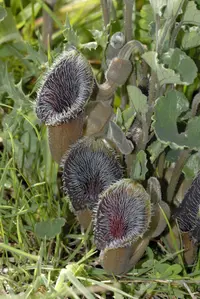
Aristolochia cretica is a small, scrambling or twining perennial vine known for its unusual, pipe-shaped flowers and heart-shaped leaves. It stays relatively compact compared to many other Aristolochia species. Native to rocky slopes and scrub habitats in parts of the eastern Mediterranean, it is adapted to dry, bright, and exposed conditions. The flowers often attract specialized pollinating insects and give the plant a distinct ornamental character. It suits patient growers who appreciate unusual flowering forms more than rapid foliage display. Gardeners who want to learn how to care for Aristolochia cretica should know it prefers well-drained soil, moderate moisture, and protection from severe frost.

Care Difficulty
Moderate Care

Light Preference
Partial Sun

Water Requirements
Moderate Water

Temperature Preference
Warm Climate

Hardiness Zone
8–10

Soil Texture
Sandy, Loamy, Rocky

Soil pH
Slightly acidic (6.5–7.0), Neutral (7.0)

Soil Drainage
Well-drained

Fertilization
Minimal (feed rarely)
Scan your plant to receive care tips personalized for your specific plant
Available on iOS and Android
This Mediterranean vine prefers bright conditions with some protection from harsh midday sun.
This species prefers consistently moist but never waterlogged soil.
This vine thrives in mild, temperate climates with warm summers and frost-free winters.
This Mediterranean vine handles typical household humidity but benefits from slightly moist air.
Aristolochia cretica prefers a loose, deep, moderately fertile mix that drains quickly yet holds some moisture.
This species is suitable for container growing when the pot supports its twining habit and root depth.
This species grows reasonably well in lean soils, but moderate feeding improves vigor and flowering in cultivated Aristolochia cretica.
Light, well-timed pruning helps maintain a manageable, flowering vine and supports plant health in Aristolochia cretica.
This species is more often grown in the ground, but container-grown Aristolochia cretica or young plants may occasionally need repotting or transplanting.
Gardeners usually propagate this vine by seed or semi-ripe cuttings when expanding plantings of Aristolochia cretica.
In mild to moderately cold climates, this species is fairly hardy but benefits from simple winter care, especially when young or container-grown.

Plant Health Check
Not sure what's wrong with your plant? Check your plant's health inside the app.
Aristolochia cretica is naturally restricted to the island of Crete and a few nearby islets, where it grows in rocky phrygana shrublands, open pine woods, and stony slopes, often on calcareous substrates.
This species produces its inconspicuous, pipe-shaped flowers mainly in spring, before or as new leaves expand, which helps ensure that early-season pollinators can locate the blooms among low Mediterranean vegetation.
The flowers emit a faint, musty scent and have a tubular, curved perianth that temporarily traps small flies, a mechanism that increases pollen transfer efficiency once the hairs inside the tube wither and allow the insects to escape.

Aristolochia cretica is part of a group of Mediterranean Aristolochia species that serve as exclusive larval host plants for certain swallowtail butterflies (genus Zerynthia), forming a specialized plant–insect relationship where caterpillars can tolerate aristolochic acids that deter most other herbivores.
This species is a twining climber. Young shoots search for nearby structures and wrap around them, gradually extending several meters. Without support, stems may sprawl along the ground and tangle with neighboring plants.
Keep your plants happy and healthy with plant identification, disease detection, and easy care guidance.


-200x152.webp)