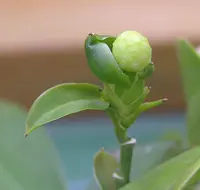
Lilac vine Care (Hardenbergia violacea)

Also known as: Happy wanderer, False Sasparilla, Sarsparilla Vine, Purple coral pea, Lilac vine, False Sarsaparilla, Native lilac
Lilac vine

About Lilac vine

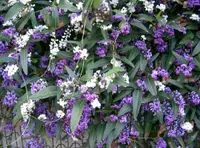
Lilac vine, Hardenbergia violacea, is a woody, evergreen climber from Australia, often grown on trellises, fences, or as a groundcover. It produces cascading sprays of pea-like purple, white, or pink flowers in late winter to early spring, giving strong seasonal color when many plants are still dormant.

The foliage is typically dark green and leathery, forming a dense screen when well supported. In mild climates it can grow quickly and become a long-lived landscape plant.

This species prefers bright light, well-drained soil, and moderate watering, which makes it relatively straightforward to care for Lilac vine in suitable outdoor conditions.

Main Plant Requirements

Care Difficulty

Moderate Care

Light Preference

Full Sun

Water Requirements

Moderate Water

Temperature Preference

Warm Climate

Hardiness Zone

9–11

Soil Texture

Sandy, Loamy, Organic-rich

Soil pH

Acidic (5.5–6.5), Slightly acidic (6.5–7.0)

Soil Drainage

Well-drained

Fertilization

Minimal (feed rarely)

Get Personalized Care Plan

Scan your plant to receive care tips personalized for your specific plant

Available on iOS and Android

How to Care for the Lilac vine

This twining vine flowers best with ample direct light but some protection from harsh extremes.

  • Provide 4–6 hours of direct sun daily, ideally gentle morning sun with light afternoon shade, especially in hot inland climates.
  • Tolerates bright, open shade or dappled light, but Lilac vine will produce fewer blooms and more sparse growth if light drops below roughly 3–4 hours of sun-equivalent exposure.
  • In summer, avoid intense reflected or all-day afternoon sun that can scorch foliage; in winter, maximize exposure by avoiding deep shade from buildings or evergreen trees.

This vine prefers evenly moist, well-drained soil and responds best when watering follows soil cues.

  • Allow the top 3–5 cm of soil to dry before watering, then soak thoroughly so water drains freely from the root zone, avoiding standing water.
  • During active growth and flowering, water when foliage just begins to lose perkiness; in cooler months reduce frequency so soil remains slightly moist but not saturated for days.
  • Watch for yellowing, soft leaves as a sign of overwatering and dry, curling leaves with brittle stems as a sign Hardenbergia violacea is staying too dry between waterings.

This species prefers mild, frost-free conditions but tolerates short cool spells once established.

  • Optimal growth occurs around 60–75°F (16–24°C), with steady flowering in mild winters typical of coastal or Mediterranean-type climates.
  • Mature plants can survive brief drops to about 25°F (-4°C), but foliage and young shoots may burn; prolonged freezes below 28°F (-2°C) can kill top growth.
  • Tolerates summer heat up to about 90–95°F (32–35°C) if roots are mulched and soil moisture is stable, but flowering declines in extended hot, dry periods.

This species handles typical indoor and outdoor humidity and rarely needs special adjustment.

  • Aim for 40–60% humidity; Lilac vine tolerates short dips lower if soil moisture stays consistent.
  • Crisp leaf tips, stalled growth, and increased spider mites suggest air is too dry or plant is water-stressed.
  • Increase local humidity with nearby water trays or grouped plants rather than misting leaves directly.

Hardenbergia violacea prefers free-draining, moderately fertile soil that stays slightly moist but never soggy.

  • Use a loamy mix with 40–60% organic matter such as compost plus mineral material like sand or fine grit.
  • Ensure sharp drainage; in containers, combine roughly 2 parts potting mix, 1 part compost, 1 part perlite or coarse sand.
  • Target slightly acidic to neutral pH around 6.0–7.0 to support nutrient uptake and root health.
  • Avoid heavy clay, compacted, or waterlogged soil, which promotes root rot and weak, chlorotic foliage.

This climber is well suited to container growing when given stable support and controlled moisture.

  • Select a deep, heavy pot that resists tipping once the vine covers its trellis or support frame.
  • Choose a slightly wider container than the rootball to give lateral root run without leaving a large, soggy soil volume.
  • Use a coarse, fast-draining container mix and raise the pot on feet or bricks to keep drainage outlets clear.

Hardenbergia violacea responds well to modest, balanced feeding in containers or poor soils.

  • Use a balanced, slow-release fertilizer (around 10-10-10) or well-rotted compost at the start of spring.
  • Feed container-grown Lilac vine every 6–8 weeks during the active growing season only.
  • Apply fertilizer at half the label strength to avoid excess leafy growth at the expense of flowers.
  • Stop feeding in late summer so growth can harden before winter, and avoid winter fertilization.

Thoughtful pruning keeps Hardenbergia violacea compact, flowering well, and safely supported.

  • Prune just after flowering in late winter or early spring so new growth can set buds.
  • Remove dead, damaged, and crossing stems first, then thin congested areas to improve light and airflow.
  • Shorten overly long vines to control size and train along a trellis or fence for a neat framework.
  • Use clean, sharp bypass pruners and make cuts just above a leaf node to encourage branching.

This vigorous climber benefits from occasional transplanting or pot size increases to support healthy root growth.

  • Check for roots circling the container, emerging from drainage holes, or slowed top growth as signs it needs more space.
  • Plan repotting or transplanting for late winter to early spring, before strong new growth starts.
  • Move to a pot or garden spot only 1–2 sizes larger, using free-draining soil and firm but gentle backfilling.
  • Water thoroughly after planting, shade from intense sun for 3–5 days, and keep soil evenly moist to limit root stress.

Hardenbergia violacea is commonly propagated from seeds or semi-ripe cuttings for reliable new plants.

  • Sow seeds in late winter; nick or soak the hard seed coat to improve germination.
  • Use a free-draining seed or cutting mix and keep it just moist, not wet, at 65–75°F.
  • Take 7–10 cm semi-ripe stem cuttings in late spring or summer, removing lower leaves.
  • Apply rooting hormone, insert cuttings in trays, and provide bright, indirect light with high humidity until rooted.

This climber is moderately frost tolerant but benefits from simple winter precautions in colder areas.

  • In mild climates, established plants usually handle light frosts with minimal damage.
  • Apply a 5–8 cm mulch layer around the root zone, keeping it slightly away from the stems.
  • In areas with hard freezes, move containers into a bright, cool, frost-free space or wrap pots with insulating material.

Care Tips

Early trellis training

Install a sturdy trellis or wire mesh at planting time and loosely tie young stems with soft ties so the vine quickly learns the support pattern and does not develop congested, tangled growth at the base.

Root-zone cooling

Mulch the root zone with 5–8 cm of coarse organic material and keep it pulled a few cm away from the stems to keep roots cooler in summer, conserve moisture, and reduce weed competition.

Wind-smart placement

Site the plant where it gets good air movement but is shielded from strong prevailing winds, such as along a fence or pergola, to reduce stem breakage and flower loss during storms.

Flowering checkup

After the main flowering flush, inspect stems for old, weak, or shaded interior growth and selectively thin a few of the oldest canes to encourage better light penetration and more blooms next season when growing Lilac vine.

Support clean-up routine

Once a year, remove old ties, replace them with fresh soft ties, and clear any debris or dead twigs caught in the support structure to prevent stem girdling and reduce hiding places for pests.

Common Pests and Diseases

Two-spotted spider mites

This pest commonly appears on plants grown in hot, dry, or sheltered spots and feeds by sucking sap from the undersides of leaves. Symptoms include fine webbing, pale stippling on foliage, and general leaf yellowing or bronzing.

Solution

Rinse foliage thoroughly with a strong but controlled stream of water, including the undersides of leaves, and repeat weekly until activity drops. Increase humidity around the plant if possible, prune and dispose of heavily infested shoots, and use a horticultural oil or insecticidal soap labeled for mites, applied in the evening to avoid leaf scorch.

Scale insects

These insects attach tightly to stems and leaf midribs, appearing as small, dome-shaped or flat bumps. Symptoms include sticky honeydew, sooty mold growth, and gradual decline in vigor.

Solution

Gently scrape or wipe individual scales off with a cotton swab dipped in alcohol on light infestations, then prune out badly affected stems and discard them. For larger problems, apply insecticidal soap or a lightweight horticultural oil, making sure to coat stems and leaf undersides, and repeat applications as the product label directs.

Botrytis blight

This disease tends to develop in cool, damp, or crowded conditions, especially on dense vines with poor airflow. Symptoms include soft brown spots on flowers and young shoots, often covered with gray, fuzzy mold.

Solution

Remove and discard all affected flowers and stems, avoid overhead watering, and thin or prune the vine to improve light penetration and air movement. In persistent cases, use a fungicide labeled for ornamental plants and botrytis, applying before wet or cool spells and following label directions carefully.

Powdery mildew

This disease is favored by mild temperatures and poor air circulation, especially when the plant is shaded and foliage remains slightly damp. Symptoms include white, powdery patches on leaves and shoots, which can lead to distortion and early leaf drop.

Solution

Improve airflow by selective pruning, avoid wetting foliage when watering, and remove heavily infected leaves to slow spread. If needed, apply a fungicide suitable for powdery mildew on ornamentals, or use a potassium bicarbonate or sulfur-based product, treating both upper and lower leaf surfaces.

Caterpillars

These insects chew irregular holes in leaves and can quickly strip soft new growth on young vines. Symptoms include missing leaf margins, frass (droppings) on foliage, and ragged foliage on the outer parts of the plant.

Solution

Inspect the plant in the early morning or evening and hand-pick visible caterpillars, dropping them into soapy water. For heavier infestations, use a targeted biological product containing Bacillus thuringiensis (Bt), applied to foliage where caterpillars are feeding, and reapply as directed after rain or heavy watering.

Interesting Facts

Native winter bloomer

This species flowers in late winter to early spring in its native southeastern Australia, providing nectar and pollen when few other shrubs and vines are in bloom, which supports early-season native bees and other pollinators.

Root-nodule nitrogen fixer

As a member of the legume family, it forms nodules on its roots that house symbiotic Rhizobium bacteria, which convert atmospheric nitrogen into forms the plant can use, helping it grow in relatively poor soils.

Adapted to fire-prone habitats

In parts of its natural range, this vine occupies open forest and woodland that experience periodic bushfire, and mature plants can resprout from the base after fire, using stored energy in their root system.

Botan icon

Did you know?

In Australia, this species has been officially adopted as the floral emblem of the state of New South Wales under the cultivated form Hardenbergia violacea 'Happy Wanderer', highlighting its cultural recognition as a characteristic native climber.

FAQs about Lilac vine

Lack of flowers usually comes from insufficient light, heavy pruning at the wrong time, or excess nitrogen fertilizer. Older, unpruned stems flower best. Hardenbergia violacea care also benefits from a short dry, cool period before bloom.

Grow Healthy Plants with Botan Care

Keep your plants happy and healthy with plant identification, disease detection, and easy care guidance.

Botan plant care app — identify plants on mobile

Explore More Plants