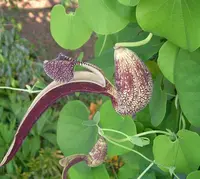
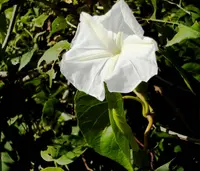
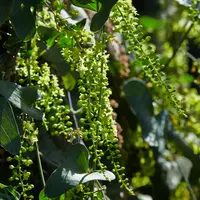
intoxicating yam Care (Dioscorea hispida)

Also known as: Indian Three-leaved Yam
intoxicating yam

About intoxicating yam

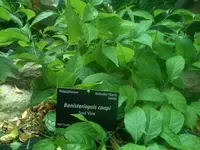
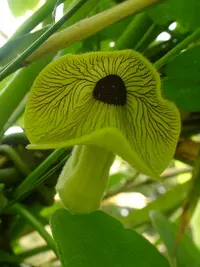
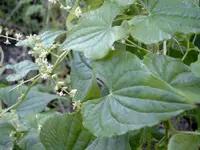
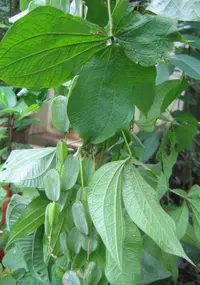
Intoxicating yam, Dioscorea hispida, is a twining vine with heart-shaped leaves and an underground tuber. It belongs to the yam family, Dioscoreaceae, and is not a true sweet potato. The plant naturally occurs in tropical forests and thickets across Southeast Asia, where it climbs over shrubs and small trees. In its native range, the large tubers have been traditionally used as a food source only after careful processing to remove toxins. Dioscorea hispida can be challenging to grow outside the tropics due to its need for sustained warmth and seasonal moisture. It prefers bright light, a support to climb, and well-drained soil, so anyone who wants to care for intoxicating yam must understand these basic requirements.

Main Plant Requirements

Care Difficulty

Hard Care

Light Preference

Partial Shade

Water Requirements

Regular Water

Temperature Preference

Tropical / Frost Sensitive

Hardiness Zone

11–12

Soil Texture

Sandy, Loamy, Organic-rich

Soil pH

Acidic (5.5–6.5), Slightly acidic (6.5–7.0)

Soil Drainage

Moist but well-drained

Fertilization

Minimal (feed rarely)

Get Personalized Care Plan

Scan your plant to receive care tips personalized for your specific plant

Available on iOS and Android

How to Care for the intoxicating yam

Dioscorea hispida prefers bright, indirect light similar to a light woodland edge.

  • Provide 3–5 hours of gentle morning sun with dappled or filtered light for the rest of the day to prevent leaf scorch.
  • Plant in a spot with partial shade, especially from strong midday and afternoon sun, which can cause yellowing and dry, crispy patches.
  • In summer, protect from intense, reflected heat; in cooler seasons, ensure at least bright open shade so vines do not become weak and sparse.

Dioscorea hispida grows from a tuber and needs careful moisture control to avoid rot.

  • Water only when the top 3–5 cm of soil feel dry, then soak thoroughly so excess drains away from the tuber zone.
  • Use loose, fast-draining soil; persistent wetness, sour smell, or soft, collapsing stems signal overwatering and possible rot.
  • During active growth, soil should stay slightly moist; as vines yellow and die back seasonally, reduce watering and keep the soil just barely damp.

This species prefers warm, frost-free conditions similar to other tropical yams.

  • Aim for 70–85°F (21–29°C) during active growth for strongest vine and leaf development.
  • Below 55°F (13°C) growth slows; below 45°F (7°C) tubers risk damage, and any frost can kill the top growth.
  • The plant tolerates short hot spells up to about 95°F (35°C) if soil moisture is stable, but extended heat with dry soil can cause premature dieback.

Humidity plays a minor role for Dioscorea hispida, which tolerates a fairly wide range in cultivation.

  • Target 40–60% relative humidity, which suits this vine in most home or outdoor conditions when caring for intoxicating yam.
  • The plant handles short periods of drier air but may show curled or slightly browned leaf edges if prolonged.
  • Increase humidity locally with grouped plants, a pebble tray under outdoor pots, or brief morning misting in very arid climates.

Soil preparation for Dioscorea hispida should prioritize drainage, aeration, and ease of tuber expansion.

  • Use a loose, sandy or sandy-loam mix enriched with moderate organic matter so the underground tuber can swell without compaction.
  • Aim for slightly acidic to neutral pH around 6.0–7.0, avoiding highly acidic or strongly alkaline conditions that restrict nutrient uptake.
  • Combine roughly 50–60% coarse sand with 20–30% compost and 10–20% perlite or pumice to enhance both drainage and root aeration.
  • Avoid heavy clay, waterlogged spots, or hardpan layers; if soil is dense, amend deeply with coarse sand and grit before planting.

This species can be grown in containers if the pot allows for deep, unobstructed tuber development and reliable drainage.

  • Choose a tall, deep container so the tuber can develop downward rather than becoming constricted near the surface.
  • Select a stable, heavier pot material if supporting a climbing vine to reduce the risk of tipping in wind or when the vine is fully leafed.
  • Raise the container slightly on pot feet or bricks so drainage holes remain clear and excess water escapes quickly after rain or irrigation.

Dioscorea hispida is a nutrient-tolerant tuber that benefits from light, controlled feeding during active growth only.

  • Apply a balanced NPK fertilizer at 1/2 strength every 4–6 weeks during the warm growing season, after new shoots appear.
  • Use a slow-release granular fertilizer or a light top-dressing of well-rotted compost, keeping it away from the tuber crown.
  • Avoid salt buildup by watering deeply with plain water between feedings, especially in containers.
  • Stop feeding intoxicating yam completely once leaves yellow and dormancy begins, and do not resume until new growth returns.

Pruning Dioscorea hispida is minimal and focuses on managing the vine and maintaining plant health.

  • Carry out light pruning in late winter or early spring, before strong new growth starts.
  • Remove dead, damaged, or diseased stems with clean, sharp pruners to reduce infection risk.
  • Thin congested or crossing vines to improve air circulation and keep the plant manageable on its support.
  • Avoid heavy cutting into the tuber; shaping is done mainly by guiding or shortening the climbing stems.

Transplanting Dioscorea hispida is done infrequently because the tuber prefers stable conditions and dislikes disturbance.

  • Plan transplanting for late winter or early spring, while the vine is dormant and foliage is absent.
  • Look for signs such as roots circling the pot, compacted soil, or declining vigor as indicators that more space is needed.
  • When moving, dig widely and deeply around the tuber, keeping as much root mass and surrounding soil intact as possible.
  • Replant at the same depth in loose, well-drained soil, water gently, and shade the area for 1–2 weeks to limit transplant shock.

Dioscorea hispida plant care rarely involves home propagation, as the species is slow and can be challenging to multiply safely.

  • Propagation is usually from fresh seed sown in warm (70–80°F), evenly moist, well-drained medium in spring.
  • Provide bright, indirect light and stable warmth, as germination may be slow and irregular.
  • Tuber division is possible only on established, large plants; each section must include healthy buds and fine roots.
  • Use clean tools, allow cut surfaces to dry briefly, then plant divisions shallowly and keep just slightly moist.

This yam is not frost hardy and needs thoughtful winter care in regions with cold temperatures.

  • In mild climates, allow the vine to die back naturally and mulch the root zone with 5–10 cm of dry organic material.
  • In colder areas, lift container plants before frost and overwinter them indoors in a cool (50–60°F), dry place.
  • Keep stored tubers or potted plants almost dry during dormancy, watering only enough to prevent shriveling.

Care Tips

Secure climbing support

Install a sturdy trellis or vertical netting at planting time so the long, vigorous vine can climb safely and the tubers are not disturbed later when the plant is heavy and actively growing.

Manage plant toxicity

Grow this yam in a fenced or clearly separated area away from children, pets, and food crops, and always label it clearly as poisonous so its tubers and seeds are never harvested or eaten by mistake.

Time-safe handling

Schedule staking, tying, and any necessary handling for early morning or late afternoon, and use gloves and long sleeves to reduce skin contact with plant sap and minimize stress on the vine during heat.

Seasonal vine removal

Once the vine yellows and dies back naturally, cut and dispose of the dry top growth instead of pulling hard on it so the underground tuber remains undisturbed and ready to resprout next season.

Monitor invasive spread

Check the surrounding area for volunteer seedlings or stray tubers each season and remove them promptly so that growing intoxicating yam does not escape cultivation or compete with nearby vegetation.

Common Pests and Diseases

Scale insects

This pest feeds on stems, undersides of leaves, and sometimes on the caudex, sucking sap and weakening the vine. Symptoms include sticky honeydew, sooty mold growth, and small brown or whitish bumps that do not easily rub off.

Solution

Remove light infestations with a cotton swab dipped in isopropyl alcohol, and gently wipe affected stems, petioles, and the caudex. For heavier infestations, use a horticultural oil or insecticidal soap, ensuring full coverage and repeating every 7–10 days while also improving light and airflow to support plant recovery.

Tuber weevils

These insects bore into the underground tubers and roots, causing internal tunnels, darkened tissue, and eventual decline or collapse of vines. Symptoms include poor new growth, yellowing foliage, and a tuber that feels soft or shows entry holes when inspected.

Solution

Inspect and discard heavily damaged tubers, and during repotting remove and destroy any larvae or adults found in the soil. Use clean, well-draining media, rotate planting sites outdoors, and consider applying a soil drench with a targeted insecticide or beneficial nematodes to reduce weevil populations when growing intoxicating yam in the ground or large containers.

Leaf spot

This disease causes small water-soaked or brown lesions on leaves that may enlarge and coalesce, sometimes with yellow halos. Symptoms include premature leaf drop and a general thinning of the vine canopy in humid, poorly ventilated conditions.

Solution

Prune and discard affected leaves, avoid wetting the foliage, and water at the soil level in the morning so leaves dry quickly. Improve spacing and airflow, and if spots continue to spread, apply a labeled copper or bio-fungicide, repeating as directed until new growth emerges clean.

Anthracnose

This disease leads to dark, sunken lesions on leaves and young stems, often starting along veins or at leaf tips and margins. Symptoms include distorted new growth, scorched-looking areas, and dieback of tender shoots in warm, wet weather.

Solution

Remove and destroy infected shoots and leaves, and keep vines off the ground or wet surfaces by providing a support. Reduce overhead watering, clean up fallen debris around the tuber, and use a preventive fungicide (such as copper-based products) during prolonged rainy or humid periods if the plant has a history of infection.

Nematode damage

These microscopic worms attack roots and tubers, causing galls, roughened surfaces, or corky patches, which reduce water and nutrient uptake. Symptoms include stunted vines, yellowing leaves, and poor tuber development even under otherwise good growing conditions.

Solution

Discard severely infested plants and avoid reusing the same soil; instead, use fresh, pasteurized potting mix for containers. Rotate planting sites outdoors, incorporate organic matter to support beneficial soil life, and consider using nematode-resistant cover crops or solarizing the soil in warm climates to reduce nematode populations before replanting.

Interesting Facts

Overlapping leaf scars

The large, brown, overlapping leaf scars along the vine are a distinctive identification feature and give the stems a rough, segmented appearance compared with many other yam species.

Strongly barbed stem

The twining stems carry sharp, downward-pointing prickles that help the plant anchor onto surrounding vegetation and climb toward the forest canopy.

Highly toxic tubers

The underground tubers contain potent toxic alkaloids and saponins; in traditional use they must be repeatedly sliced, soaked, and leached in running water to remove toxins before any consumption.

Botan icon

Did you know?

This species has a long history as a famine and emergency food in parts of Southeast Asia, where complex detoxification methods were developed and passed down culturally, allowing communities to safely use an otherwise deadly wild yam when no other starch sources were available.

FAQs about intoxicating yam

The raw tubers are highly toxic due to steroidal saponins and other poisons. In traditional use, they are only eaten after complex multi-step detoxification involving slicing, soaking, and prolonged boiling. Such processing is not recommended for home growers.

Grow Healthy Plants with Botan Care

Keep your plants happy and healthy with plant identification, disease detection, and easy care guidance.

Botan plant care app — identify plants on mobile

Explore More Plants