White Veined Pipevine Care (Aristolochia fimbriata)

Also known as: White Veined Hardy Dutchman's Pipe
White Veined Pipevine

About White Veined Pipevine

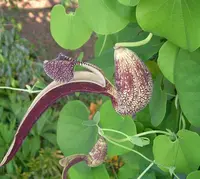
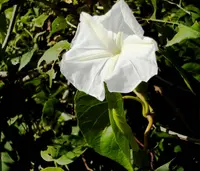
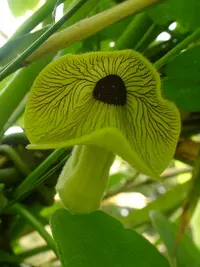
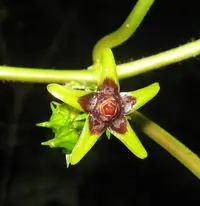
White veined pipevine, Aristolochia fimbriata, is a low, spreading perennial vine grown mainly for its unusual flowers and striking, silver-veined foliage. It often forms a dense groundcover or trails over the edge of containers.

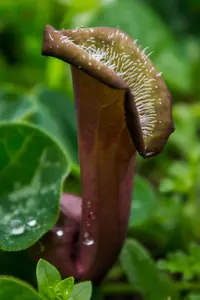
This species is native to parts of South America, where it grows in warm, humid climates. The small, pipe-shaped flowers attract specialized butterflies, making it interesting for wildlife-friendly gardens.

It is generally considered moderately easy to grow, as long as it receives consistent moisture, well-drained soil, and protection from harsh, drying conditions. Understanding how to care for White Veined Pipevine helps keep its foliage dense and its growth compact in home gardens or containers.

Main Plant Requirements

Care Difficulty

Moderate Care

Light Preference

Partial Sun

Water Requirements

Regular Water

Temperature Preference

Warm Climate

Hardiness Zone

7–9

Soil Texture

Sandy, Loamy, Organic-rich

Soil pH

Acidic (5.5–6.5), Slightly acidic (6.5–7.0)

Soil Drainage

Moist but well-drained

Fertilization

Light (every 4–6 weeks)

Get Personalized Care Plan

Scan your plant to receive care tips personalized for your specific plant

Available on iOS and Android

How to Care for the White Veined Pipevine

Aristolochia fimbriata grows best with bright light and some protection from harsh afternoon sun.

  • Provide 4–6 hours of morning sun or bright, filtered light, especially in spring and early summer, to support compact growth and flowering for White Veined Pipevine.
  • Allow light dappled shade or partial shade (about 30–60% shade) during the hottest afternoon hours to prevent leaf scorch and faded foliage color.
  • In warmer zones, give more shade in midsummer, while in cooler or coastal climates it can tolerate closer to full sun if soil moisture is consistent.

Aristolochia fimbriata prefers evenly moist, never soggy soil with slight drying between waterings.

  • Water when the top 3–5 cm of soil feels dry, using enough water to moisten the root zone, then let excess drain away to prevent root rot.
  • In spring and summer, monitor more often during hot, windy periods; in cooler months, extend the interval as growth slows and soil stays moist longer.
  • Watch foliage for cues: limp, curling leaves and dry soil indicate underwatering, while yellowing leaves and a sour soil smell suggest overwatering and poor drainage.

This species performs well in warm, mild climates and reacts poorly to freezing temperatures.

  • Aim for active growth in 65–85°F (18–29°C); short peaks up to 90°F (32°C) are tolerated if soil moisture and light shade are provided.
  • Protect the plant from temperatures below 40°F (4°C), as foliage is damaged by light frost and hard freezes can kill roots, especially in exposed sites.
  • In regions with cold winters, treat it as a tender perennial, allowing top growth to die back and protecting the root zone with mulch when frost is expected.

This species handles a range of household humidity but benefits from moderate moisture in the air.

  • Aim for 40–60% humidity; no special equipment is needed in most homes.
  • Tolerates short dry spells, but persistent very dry air can cause leaf edges to brown and curl.
  • In heated, arid rooms, group plants, place trays with water and pebbles nearby, or move White Veined Pipevine away from hot air vents.

Aristolochia fimbriata prefers loose, well-draining, organically enriched soil.

  • Use a loamy mix built from 50–60% standard potting mix, 20–30% compost, and 10–20% perlite or coarse sand for structure and drainage.
  • Ensure the soil drains freely within a few seconds of watering so roots do not sit in stagnant water.
  • Target slightly acidic to neutral pH, roughly 6.0–7.0, which supports nutrient availability and healthy root growth.
  • Avoid heavy clay, compacted, or constantly waterlogged substrates; loosen dense garden soil with compost and mineral grit to improve aeration.

This species is well suited to container growing outdoors on patios, balconies, or in small gardens.

  • Select a wide, shallow to medium-depth pot to accommodate spreading roots and creeping stems without crowding them vertically.
  • Choose a heavier material such as ceramic or clay if grown with support, to stabilize the vine against wind and top-heavy growth.
  • Raise the container slightly on feet or bricks so drainage holes clear quickly and trailing stems do not sit in runoff.

This vine benefits from light, balanced feeding during active growth but does not require heavy fertilization.

  • Use a balanced liquid fertilizer (around 10-10-10 or 20-20-20) diluted to 1/4–1/2 strength every 4–6 weeks in spring and summer.
  • Alternatively, apply a thin layer of compost or a low-dose slow-release fertilizer to the root zone in early spring.
  • Stop feeding in fall and winter when growth slows or the plant goes dormant to avoid weak, stretched growth.
  • For White Veined Pipevine in containers, ensure thorough watering after feeding to prevent salt buildup in the potting mix.

Pruning helps keep Aristolochia fimbriata compact, healthy, and flowering well.

  • Best time for structural pruning is late winter to early spring before strong new growth starts.
  • Use sharp, clean hand pruners to remove dead, damaged, or crossing stems back to healthy tissue.
  • Thin congested vines to improve air flow and light penetration, which supports disease prevention and better flowering.
  • Lightly shorten overly long shoots after flowering to control spread and maintain a tidy, low-growing form.

This species suits ground planting but can be grown in containers that need occasional repotting or transplanting.

  • Check for roots circling the pot, emerging from drainage holes, or slow growth as signs it needs a larger container or ground planting.
  • Plan transplanting or repotting for early spring, just as new growth begins, to support quick root recovery.
  • Typically move container plants up 1 pot size every 2–3 years, using a free-draining mix with added organic matter.
  • Water thoroughly before and after moving, keep roots shaded, and avoid breaking the root ball to reduce transplant shock.

This vine is commonly propagated by seeds and softwood cuttings taken in the growing season.

  • Sow fresh seeds in spring in a sterile, moist seed mix, keeping them at 68–75°F with bright, indirect light.
  • Take 8–10 cm softwood cuttings in late spring or early summer, cutting just below a node.
  • Remove lower leaves, dip the cut end in rooting hormone, and place cuttings in a well-drained, moist propagation mix.
  • Maintain high humidity around cuttings with a clear cover while ensuring some air exchange to prevent fungal problems.

This species is moderately cold hardy, often dying back to the ground and resprouting in spring in many temperate climates.

  • In USDA zones around 7–9, dormant crowns usually overwinter outdoors without major intervention.
  • Apply a 5–8 cm layer of mulch over the root zone after hard frost to buffer soil temperature swings.
  • Move container-grown plants into a frost-free, cool, bright area when sustained temperatures drop below about 25°F.

Care Tips

Low Trellis Training

Provide a low trellis, wire hoop, or edging fence 10–20 cm above the soil to guide the scrambling stems, which keeps the foliage off wet ground and reduces slug damage and leaf rot when growing White Veined Pipevine.

Container Edge Spill

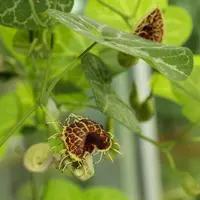
In containers, plant 5–8 cm back from the rim and let stems spill over the edge rather than trail on the soil surface, which improves air flow around the foliage and makes it easier to spot early pest issues.

Slug And Snail Barrier

Lay a 5–8 cm band of sharp grit or crushed horticultural pumice around the planting zone and refresh it each season to discourage slugs and snails that readily chew the thin leaves.

Caterpillar Management Zone

If used as a host plant for swallowtail butterflies, group plants in one dedicated bed or container cluster so caterpillar feeding is concentrated and it is easier to monitor leaf loss and protect nearby ornamentals.

Winter Crown Protection

In regions with cold winters, mark the crown position with a small stake and cover it with a thin, breathable mulch layer (such as shredded bark) after frost, then remove most of the mulch in spring so new shoots can emerge freely.

Common Pests and Diseases

Pipevine swallowtail caterpillars

These pests are the larvae of a native butterfly that can defoliate plants by consuming large amounts of foliage in a short time. Symptoms include chewed or missing leaves, often down to the veins, while stems remain intact.

Solution

Handpick caterpillars from small plants and relocate them to other pipevine hosts if available, since they are important native butterflies. For ornamental plants that are being stripped repeatedly, use lightweight physical barriers such as fine insect netting during peak egg‑laying periods, and support rapid regrowth with steady moisture and balanced nutrition as part of general Aristolochia fimbriata care.

Spider mites

These pests are tiny sap-sucking arachnids that thrive in hot, dry conditions and on stressed plants. Symptoms include fine webbing on stems and leaf undersides, stippled or bronzed leaves, and gradual leaf drop.

Solution

Rinse foliage thoroughly with a strong but gentle stream of water, focusing on leaf undersides, then repeat every few days for 1–2 weeks. If populations stay high, apply insecticidal soap or horticultural oil labeled for mites, and reduce stress by maintaining even moisture and avoiding very dry, stagnant air around the plant.

Leaf spot

This disease often appears during warm, humid weather, especially where foliage stays wet for long periods. Symptoms include small brown or dark lesions on leaves that may enlarge, merge, and cause partial yellowing or early leaf drop.

Solution

Remove and discard affected leaves, including any fallen debris, to lower the amount of infectious material. Improve air circulation, water at soil level rather than overhead, and if spotting progresses, apply a fungicide labeled for ornamental leaf spots according to label directions while maintaining a drier leaf surface whenever possible.

Powdery mildew

This disease is caused by fungi that grow on leaf surfaces, especially where nights are cool, days are warm, and air is stagnant. Symptoms include white or gray powdery patches on leaves, curling or distortion, and possible reduction in growth vigor.

Solution

Prune to open the plant canopy and nearby vegetation to improve air movement, and avoid overhead watering in the evening. Remove heavily infected leaves, then apply a suitable fungicide or horticultural oil labeled for powdery mildew, making sure to cover both upper and lower leaf surfaces.

Interesting Facts

Specialist butterfly host

This species is a natural larval host for several swallowtail butterflies, including the pipevine swallowtail, whose caterpillars can safely feed on its foliage despite the plant’s chemical defenses.

Miniature pipe-shaped flowers

Its small, ground-hugging flowers are shaped like curved pipes and often hide beneath the foliage, positioned to attract tiny pollinating insects that explore their mottled interior.

Groundcover-style growth

Unlike many climbing relatives in its genus, this species usually grows as a low, spreading groundcover with short, twining stems rather than producing tall, vigorous vines.

Botan icon

Did you know?

This species accumulates toxic aristolochic acids that taste bitter and deter most herbivores, and these same compounds are sequestered by pipevine swallowtail caterpillars, making the adult butterflies distasteful to many predators and contributing to their warning coloration.

FAQs about White Veined Pipevine

This species spreads moderately by short runners and can form a low patch over time, but it is not usually invasive. Occasional edging or lifting unwanted stolons keeps it within bounds in mixed beds or borders.

Grow Healthy Plants with Botan Care

Keep your plants happy and healthy with plant identification, disease detection, and easy care guidance.

Botan plant care app — identify plants on mobile

Explore More Plants