Rotate Dormant Pots
During the dry rest period, rotate the pot 90° every 2–3 weeks so new leaves and flower stalks emerge evenly and the plant does not lean toward the previous light source.

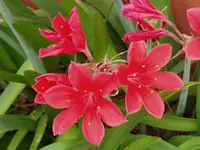
Scarborough lily, Cyrtanthus elatus, is a bulbous flowering plant valued for its upright clusters of trumpet-shaped red, orange, or occasionally pink blooms. It forms compact clumps of narrow, strap-like leaves and sends up sturdy flower stalks, giving a tidy, architectural look.
This species originates from South Africa, where it grows in regions with marked dry and wet seasons. It is moderately easy to grow when its need for a dry rest period and good drainage is respected.
In cultivation it prefers bright light, well-drained soil, and careful watering that avoids waterlogged conditions. Understanding these seasonal and moisture needs is central to how to care for Scarborough lily.

Care Difficulty
Moderate Care

Light Preference
Partial Sun

Water Requirements
Moderate Water

Temperature Preference
Tropical / Frost Sensitive

Hardiness Zone
9–11

Soil Texture
Sandy, Loamy, Organic-rich

Soil pH
Acidic (5.5–6.5), Slightly acidic (6.5–7.0)

Soil Drainage
Well-drained

Fertilization
Light (every 4–6 weeks)
Scan your plant to receive care tips personalized for your specific plant
Available on iOS and Android
Cyrtanthus elatus prefers bright, indirect light with some direct sun for strong flowering.
Water Cyrtanthus elatus to keep the soil slightly moist during active growth but never saturated.
This bulb prefers mild, frost-free conditions for reliable flowering and healthy foliage.
This species manages well in typical household humidity but benefits from moderate moisture in the air.
This bulb prefers fast-draining, airy soil that does not stay wet around the roots.
This species is well suited to container growing when drainage and bulb positioning are controlled carefully.
Cyrtanthus elatus benefits from modest feeding to support flowering but is sensitive to excess salts.
Pruning for Cyrtanthus elatus focuses on cleanliness and directing energy back to the bulbs.
Container-grown Cyrtanthus elatus prefers slightly crowded bulbs and only occasional repotting.
Cyrtanthus elatus is most reliably propagated by bulb division rather than by seed for home growers.
This frost-tender bulb needs protection from freezing temperatures, especially in cooler climates.

Plant Health Check
Not sure what's wrong with your plant? Check your plant's health inside the app.
This species is native to South Africa’s Cape region and naturally experiences a Mediterranean-type climate with wet winters and dry summers, which shapes its seasonal growth and flowering cycle in cultivation.
The plant forms a true bulb that can produce contractile roots, which slowly pull the bulb deeper into the soil to reach a more stable temperature and moisture zone over time.
Under suitable conditions, the inflorescence can emerge and reach flowering relatively quickly after a rest period, which is one reason it has been used as a model for studying flower initiation and bulb physiology in ornamental geophytes.

This species played a key role in early breeding work on red-flowering bulbous ornamentals, contributing traits such as intense scarlet flower color and compact growth habit to a number of modern hybrids grown commercially as pot plants and cut flowers.
Lack of flowers usually comes from insufficient light, overcrowded bulbs, or skipping a cool, dry rest period. Provide bright conditions, allow foliage to mature naturally, then give a brief, drier dormancy to reset the flowering cycle.
Keep your plants happy and healthy with plant identification, disease detection, and easy care guidance.