

Support Heavy Spikes
As the flowering spike elongates, insert a slim stake and secure it loosely with soft ties to prevent the tall, top-heavy stem from bending or snapping under its own weight.

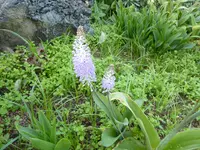
Madeira squill, Scilla madeirensis, is a bulb-forming perennial known for its tall, dense flower spikes packed with many small purple-blue blooms. It grows from a compact bulb that sends up broad, fleshy leaves followed by an impressive cone-like inflorescence in the flowering season.
This species is native to the island of Madeira, where it grows in rocky, well-drained habitats. In cultivation, it is valued as an unusual ornamental bulb but can be slightly challenging due to its need for a dry rest period.
It prefers bright light, moderate moisture during active growth, and sharply draining soil. Understanding its seasonal growth cycle is key to how to care for Madeira Squill successfully.

Care Difficulty
Moderate Care

Light Preference
Partial Sun

Water Requirements
Moderate Water

Temperature Preference
Warm Climate

Hardiness Zone
10–11

Soil Texture
Sandy, Loamy, Organic-rich

Soil pH
Acidic (5.5–6.5), Slightly acidic (6.5–7.0)

Soil Drainage
Well-drained

Fertilization
Light (every 4–6 weeks)
Scan your plant to receive care tips personalized for your specific plant
Available on iOS and Android
This bulb prefers bright, gentle light similar to that of an open woodland edge.
This species benefits from steady but controlled moisture around its bulb and roots.
This plant grows best in mild, frost-free conditions that mimic its native oceanic climate.
This species prefers moderately humid air but tolerates typical home conditions.
This bulb prefers sharply draining, airy soil that does not stay wet around the roots.
This species is well suited to container growing when the pot supports its tall, heavy flowering spike.
This bulb responds well to moderate feeding during active growth but does not need heavy fertilization.
Pruning needs for Scilla madeirensis are minimal and focus on post-flowering clean-up.
This bulb prefers stable conditions and resents frequent disturbance, so repot or transplant only when clearly needed.
Multiplying this species is most reliable by bulb division, with seed used mainly for patient growers or breeding.
This bulb is not fully frost hardy in many regions and benefits from targeted winter protection, especially in containers.

Plant Health Check
Not sure what's wrong with your plant? Check your plant's health inside the app.
This species is endemic to Madeira, meaning it occurs naturally only on this North Atlantic archipelago, where it grows on cliffs and rocky slopes in mild, oceanic conditions.
Mature bulbs can produce a single, densely packed flower spike up to about 60 cm tall, carrying many small violet to bluish flowers that open progressively from bottom to top.
The plant follows a Mediterranean-type cycle: leaves and flower spikes emerge in the cooler, wetter months, while the bulb rests semi-dormant in the warmer, drier period, an adaptation to its native climate.

In its native range on Madeira, this species is considered rare in the wild, and wild populations are of conservation interest because their specialized cliff and rocky slope habitats are vulnerable to disturbance and environmental change.
Lack of flowers usually comes from insufficient winter rest, low light during bud formation, or bulbs planted too deeply. Provide a cool dry rest period, bright conditions, and avoid overfertilizing with nitrogen to support reliable spikes.
Keep your plants happy and healthy with plant identification, disease detection, and easy care guidance.

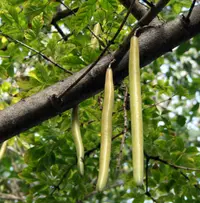
candle tree
Parmentiera cereifera
Begonia handelii
Begonia handelii
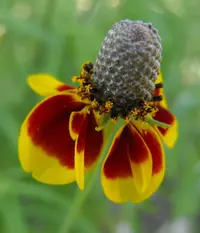
upright prairie coneflower
Ratibida columnifera
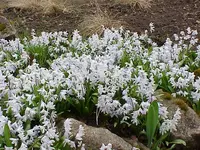
Mishchenko squill
Scilla mischtschenkoana
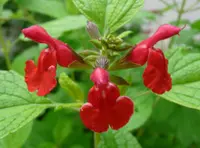
Baby sage
Salvia microphylla
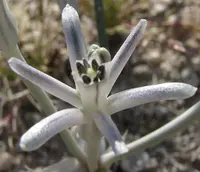
pink funnel lily
Androstephium breviflorum
 POPULAR
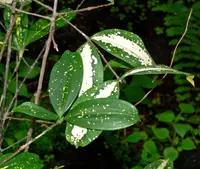
Gold dust dracaena
Dracaena surculosa
Night-Scented Pelargonium
Pelargonium triste