Staggered sowing
Sow seeds in 2–3 waves spaced 2–3 weeks apart in spring so flowering is extended and any losses to damping-off or pests are automatically replaced by the next cohort.

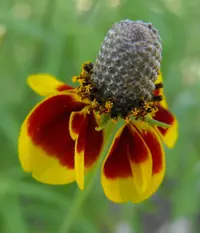
Upright prairie coneflower, Ratibida columnifera, is a hardy North American prairie perennial known for its tall, slender stems and distinctive cone-shaped centers with drooping petals. Flowers usually appear in yellow or red-brown tones, attracting bees and butterflies in open, sunny sites.
This species naturally occurs in prairies, plains, and roadsides across central and western parts of North America, where soils are often dry and nutrient-poor. It adapts well to low-maintenance gardens because it tolerates drought, poor soils, and temperature swings.
These traits make it relatively easy to establish in wildflower plantings or naturalistic borders. Gardeners who want to learn how to care for upright prairie coneflower mainly need to focus on providing full sun and well-drained soil.

Care Difficulty
Easy Care

Light Preference
Full Sun

Water Requirements
Low Water

Temperature Preference
Cold Hardy

Hardiness Zone
3–8

Soil Texture
Sandy, Loamy, Rocky

Soil pH
Slightly acidic (6.5–7.0), Neutral (7.0)

Soil Drainage
Well-drained

Fertilization
Minimal (feed rarely)
Scan your plant to receive care tips personalized for your specific plant
Available on iOS and Android
Ratibida columnifera thrives in open, bright conditions typical of prairies and meadows.
This prairie species prefers infrequent, deep watering once established.
This hardy prairie perennial tolerates a wide temperature range once established.
Humidity is rarely a concern for upright prairie coneflower, which thrives in dry, open conditions.
This species prefers lean, well-drained soil that mimics open prairie conditions.
This species can grow in containers if given enough depth and sharp drainage.
This hardy native wildflower usually needs minimal feeding, especially in nutrient-poor prairie-type soils.
Pruning supports tidy growth and sustained flowering in Ratibida columnifera.
This prairie perennial is usually grown in the ground, with transplanting more relevant than repotting.
Propagation of Ratibida columnifera is most practical from seed, with division as a secondary option.
This cold-hardy species usually needs minimal winter care in typical temperate climates.

Plant Health Check
Not sure what's wrong with your plant? Check your plant's health inside the app.
The species forms a tall, central cone of tightly packed disk florets surrounded by drooping ray petals, creating the look of a small sombrero that helps shed rain and exposes pollinators directly to pollen and nectar.
This prairie wildflower develops a deep taproot that allows it to survive hot, dry summers on poor, well-drained soils where many garden perennials decline.
Its long flowering period from early to late summer provides sustained nectar and pollen resources for native bees, butterflies, and beneficial wasps in tallgrass and mixed-grass prairies.

Traditional prairie management practices such as periodic burning favor Ratibida columnifera, and the species often increases in abundance after prescribed fire because its underground structures and seed bank tolerate heat better than many competing plants.
Yes. This species is highly attractive to native bees, honey bees, butterflies, and other pollinators. The central cone provides abundant pollen, while the drooping ray petals act as a visual signal from mid-summer into fall.
Keep your plants happy and healthy with plant identification, disease detection, and easy care guidance.