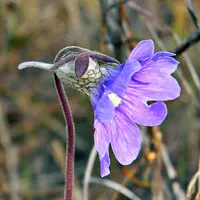
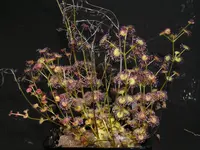
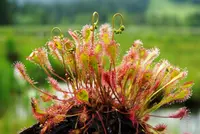
New Zealand sundew Care (Drosera stenopetala)

New Zealand sundew

About New Zealand sundew

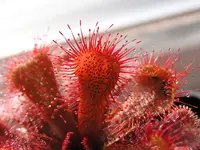
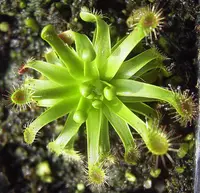
New Zealand sundew (Drosera stenopetala) is a compact, cold-adapted carnivorous plant that forms tight rosettes of red-tinged, spoon-shaped leaves. Each leaf is covered in sticky, glistening droplets that trap small insects, which provide nutrients in its naturally poor soils.

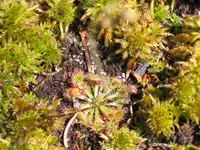
This species is native to higher elevations in New Zealand, where it grows in cool, wet alpine bogs and tussock grasslands. It is slower growing and less forgiving than many other sundews, so it suits growers who already understand basic carnivorous plant care. To care for New Zealand sundew successfully, conditions must stay cool, bright, and consistently moist with low-mineral, acidic substrate.

Main Plant Requirements

Care Difficulty

Hard Care

Light Preference

Full Sun

Water Requirements

Keep Soil Moist

Temperature Preference

Cool Climate

Hardiness Zone

7–9

Soil Texture

Peaty, Sandy, Organic-rich

Soil pH

Strongly acidic (4.5–5.5)

Soil Drainage

Waterlogged tolerant

Fertilization

Minimal (feed rarely)

Get Personalized Care Plan

Scan your plant to receive care tips personalized for your specific plant

Available on iOS and Android

How to Care for the New Zealand sundew

This alpine sundew prefers bright, cool light that mimics open, high-elevation habitats.

  • Provide 4–6 hours of direct morning sun with bright, filtered light the rest of the day; light afternoon shade helps avoid overheating in warm areas.
  • In cool, cloudy climates, New Zealand sundew tolerates full sun, but in warmer regions, protect from harsh midday sun to prevent leaf scorch and dry traps.
  • If leaves lose red coloration, tentacles shorten, or dew production drops, increase light exposure gradually over 7–10 days to avoid shock.

This species requires consistently moist, low-mineral conditions that never dry out completely.

  • Maintain soil that is wet to consistently moist; do not allow more than the top 0.5–1 cm to dry, as Drosera stenopetala dislikes any prolonged drought.
  • Use rainwater, distilled, or reverse-osmosis water, keeping soil slightly wetter in active growth and just moist but not waterlogged during colder dormant periods.
  • Watch for signs of stress: limp, dull leaves and reduced dew indicate underwatering, while sour smell, blackened roots, or collapsing crowns suggest chronic overwatering and poor aeration.

This highland carnivorous plant prefers cool conditions with marked seasonal variation.

  • Aim for cool growing temperatures of 50–68°F (10–20°C) during the main growing season, avoiding prolonged warmth above 75°F (24°C) which can weaken growth and reduce dew.
  • This species tolerates light frosts around 28–32°F (-2–0°C) for short periods, especially when acclimated, but prolonged hard freezes require protection such as snow cover or mulching.
  • Provide cooler nights year-round, ideally 40–50°F (4–10°C), as sustained warm nights and hot days above 80°F (27°C) can cause stress, dormancy disruption, and leaf dieback.

This alpine sundew prefers cool, moderately humid air rather than tropical conditions.

  • Aim for 50–70% humidity, avoiding hot, stagnant air that promotes fungal problems.
  • Plant tolerates brief dips to 30–40% if roots stay cool and wet, but foliage may curl slightly.
  • Low humidity stress shows as drying tentacles and reduced dew; group pots, use a pebble tray, or humidify the room without enclosing the plant.

Drosera stenopetala needs permanently wet, nutrient-poor, well-aerated substrate.

  • Use a mix of 1:1 milled sphagnum peat and coarse silica sand or fine horticultural grit for a loose, open texture.
  • Ensure water drains freely through the pot while the mix remains saturated, mimicking constantly wet, cold bog conditions.
  • Keep pH acidic around 4.5–5.5; never add compost, fertilizers, or manure, which damage the roots and beneficial microbes.
  • Improve aeration with 10–20% fine perlite if the mix compacts, but avoid limestone-based materials that raise pH.

This species adapts well to container cultivation when moisture and temperature are tightly controlled.

  • Choose a deep pot to insulate roots from heat and allow a stable, cool, saturated root zone.
  • Use white or light-colored plastic pots to reduce solar heating and slow evaporation around the crown.
  • Stand the container in a tall tray of rain or distilled water to keep the lower substrate waterlogged without flooding the crown.

This alpine carnivorous species gains most nutrients from captured insects, so New Zealand sundew indoor care should be very low in added fertilizer.

  • Avoid standard houseplant fertilizers; they are usually too strong and can burn roots and leaves.
  • If growth is weak, use a very dilute (1⁄8–1⁄4 strength) balanced NPK orchid or carnivorous plant fertilizer as foliar spray only.
  • Apply at most once every 4–6 weeks during active growth, never onto the soil or water tray.
  • Stop all feeding in winter dormancy, when metabolic activity and nutrient demand are low.

Drosera stenopetala requires only light, hygienic pruning to keep rosettes healthy.

  • Best timing is late winter to early spring, before strong new growth begins.
  • Use fine scissors or small snips to remove dead, blackened, or moldy leaves at the base.
  • Thin out badly damaged or overcrowded rosettes to improve airflow and reduce fungal problems.
  • Minimal pruning preserves the plant’s natural compact form and does not affect flowering significantly.

This species dislikes disturbance, so repotting Drosera stenopetala should be infrequent and gentle.

  • Repot only when roots circle the pot, the mix compacts, or growth slows despite good light and water.
  • Best timing is late winter to very early spring, just before active growth starts.
  • Typical frequency is every 2–3 years, using a cool, low-nutrient mix such as fine sphagnum with sand or perlite.
  • Slide the root ball out carefully, avoid breaking the taproot, and keep roots moist at all times to reduce stress.

Propagation of Drosera stenopetala is possible but slower than in many lowland sundews and needs cool, stable conditions.

  • Leaf cuttings taken in late spring to summer can root in moist, cool long-fiber sphagnum under bright, indirect light.
  • Root cuttings are possible but risky; keep segments horizontal and barely covered in the same low-nutrient medium.
  • Seed germination requires fresh seed, cool temperatures, and consistently damp, acidic substrate; avoid fertilized mixes.
  • Maintain high humidity, gentle air movement, and no direct hot sun until young plants establish strong roots.

This alpine sundew is cold hardy but still benefits from thoughtful winter care in cultivation.

  • Mature plants tolerate light to moderate frost if kept in a cold frame or unheated greenhouse with good ventilation.
  • For outdoor containers, insulate pots with foam, bubble wrap, or a sand plunge to stabilize root-zone temperatures.
  • Keep the medium just moist, not waterlogged, during dormancy to prevent rot in cold, low-light conditions.
  • In very harsh climates, move containers under cover to avoid repeated freeze–thaw cycles and excessive snow load.

Care Tips

Cool root management

Place the pot inside a taller outer pot and fill the gap with damp long-fiber sphagnum to insulate roots and keep the root zone cooler and more stable through warm spells.

Seasonal dormancy signal

In late summer to early autumn, gradually reduce day length with a timer and slightly lower temperatures so the plant receives a clear signal to form its tight winter bud instead of remaining in weak, elongated growth.

Snow and frost protection

If grown outdoors in suitable climates, shelter the pot from direct snow and freeze–thaw cycles by moving it into an unheated but bright cold frame so the crown does not heave or rot.

Safe water reserves

Prepare several liters of stored rainwater or reverse osmosis water ahead of hot, dry periods so there is no need to switch to mineral-rich tap water in an emergency.

Gentle pest management

Inspect leaves and the crown monthly with a hand lens and, if aphids or mites appear, rinse gently with pure water and only then use a low-dose, carnivorous-plant-safe insecticidal soap directed at pests, avoiding the winter bud.

Common Pests and Diseases

Fungal leaf spot

This disease causes small water-soaked spots on the leaves that turn brown or black and may merge into larger dead patches, often during cool, damp weather. Symptoms include reduced dew production and premature leaf dieback.

Solution

Remove and discard affected leaves, increase air movement around the rosette, and avoid wetting the foliage when watering. Keep the plant cooler and less crowded, and if needed use a low-dose sulfur or copper-based fungicide tested first on a small area, as Drosera stenopetala care is sensitive to harsh chemicals.

Botrytis blight

This disease appears as fuzzy gray mold on old leaves, trapped insects, and flower stalks, especially under still, humid, cool conditions. Symptoms include rapid collapse of affected tissue and spreading rot from dead to healthy parts.

Solution

Promptly prune and discard all affected and decaying material, including spent flower stalks, and improve ventilation without lowering humidity too abruptly. Keep dead insects from accumulating on the leaves and, in persistent cases, apply a gentle fungicide suitable for carnivorous plants, ensuring the crown remains dry between treatments.

Aphids

These insects cluster on tender leaves and flower stalks, sucking sap and causing distortion, stunting, and reduced dew production. This pest can also transmit viral or fungal pathogens between plants.

Solution

Rinse the plant gently with cool, soft water to dislodge colonies, taking care not to damage the rosette, and repeat every few days. For persistent infestations, use a dilute insecticidal soap or neem oil spray applied lightly and then rinsed off after a short contact time, monitoring for any phytotoxic reaction.

Fungus gnats

These insects lay eggs in constantly moist media, and the larvae feed on algae, organic matter, and sometimes fine roots, especially in peat-based mixes. Symptoms include reduced vigor, poor seedling establishment, and visible small black flies around the pot surface.

Solution

Allow the surface of the substrate to become slightly less wet while keeping the root zone cool and evenly moist, and use top-dressing with clean silica sand to discourage egg-laying. Yellow sticky traps help reduce adult numbers, and a biological control such as Bacillus thuringiensis israelensis (BTI) in irrigation water can target larvae without harming the plant.

Interesting Facts

Southern alpine specialist

This species is naturally restricted to cold, high-altitude bogs and cushion fields in the mountains of New Zealand’s South Island, where it experiences frequent frosts and snow cover even in the growing season.

Winter bud survival

Instead of dying back completely, it forms tight overwintering buds called hibernacula at soil level, allowing it to survive freezing temperatures that would kill most other sundews.

Narrow-petaled rosettes

The plant forms compact ground-hugging rosettes with unusually narrow, wedge-shaped leaves that end in sticky tentacles, an adaptation that helps it trap small alpine insects close to the cold, often windy ground layer.

Botan icon

Did you know?

It is one of the few carnivorous plant species that appears to have evolved and diversified entirely within New Zealand’s alpine environments, making it an important model for studying how carnivorous plants adapt to cold, nutrient-poor mountain habitats.

FAQs about New Zealand sundew

Brown leaves often result from mineral buildup in tap water, heat stress, or old leaves dying back naturally. Switch to rain, distilled, or reverse-osmosis water and keep conditions cool. Remove only fully dead leaves to prevent mold.

Grow Healthy Plants with Botan Care

Keep your plants happy and healthy with plant identification, disease detection, and easy care guidance.


Botan plant care app — identify plants on mobile

Explore More Plants