Black Yarrow Care (Achillea atrata)

Also known as: Dark Stemmed Sneezewort
Black Yarrow

About Black Yarrow

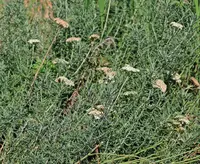
Black yarrow (Achillea atrata) is a compact, clump-forming perennial herb from mountain regions of central and southern Europe. It is related to common yarrow but has darker, often deep-colored flower heads and fine, feathery foliage.

The plant typically forms low mounds and sends up upright flowering stems, making it suitable for rock gardens and dry, sunny borders. Its alpine origin means it prefers well-drained, lean soils and does not tolerate prolonged wet conditions.

Achillea atrata is generally resilient, cold hardy, and drought tolerant once established, so many gardeners find it straightforward to care for Black Yarrow in suitable conditions with good light and moderate moisture.

Main Plant Requirements

Care Difficulty

Easy Care

Light Preference

Full Sun

Water Requirements

Low Water

Temperature Preference

Cold Hardy

Hardiness Zone

4–8

Soil Texture

Sandy, Loamy, Rocky

Soil pH

Slightly acidic (6.5–7.0), Slightly alkaline (7.0–7.5)

Soil Drainage

Well-drained

Fertilization

Minimal (feed rarely)

Get Personalized Care Plan

Scan your plant to receive care tips personalized for your specific plant

Available on iOS and Android

How to Care for the Black Yarrow

This alpine perennial thrives in strong light and performs best in open, exposed sites.

  • Provide 6–8 hours of direct sun daily; full sun from morning through mid-afternoon produces the most compact growth and flowers.
  • Tolerates light partial shade, especially with afternoon shade in very hot summers, but flowering of Black Yarrow declines if sun drops below about 4–5 hours.
  • In cooler seasons or cloudy climates, choose the brightest, least obstructed spot; lanky, weak stems indicate insufficient light, while scorched, bleached foliage suggests extreme dry heat exposure.

This species prefers dry to moderately dry conditions and is highly drought tolerant once established.

  • Water outdoor plants only when the top 3–5 cm of soil feel dry; in most climates this means infrequent, deep watering rather than light, frequent applications.
  • Ensure very sharp drainage with sandy or gritty soil; waterlogged or compacted ground greatly increases root rot risk in Achillea atrata.
  • In hot summer spells, slight leaf droop and dull foliage color signal the need for a soak, while yellowing lower leaves and a sour soil smell suggest overwatering.

This mountain yarrow is cold hardy and adapted to cool, exposed conditions with moderate summer warmth.

  • Active growth is strongest around 60–75°F (16–24°C); it tolerates typical outdoor summer heat if soil is well drained and roots are not waterlogged.
  • Mature plants withstand winter cold to about -20°F (-29°C) in dry, free-draining soil, with crowns benefiting from snow cover or light mulch in very exposed sites.
  • During heat waves above 90°F (32°C), flowering and foliage quality improve if the soil is kept slightly drier and plants receive late-day shade to reduce stress.

This species is adapted to dry, open habitats and does not require elevated humidity.

  • Aim for 30–50% relative humidity, similar to typical indoor air in many homes.
  • Black Yarrow tolerates very dry air and usually only shows humidity stress if combined with severe underwatering, leading to crisping leaf tips and sluggish growth.
  • If air is extremely dry and hot, group plants together and avoid placing them directly beside heating vents to reduce additional moisture loss.

Achillea atrata prefers lean, mineral soils with sharp drainage and low to moderate fertility.

  • Use a sandy or gritty loam, aiming for roughly 50–60% mineral components such as coarse sand or fine gravel to prevent waterlogging around the roots.
  • Keep pH slightly alkaline to neutral (about 7.0–8.0), adding a small amount of garden lime if the native soil is distinctly acidic.
  • Blend a modest portion of compost with coarse sand and perlite; too much organic matter increases moisture retention and encourages root rot in this species.
  • Avoid heavy clay, peat-heavy mixes, or any soil that stays wet for more than 1 day after watering, as poor aeration quickly damages the root system.

This species can be grown in containers if the setup prioritizes fast drainage and a stable, low-nutrient medium.

  • Select a wide, shallow pot that matches its fibrous, spreading root system and prevents the plant from sitting in a deep, wet column of soil.
  • Choose unglazed terracotta or other porous materials to let the mix dry quickly, which mimics the naturally dry, stony habitats this species occupies.
  • Raise the container slightly on feet or pot risers so excess water exits freely and does not wick back into the drainage holes after rainfall or irrigation.

Achillea atrata prefers low to moderate fertility and often performs best in lean soil.

  • Use a light application of balanced granular fertilizer (e.g., 10-10-10) or compost once in early spring for established clumps.
  • Apply at half the label rate to avoid lush, floppy growth and reduced flowering in Black Yarrow.
  • Skip additional feeding during summer unless growth is clearly weak, then use a diluted liquid balanced feed.
  • Do not fertilize in fall or winter, as the plant is entering or in dormancy and does not need extra nutrients.

Pruning Achillea atrata supports dense growth and longer flowering.

  • In mid to late summer, deadhead spent flower stems down to a leafy node to encourage continued blooming.
  • Remove dead, damaged, or diseased stems at the base whenever noticed to maintain plant health.
  • In late fall or very early spring, cut back old, woody, or leggy growth to 5–10 cm to refresh the clump.
  • Use clean, sharp hand pruners or scissors and make angled cuts just above healthy leaves or buds.

This species is more often transplanted in the garden than repotted in containers.

  • Transplant divisions or young plants in early spring or early fall, when temperatures are mild and soil is workable.
  • Look for signs such as crowded clumps, reduced flowering, or slow growth to decide when to lift and divide.
  • Every 3–4 years, dig up the clump, gently tease apart sections with firm roots, and replant at the same depth.
  • Water well after transplanting, then keep soil slightly moist for 1–2 weeks to limit root stress and support reestablishment.

Achillea atrata is commonly propagated by division and seeds.

  • Divide mature clumps in early spring or early fall, ensuring each piece has several shoots and a healthy root mass.
  • Sow seeds in late winter to early spring on the surface of a well-draining mix, as light helps germination.
  • Maintain 60–70°F and even moisture for seeds; germination often occurs within 2–4 weeks.
  • Softwood stem cuttings in late spring root in a sandy, free-draining medium under high humidity and bright, indirect light.

Established Achillea atrata plants are cold hardy in most temperate climates and need minimal winter care.

  • The crown and roots tolerate typical outdoor frosts once the plant is well established.
  • After hard frost, cut back dead stems to 5–10 cm, or leave some for winter interest and cut in late winter.
  • In very cold or exposed sites, apply a thin mulch layer around the root zone, keeping it slightly away from the crown.
  • Container-grown plants may be overwintered in a cold frame or unheated garage to reduce freeze–thaw stress on roots.

Care Tips

Encourage Compact Growth

Cut back flowering stems by one-third immediately after the first main flush of blooms to keep plants low, dense, and less likely to flop in windy, exposed sites.

Improve Drainage Mounds

On heavy or marginal soils, plant on low raised ridges or mounds 10–15 cm high using a gritty mix to mimic its natural alpine conditions and reduce winter root loss from excess moisture.

Staggered Rejuvenation Cuts

Every 2–3 years, divide and replant only the oldest, most open clumps in early spring, leaving younger clumps undisturbed so the planting continues to flower without a gap while sections re-establish.

Controlled Self-Seeding

Allow a few seed heads to mature and drop where you want new plants, then shear off the rest to prevent overcrowding and maintain a controlled, naturalized drift when growing Black Yarrow.

Targeted Pest Monitoring

Inspect flower stalks and leaf bases weekly in late spring for aphids or spittlebugs, and wash off small colonies with a firm hose spray before they build up enough to distort stems or reduce flowering.

Common Pests and Diseases

Powdery mildew

This disease often appears in warm, dry weather combined with poor air circulation, covering foliage with a white or gray powdery coating. Symptoms include distorted, stunted growth and reduced flowering if the infection is heavy.

Solution

Remove and dispose of heavily infected leaves and spent flower stems, then thin or divide clumps to improve airflow around plants. Avoid overhead watering, water at soil level in the morning, and, if needed, apply a sulfur or potassium bicarbonate fungicide labeled for ornamentals at the first signs of infection as part of broader Achillea atrata care instructions.

Leaf spot

This disease causes small, brown to purplish spots on leaves that may merge into larger blotches, leading to premature yellowing and leaf drop in humid or wet conditions. Symptoms include a gradual thinning of the foliage and reduced vigor rather than sudden collapse.

Solution

Cut off and discard affected leaves and any heavily damaged stems to reduce the source of infection. Keep foliage as dry as possible by watering at the base, increase spacing or divide dense clumps, and use a copper-based or chlorothalonil fungicide if leaf spots continue to spread despite cultural corrections.

Aphids

These insects cluster on young stems and flower stalks, sucking sap and causing curling, distortion, and sticky honeydew that can attract sooty mold. This pest is especially common on vigorous new growth and flowering shoots.

Solution

Spray colonies off with a firm stream of water and pinch back heavily infested shoot tips. For ongoing problems, treat with insecticidal soap or a light horticultural oil, making sure to coat the undersides of leaves and repeating applications as directed until populations are reduced.

Spittlebugs

These insects produce frothy, spittle-like masses on stems and leaf nodes while feeding on plant sap, which can cause minor distortion or weakening of tender shoots. This pest is frequently seen on yarrow species in spring and early summer.

Solution

Manually remove the foam masses by hand or rinse them off with a strong stream of water, which dislodges and exposes the nymphs. For larger plantings with recurring issues, reduce surrounding weeds that host spittlebugs and, if necessary, use insecticidal soap targeting young nymphs early in the season.

Botrytis blight

This disease thrives in cool, damp conditions and causes gray, fuzzy mold on fading flowers, buds, and sometimes leaves, leading to browning and collapse of affected tissues. Symptoms include water-soaked spots on petals and stems that quickly become covered with gray spores.

Solution

Remove and discard all spent flower heads, infected stems, and plant debris to reduce inoculum, and improve air circulation by thinning or dividing crowded clumps. Avoid prolonged leaf wetness, water early in the day at soil level, and in persistent cases apply a labeled fungicide for botrytis to protect healthy flower stalks during wet spells.

Interesting Facts

High alpine specialist

This species is native to the Eastern Alps and typically grows at high elevations on open, sunny, often windswept slopes with shallow, stony soils rich in limestone debris.

Dark flower centers

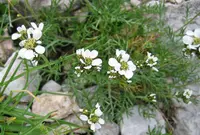
Unlike many other yarrow species with uniformly pale flower clusters, it is characterized by white to creamy flower heads with distinctly dark, almost blackish centers that create a strong contrast.

Preference for limestone scree

The plant commonly colonizes limestone screes and rocky calcareous grasslands, where it benefits from sharp drainage and low competition from taller vegetation.

FAQs about Black Yarrow

Lack of flowers usually comes from too much shade, overly rich or wet soil, or heavy, untimed pruning. Ensure full sun, free-draining soil, and avoid high-nitrogen fertilizers. Dividing very old clumps can also restore flowering.

Grow Healthy Plants with Botan Care

Keep your plants happy and healthy with plant identification, disease detection, and easy care guidance.

Botan plant care app — identify plants on mobile

Explore More Plants