Acampe pachyglossa Care

Acampe pachyglossa

About Acampe pachyglossa

Acampe pachyglossa is a warm-growing epiphytic orchid that typically anchors itself on tree trunks and branches. It forms compact clumps with stiff, leathery leaves and short, sturdy flower spikes.

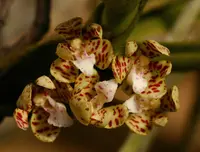
The flowers are small but numerous, usually yellowish with darker markings, and appear in clusters that give the plant a distinctive, textured display. It occurs naturally in parts of Southeast Asia, often in lowland to mid-elevation forests with high humidity and good air movement.

Its tough foliage and slow, steady growth make it relatively durable for an orchid, but it still needs stable warmth, bright filtered light, and regular moisture. Understanding how to care for Acampe pachyglossa starts with recreating these stable, humid forest conditions as closely as possible indoors or in a greenhouse.

Main Plant Requirements

Care Difficulty

Hard Care

Light Preference

Partial Shade

Water Requirements

Regular Water

Temperature Preference

Tropical / Frost Sensitive

Hardiness Zone

11–12

Soil Texture

Sandy, Rocky, Organic-rich

Soil pH

Acidic (5.5–6.5)

Soil Drainage

Well-drained

Fertilization

Light (every 4–6 weeks)

Get Personalized Care Plan

Scan your plant to receive care tips personalized for your specific plant

Available on iOS and Android

How to Care for the Acampe pachyglossa

This warm-growing epiphytic orchid prefers bright, indirect light similar to bright tree canopy conditions.

  • Provide 4–6 hours of bright, filtered light daily, such as dappled sun under taller plants or a shade cloth reducing direct rays by 40–60%.
  • Allow gentle early morning sun but protect from strong midday and afternoon sun, which can scorch leaves and cause yellow patches or dry leaf tips.
  • In summer, increase shade slightly; in cooler months, give a bit more light to maintain compact growth and reliable flowering in Acampe pachyglossa.

Watering should mimic brief tropical rains followed by fast drying around the roots.

  • Allow roots or mounting medium to dry almost completely between waterings; in warm weather this may mean thorough soaking every few days, guided by silvery, dry-looking roots as a cue.
  • Reduce watering in cooler seasons, keeping roots just barely moist; avoid constant wetness, which leads to root rot, limp leaves, and a musty smell.
  • Ensure excellent drainage and strong air movement around roots, as Acampe pachyglossa is highly sensitive to stagnant water and heavy, compacted substrates.

This species prefers consistently warm, frost-free conditions typical of lowland tropical climates.

  • Aim for 70–85°F (21–29°C) for active growth, with a slight night drop to 65–70°F (18–21°C) to support healthy metabolism and flowering.
  • Keep above 55°F (13°C) at all times; below this, growth slows, leaves may spot or drop, and prolonged exposure can damage roots and pseudostems.
  • The plant tolerates short spikes to 95°F (35°C) if humidity and air movement are high, but sustained heat plus dry air can cause wrinkled leaves and stressed roots.

This orchid prefers consistently warm, humid air to maintain firm leaves and healthy roots.

  • Aim for 60–80% humidity; tolerate short dips to 40–50% if watering is regular.
  • Watch for folded, leathery leaves and shriveled aerial roots as signs of low humidity stress in Acampe pachyglossa.
  • Increase humidity with a pebble tray under the pot, localized humidifier, or grouping plants without blocking air movement.

In cultivation this species grows best in a very airy, bark-based medium rather than compact potting soil.

  • Use a coarse orchid mix of medium bark, chunky perlite or pumice, and a small amount of charcoal for structure and aeration.
  • Ensure rapid drainage so water runs through within seconds, leaving the mix moist but never waterlogged.
  • Keep pH slightly acidic to neutral, around 5.5–7.0, which supports nutrient uptake and root health.
  • Avoid fine peat-heavy mixes or dense garden soil that collapse, stay soggy, and suffocate the roots of Acampe pachyglossa.

This species is suitable for container growing when mounted-style conditions are imitated in a pot or basket.

  • Choose a slatted basket or plastic pot with many side holes so aerial roots can grow out and dry quickly.
  • Fill only the lower part of the container with coarse mix, allowing upper roots to remain more exposed to air.
  • Use a heavier basket or add weight at the base to keep the container stable as tall, rigid flower spikes develop.

This orchid benefits from light, controlled feeding during active growth.

  • Use a balanced orchid fertilizer (around 20-20-20) diluted to 1/4–1/2 strength for caring for Acampe pachyglossa.
  • Feed every 2–3 weeks in spring and summer when new roots and leaves are forming.
  • Rinse the growing medium with plain water monthly to prevent salt buildup.
  • Reduce feeding to once every 4–6 weeks in fall and stop or feed very lightly in winter.

Pruning needs for Acampe pachyglossa are minimal and focus on plant health rather than shaping.

  • Carry out light pruning in late winter or after flowering flushes.
  • Remove dead, diseased, or shriveled roots and leaves with sterilized scissors or pruning shears.
  • Cut spent flowering spikes back to the base once they dry fully to redirect energy to roots and leaves.
  • Avoid heavy cutting of healthy canes, as this reduces future flowering and can stress the plant.

This epiphytic orchid prefers stable conditions and is repotted infrequently.

  • Plan to repot every 2–3 years or when roots circle tightly, growth slows, or the bark medium breaks down.
  • Choose late spring, as new roots start, to help Acampe pachyglossa reestablish quickly.
  • Use a small, snug pot or mount with coarse orchid bark to keep roots airy and well drained.
  • Moisten roots before repotting, handle them gently, and keep the plant shaded and slightly drier for 7–10 days afterward to limit stress.

Propagation of Acampe pachyglossa is specialized and not commonly attempted by home growers.

  • Vegetative propagation relies mainly on keikis, which are baby plants forming on mature stems under good light and humidity.
  • Detach keikis only when they have at least 3–4 roots of 3–5 cm length.
  • Pot keikis in fine to medium orchid bark and maintain warm temperatures of 70–80°F with high humidity of 60–80%.
  • Seed propagation requires sterile laboratory conditions and is not practical in typical home setups.

This warm-growing orchid is frost sensitive and needs protection in cool climates.

  • Keep temperatures above 55°F; prolonged exposure below this can damage leaves and roots.
  • Move container plants indoors or into a heated greenhouse before the first frost risk.
  • Provide bright, indirect light and good air movement while slightly reducing watering in winter.
  • Avoid cold drafts and keep the root zone dryish to reduce rot risk in low temperatures.

Care Tips

Basket mounting

Mount plants in slatted baskets or on hardwood slabs with coarse orchid media so roots receive high airflow and can attach firmly, then secure new leads with soft ties until they anchor.

Summer rain protection

If grown outdoors in warm climates, place the plant under a roof overhang or 50–70% shade cloth to avoid prolonged pounding rain that can damage roots and wash out nutrients.

Root health checks

Inspect aerial roots every 4–6 weeks, trimming only dead, hollow, or mushy sections with sterilized tools to keep the plant stable and reduce entry points for rot and pathogens.

Targeted air movement

Use a small oscillating fan on a low setting to keep air moving across foliage and roots, reducing fungal issues after heavy watering while avoiding direct, drying drafts.

Seasonal fertilizer pause

In cooler months with slower growth, reduce or pause feeding for 4–6 weeks and resume lightly as new root tips appear, which helps align nutrient supply with the plant’s active growth when caring for Acampe pachyglossa.

Common Pests and Diseases

Scale insects

This pest feeds on sap along the thick, leathery leaves and stems, causing yellowing patches, slowed growth, and sticky honeydew on nearby surfaces.

Solution

Remove visible scales with a cotton swab dipped in isopropyl alcohol, then wash the plant thoroughly with lukewarm water and a mild insecticidal soap; improve air movement and avoid overfertilizing to reduce future outbreaks, which is key for Acampe pachyglossa care instructions in warm, humid conditions.

Mealybugs

These insects hide in leaf axils and between crowded roots on mounts, sucking sap and leaving white, cottony clusters and sticky residue.

Solution

Unpot or unmount affected plants if practical, rinse roots and leaf bases under a gentle stream of water, then spot-treat remaining colonies with isopropyl alcohol and repeat checks weekly until no new insects appear.

Spider mites

This pest thrives in hot, dry air, leading to fine webbing, stippled or silvery leaves, and overall loss of vigor, especially on plants grown indoors or in dry greenhouses.

Solution

Increase humidity, hose down foliage thoroughly (including leaf undersides), and use a labeled miticide or insecticidal soap in repeated applications, ensuring good air circulation but avoiding strong, drying drafts.

Anthracnose

This disease causes sunken, brown to black spots on leaves and occasionally on flower spikes, often starting on older or stressed tissue.

Solution

Remove and discard affected leaves, improve air circulation around the plant, avoid wetting foliage late in the day, and apply a copper-based or other orchid-safe fungicide according to label directions if spotting continues to spread.

Bacterial brown spot

Symptoms include water-soaked lesions on leaves that rapidly turn brown and may emit a foul odor, often following mechanical damage in warm, stagnant conditions.

Solution

Isolate the plant, cut out infected tissue with sterile tools, keep leaves dry, increase airflow, and reduce overhead watering; in early stages, a hydrogen peroxide rinse on affected areas may help limit further spread.

Interesting Facts

Hot lowland specialist

This species is native to hot, humid lowland forests of India and Sri Lanka, where it often grows in exposed tree canopies that experience intense sun and high temperatures rather than the deep shade typical of many orchids.

Stout succulent roots

Its thick, fleshy aerial roots are adapted to cling tightly to rough tree bark and rapidly absorb rainfall and humidity, an adaptation that helps it cope with long, hot dry spells between showers in monsoon climates.

Fragrant yellow flowers

The flowers are small but conspicuously yellow with darker markings and produce a noticeable fragrance, which is thought to help attract specific insect pollinators in its native range.

FAQs about Acampe pachyglossa

Lack of flowering is usually linked to insufficient light intensity, too little temperature variation between day and night, or a plant that is still immature. Occasional mild stress from slightly cooler, drier conditions can also trigger bud formation.

Grow Healthy Plants with Botan Care

Keep your plants happy and healthy with plant identification, disease detection, and easy care guidance.

Botan plant care app — identify plants on mobile

Explore More Plants