Shield Sundew Care (Drosera peltata)

Also known as: Pale Sundew, drosera gracilis
Shield Sundew

About Shield Sundew

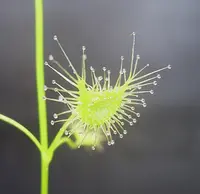
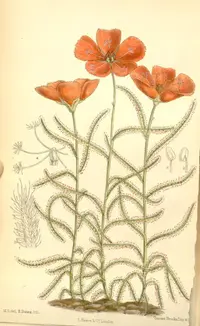
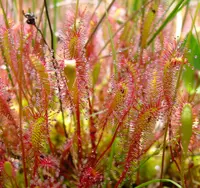
Shield sundew (Drosera peltata) is a small, carnivorous plant that forms slender, upright stems topped with round, shield-like leaves. Each leaf carries glistening sticky droplets that trap small insects, providing extra nutrients in poor soils.

This species is native to Australia, New Zealand, and parts of Southeast Asia, where it often grows in open, seasonally damp grasslands and heath. It is a tuberous sundew, which means it survives dry or cool periods as an underground storage organ and can be somewhat demanding in cultivation.

For those learning how to care for Shield Sundew, success usually depends on bright light, consistently moist but low-mineral conditions, and a clear seasonal rhythm with a rest period.


Main Plant Requirements

Care Difficulty

Moderate Care

Light Preference

Full Sun

Water Requirements

Aquatic

Temperature Preference

Cool Climate

Hardiness Zone

8–10

Soil Texture

Sandy, Peaty, Organic-rich

Soil pH

Strongly acidic (4.5–5.5), Acidic (5.5–6.5)

Soil Drainage

Waterlogged tolerant

Fertilization

Minimal (feed rarely)

Get Personalized Care Plan

Scan your plant to receive care tips personalized for your specific plant

Available on iOS and Android

How to Care for the Shield Sundew

Drosera peltata grows best with bright light that mimics open, sunny habitats.

  • Provide 4–6 hours of direct morning sun plus bright, filtered light for the rest of the day to support strong carnivorous growth in Shield Sundew.
  • Allow light partial shade in hotter climates, especially from harsh afternoon sun, to prevent leaf burn and drying of the fine sticky hairs.
  • Watch leaf color: reddish or bronze tones indicate high light, while pale, floppy growth suggests the plant needs more direct sun exposure.

This species prefers consistently moist, low-nutrient, acidic substrates.

  • Maintain soil evenly damp to wet; do not allow more than the top 0.5–1 cm to dry, as fine roots dry out quickly in Drosera peltata.
  • Use rainwater, distilled, or reverse-osmosis water and avoid mineral buildup, which shows as white crust on soil or stunted growth.
  • In cooler dormant periods, reduce saturation slightly while keeping soil moist; drooping, dull leaves suggest underwatering, while blackened bases suggest chronic waterlogging.

This sundew adapts to mild climates but reacts poorly to temperature extremes.

  • Aim for 60–77°F (16–25°C) during active growth for best leaf and trap formation.
  • Short dips to 40°F (4°C) are usually tolerated, but repeated frosts or hard freezes below 32°F (0°C) can damage or kill aerial parts.
  • In hot spells above 86°F (30°C), provide light shade and higher humidity, as prolonged heat stress can cause leaf curling, slowed growth, or premature dormancy.

This species prefers moderately humid air but tolerates typical indoor levels if roots stay constantly moist.

  • Aim for 50–70% humidity to keep glands active and dew production strong.
  • Tolerates brief dips to 30–40%, but leaves may curl, redden excessively, and lose dew under very dry air.
  • Increase humidity by using a nearby pebble tray or grouping plants, but avoid sealing Shield Sundew in closed, stagnant chambers.

This carnivorous species requires low-nutrient, acidic, open soil that stays moist but not stagnant.

  • Use a mix of 1:1 sphagnum peat moss and coarse silica sand or perlite for a loose, airy texture.
  • Ensure rapid drainage through the substrate while keeping consistent moisture by using a tray method rather than heavy watering from above.
  • Keep pH roughly 4.0–5.5, avoiding lime, compost, fertilizers, or bark that would raise nutrients or alkalinity.
  • For Drosera peltata, avoid dense garden soil or potting mixes, which compact easily and suffocate fine roots and tubers.

This species is suitable for container growing when depth, drainage, and moisture retention are balanced carefully.

  • Choose a pot at least 10–15 cm deep so underground tubers have room to form and remain insulated from heat.
  • Use plastic or glazed ceramic containers rather than porous clay to reduce evaporation and keep the tray-water method stable.
  • Elevate the pot slightly above the water tray base so drainage holes contact water film, not standing water, to prevent anaerobic conditions.

Drosera peltata gains most nutrients from captured insects and usually needs no conventional fertilizer.

Drosera peltata needs only light pruning to stay tidy and healthy.

  • In late winter or early spring, remove dead leaves and flower stalks using fine scissors or small snips.
  • Cut away any blackened, diseased, or dried growth at the base without disturbing live crowns.
  • Thin out congested stems slightly to improve light penetration and air movement.
  • Avoid shaping cuts; pruning is only for hygiene, not for sculpting the plant.

Container-grown plants benefit from occasional transplanting to refresh the airy, nutrient-poor substrate they need.

  • Plan to transplant every 1–2 years, or when growth slows and roots circle the pot drainage holes.
  • Move plants in late winter or very early spring, just before strong new growth starts.
  • Use a moist mix of sphagnum peat and sand or perlite; never add compost or standard potting soil.
  • Slide the root ball out gently, disturb tubers as little as possible, and water well to settle the new medium.

This species is commonly propagated from seed and, to a lesser extent, by careful division of tubers.

  • Sow fresh seed on the surface of moist peat-sand mix in late winter or early spring; do not bury it.
  • Provide bright light, high humidity, and cool to mild temperatures for steady germination.
  • Keep the substrate constantly damp with mineral-free water, avoiding waterlogged conditions.
  • Divide dormant tubers only when the clump is crowded, replanting them just below the surface.

This tuberous sundew requires a cool, dryish dormancy and moderate frost tolerance rather than intensive Shield Sundew indoor care.

  • In mild climates, allow foliage to die back naturally while tubers rest underground through winter.
  • Ensure containers drain well so dormant tubers do not sit in cold, stagnant water.
  • In areas with hard freezes below about 20°F, mulch outdoor pots lightly or move them to a frost-free, bright, cool spot.

Care Tips

Seasonal Dormancy Management

Allow the plant to naturally die back and rest in late summer by slowly reducing water and letting the pot dry almost fully between light waterings, then resume more regular moisture when new growth points or shoots appear in cooler seasons.

Use Deep, Narrow Pots

Grow plants in deep, narrow containers (15–20 cm) so the tubers can form well below the surface, which improves long-term vigor and reduces the risk of rot in warm spells.

Careful Pitcher Rotation

If containers are turned to even out light, rotate them only a small amount every few days so the delicate stems do not twist or topple, especially when tall scapes are in flower.

Insect Feeding Strategy

Place the plant outdoors for short periods during mild weather or position it near a slightly open window with insect activity so it can catch small flies naturally, rather than hand-feeding frequently, which can damage leaves if overdone.

Dry-Season Storage

For regions with very hot, dry summers, allow the medium to dry out completely once foliage has fully died back, then store the pot in a cool, dry, shaded place and label it clearly to avoid accidental watering during dormancy while caring for Shield Sundew nearby.

Common Pests and Diseases

Aphids

These insects congregate on young flower stalks and leaf bases, sucking sap and weakening the plant, especially in nutrient-poor carnivorous setups. Symptoms include distorted new growth, sticky honeydew, and reduced dew production on the leaves.

Solution

Rinse plants gently with a strong but controlled stream of water to dislodge colonies, then spot-treat remaining insects with a dilute insecticidal soap that is safe for carnivorous plants. For outdoor trays or bog setups, encourage natural predators such as lady beetles and avoid fertilizer or high-nitrogen conditions that favor aphid explosions when growing Shield Sundew.

Fungus gnats

These insects are attracted to constantly moist, peaty media and lay eggs that hatch into larvae feeding in the top layer of the substrate. Symptoms include slow growth, weak seedlings, and small larvae visible in the wet medium surface.

Solution

Allow just the top few millimeters of the medium to dry slightly between waterings while keeping the root zone moist, and use yellow sticky traps above the pot to capture adults. For persistent problems, top-dress with a thin layer of clean sand or apply a biological control such as Bacillus thuringiensis israelensis (BTI) to target larvae without harming the plant.

Botrytis (gray mold)

This disease thrives in cool, stagnant, very humid conditions and attacks old traps, flower stalks, and crowded foliage. Symptoms include soft brown patches that quickly develop fuzzy gray mold, often starting on dead or damaged tissue.

Solution

Remove and discard all affected leaves and flower stalks promptly, and improve air movement while keeping humidity moderate rather than saturated. Avoid water droplets sitting on leaves for long periods, and if outbreaks repeat, use a carnivorous-plant-safe fungicide as a short-term measure while correcting humidity and airflow.

Powdery mildew

This disease appears in dense, poorly ventilated setups and on plants stressed by sudden humidity or temperature swings. Symptoms include a white, powdery coating on leaves and petioles, reduced dew production, and gradual decline in photosynthesis.

Solution

Increase spacing between pots, enhance airflow, and reduce large swings in humidity and temperature. Carefully wipe or rinse affected foliage, then apply a mild fungicidal spray safe for sensitive carnivorous species, continuing treatment until new growth appears clean.

Spider mites

These pests favor warm, dry air and can colonize indoor or greenhouse-grown plants with low humidity. Symptoms include tiny pale stippling on leaves, loss of dew, fine webbing on petioles, and general decline in vigor.

Solution

Raise ambient humidity and rinse foliage thoroughly under lukewarm water to remove mites and webs, repeating every few days. For persistent infestations, use a targeted miticide or insecticidal soap labeled safe for tender foliage, and avoid letting conditions become hot and very dry for extended periods.

Interesting Facts

Tuber-forming life cycle

This species survives hot, dry summers by retreating into an underground tuber, then resprouts when cool, wet conditions return, giving it a distinctly seasonal growth cycle unlike many other sundews.

Climbing carnivorous stems

Mature plants often produce slender, climbing or scrambling stems up to several tens of centimeters tall, allowing their sticky leaves to reach above surrounding vegetation to trap more flying insects.

Wide Australasian range

The species occurs naturally across large areas of southeastern Australia, Tasmania, New Zealand, and some nearby islands, where it occupies seasonally damp habitats such as winter-wet slopes, open woodland, and grassland.

Botan icon

Did you know?

Drosera peltata shows notable morphological variation across its range, with some populations historically described as separate species or varieties, which has led to ongoing taxonomic discussion about how many distinct forms should be recognized within this complex.

FAQs about Shield Sundew

This species usually flowers after completing its rosette and stem growth and only with strong light and a cool winter rest. Plants kept too warm, repotted frequently, or allowed to dry out often skip flowering.

Grow Healthy Plants with Botan Care

Keep your plants happy and healthy with plant identification, disease detection, and easy care guidance.

Botan plant care app — identify plants on mobile

Explore More Plants