Diels Sundew Care (Drosera dielsiana)

Diels Sundew

About Diels Sundew

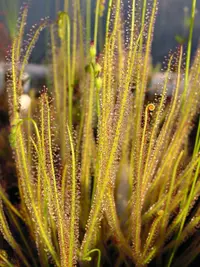
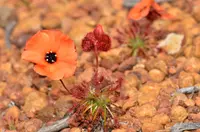
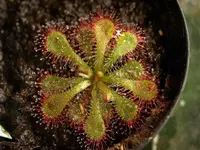
Diels sundew (Drosera dielsiana) is a small, rosette-forming carnivorous plant that traps insects with sticky, gland-covered leaves. It stays compact, which makes it suitable for indoor collections and small spaces.

The plant is native to parts of southern Africa, where it grows in open, sunny, nutrient-poor, and often seasonally wet habitats. Its need for consistently moist, low-mineral conditions and bright light is the main factor that affects how easy it is to grow.

Once those conditions are understood, it is relatively reliable and rewarding. Learning how to care for Diels Sundew helps new growers succeed with carnivorous plants in general.

Main Plant Requirements

Care Difficulty

Hard Care

Light Preference

Full Sun

Water Requirements

Aquatic

Temperature Preference

Tropical / Frost Sensitive

Hardiness Zone

10–11

Soil Texture

Sandy, Peaty, Organic-rich

Soil pH

Strongly acidic (4.5–5.5)

Soil Drainage

Waterlogged tolerant

Fertilization

Minimal (feed rarely)

Get Personalized Care Plan

Scan your plant to receive care tips personalized for your specific plant

Available on iOS and Android

How to Care for the Diels Sundew

This small sundew prefers bright conditions with several hours of direct sun for strong coloration and active traps.

  • Provide 4–6 hours of direct morning sun plus bright, filtered light the rest of the day; light shade in the hottest afternoon hours helps prevent leaf scorch.
  • Outdoors, an east- or southeast-facing exposure is ideal; indoors, place near a sunny window or under strong grow lights to support Diels Sundew energy needs.
  • If leaves turn pale green and lose red coloration, light is too low; if they bleach or curl and the moss dries rapidly, reduce direct midday sun.

This bog-dwelling carnivore requires constantly moist, low-mineral conditions to stay healthy.

  • Use only rainwater, distilled, or reverse-osmosis water; avoid tap water with dissolved salts, which gradually damage Drosera dielsiana roots and traps.
  • Keep the substrate evenly wet at all times; never allow it to dry out, even in the top 1–2 cm, but avoid stagnant water that smells sour or sulfurous.
  • In warm months, stand the pot in 1–2 cm of water and let it almost soak in before refilling; in cooler seasons, reduce the tray level but keep the mix damp.

This species prefers mild, frost-free conditions and reacts poorly to temperature extremes.

  • Aim for 65–80°F (18–27°C) for steady growth; short spikes to 85°F (29°C) are tolerated if humidity and soil moisture stay high.
  • Protect the plant from frost; avoid letting temperatures fall below 40°F (4°C), since repeated chills and light freezes can damage leaves and roots.
  • In hot spells above 85°F (29°C), increase air movement, shade during intense afternoon sun, and ensure the substrate remains cool and wet to avoid stress.

This small sundew prefers moderately high, stable humidity to keep its dewy traps active.

  • Aim for 50–70% humidity; growth often declines below ~40%.
  • Plant tolerates brief dips in drier air but leaves may shrink and dew drops reduce.
  • Humidity stress shows as curled leaf tips, dull or absent mucilage, and stalled new growth.
  • Increase humidity with a nearby open water tray or grouped plants, avoiding closed, stagnant terrariums.

This species requires a nutrient-poor, airy, and consistently moist carnivorous plant substrate.

  • Use a mix of 1:1 sphagnum peat moss and silica sand or perlite for a loose, open texture.
  • Ensure drainage is free but do not let the mix dry out; soil should stay evenly damp, never waterlogged mud.
  • Target slightly acidic conditions around pH 4.5–5.5, which match Drosera dielsiana habitats.
  • Avoid compost, fertilizers, regular potting soil, or bark-based mixes, which add minerals and can burn roots.

This species is very suitable for container growing when moisture and drainage are balanced carefully.

  • Choose a relatively shallow but wide pot so the fine root system can spread while the upper medium stays evenly moist.
  • Use plastic or glazed ceramic containers, which slow evaporation and help maintain the consistently damp substrate this species prefers.
  • Set the pot in a shallow tray of low-mineral water, allowing only a thin water layer so the medium stays moist but not stagnantly saturated.

This carnivorous sundew gains most nutrients from insects, so fertilizer use must be minimal and very dilute.

  • Use a very weak balanced liquid fertilizer (around 1/8–1/4 strength) only if Diels Sundew shows poor growth in otherwise correct conditions.
  • Apply to the soil, not directly on sticky leaves, every 4–6 weeks during active growth in spring–summer.
  • Avoid fertilizing in winter or any slow-growth period to prevent root burn and mineral buildup.
  • Flush the pot occasionally with pure rain, RO, or distilled water to remove accumulated salts.

Drosera dielsiana needs light, hygiene-focused pruning to maintain healthy rosettes and good trap function.

  • In any season, remove dead or blackened leaves at the base using fine scissors or tweezers to limit mold.
  • Trim spent flower stalks after seed set if stronger leaf growth is preferred over further flowering.
  • Thin out badly crowded rosettes only when necessary to improve air flow and reduce fungal risk.
  • Disinfect tools before use to avoid spreading disease between carnivorous plants.

This small rosette sundew benefits from occasional repotting to refresh its low-nutrient substrate and avoid compaction.

  • Look for roots circling the pot, stalled growth, or sour smell in the medium as signs repotting is needed.
  • Repot every 1–2 years in late winter or early spring, before strong new growth starts.
  • Use a fresh mix of 1:1 sphagnum peat and perlite or sand, kept moist with rain, RO, or distilled water only.
  • Handle the root ball gently, minimize disturbance, and keep humidity high for 1–2 weeks to reduce transplant stress.

This species is commonly multiplied by division, leaf cuttings, or seed under warm, bright, and humid conditions.

  • In late winter–spring, divide clumps, separating rosettes with roots and replanting into fresh carnivorous mix.
  • Take healthy leaves, lay them on damp peat–sand under high humidity and bright indirect light until plantlets form.
  • Sow fresh seeds on the surface of moist medium, do not cover, and provide 70–80°F and strong light for germination.
  • Maintain evenly moist substrate and avoid fertilizer around young plants until they are well established.

Drosera dielsiana is not frost hardy and needs mild, protected conditions during winter, especially in containers.

  • Keep plants above 40°F, ideally 50–60°F, as prolonged frost can kill roots and foliage.
  • Move pots indoors to a bright windowsill, greenhouse, or grow-light setup in cold climates.
  • Maintain moist but not waterlogged substrate, slightly drier than in summer, using low-mineral water only.
  • Avoid cold drafts and sudden temperature swings to reduce stress during the low-light season.

Care Tips

Mineral-free water

Use collected rainwater or distilled water in a shallow tray and occasionally top-water from above to flush any mineral buildup from the medium without disturbing the roots.

Seasonal dormancy cue

In winter, slightly reduce photoperiod and keep the plant a bit cooler to mimic mild seasonal rest, which helps maintain vigor and flowering in the following growing season.

Gentle air movement

Provide light, indirect air circulation from a small fan to discourage fungal growth on dewy leaves while avoiding strong drafts that dry the traps.

Targeted pest control

If aphids or fungus gnats appear, use a low-dose, carnivorous-plant-safe systemic treatment or yellow sticky traps placed just above pot level, avoiding direct contact with the sticky leaves.

Propagation rotation

Every 1–2 years, take leaf or root cuttings from the healthiest rosettes to start backup plants, which stabilizes long-term collections and reduces risk when caring for Diels Sundew.

Common Pests and Diseases

Fungus gnats

These insects breed in wet carnivorous media and their larvae chew on fine feeder roots and young growth. Symptoms include slow growth, weak seedlings, and clouds of tiny black flies when the pot is disturbed.

Solution

Allow the tray to dry slightly between waterings while keeping the medium damp, then use yellow sticky traps to catch adults and a biological control such as Bacillus thuringiensis israelensis (BTI) in the water to kill larvae. For severe infestations, repot into fresh carnivorous mix and rinse old media from roots with distilled or rainwater.

Aphids

These insects cluster on tender flower stalks and new leaves, sucking sap and causing distorted growth and sticky honeydew. Symptoms include curled or stunted leaves, deformed flowers, and reduced dew production.

Solution

Rinse affected areas under a gentle stream of distilled or rainwater, then treat with a dilute insecticidal soap or neem oil solution kept off the root zone as much as possible. Repeat treatments every 5–7 days until no new aphids appear, and remove heavily infested flower stalks to protect overall plant vigor when caring for Diels Sundew.

Spider mites

These pests thrive in dry indoor air and can damage the thin leaves, leading to faded color, loss of dew, and fine webbing. Symptoms include tiny pale speckles on leaves and general decline despite adequate light.

Solution

Increase humidity to around 50–70% and rinse foliage thoroughly under lukewarm water to remove mites and webs. If needed, apply a miticide or dilute neem oil spray to both leaf surfaces, repeating weekly while improving air movement to prevent reinfestation.

Botrytis (gray mold)

This disease appears in overly humid, stagnant air, especially on dead insect remains or decaying leaves. Symptoms include fuzzy gray mold patches on leaves, crowns, or old flower stalks, often following overcrowding and constant surface wetness.

Solution

Remove and discard all affected tissue and any dead plant material on the medium surface, then improve air circulation and avoid overhead misting. In persistent cases, apply a sulfur-based or other low-toxicity fungicide suitable for carnivorous plants and space plants so foliage dries more quickly.

Powdery mildew

This disease can occur in crowded terrarium setups with poor airflow, forming white, powdery patches on leaves that reduce photosynthesis and dewdrop production. Symptoms include dull, dusty-looking foliage and gradual weakening of the plant.

Solution

Increase ventilation and slightly reduce humidity while maintaining damp soil, and remove heavily affected leaves. A mild fungicidal spray such as potassium bicarbonate, applied lightly to foliage and repeated as needed, helps control the infection without overly stressing the plant.

Interesting Facts

Compact alpine sundew

This species is naturally small and forms flat rosettes close to the ground in high-altitude grasslands and rocky seepage areas of southern Africa, where it experiences cooler nights and intense light compared to many other tropical sundews.

Self-pollinating flowers

Its pink to reddish flowers are often cleistogamous, meaning they can self-pollinate without fully opening, which allows reliable seed production even when pollinators are scarce in its montane habitats.

Seasonal growth rhythm

In cultivation and in the wild it often shows a marked seasonal pattern, growing most actively in cooler, brighter months and slowing during hot periods, reflecting its adaptation to upland climates rather than lowland tropical wetlands.

Botan icon

Did you know?

Drosera dielsiana was one of the early African sundews to be widely distributed through seed exchanges and botanical collections in the 20th century, which is why it became a model species for hobbyists studying Drosera dielsiana plant care and basic carnivorous plant biology long before many other African Drosera were commonly grown.

FAQs about Diels Sundew

Brown leaves usually result from low humidity, mineral buildup from hard water, or strong direct sun scorch. Check water quality, raise humidity, and move the pot slightly away from harsh midday light to prevent further tissue damage.

Grow Healthy Plants with Botan Care

Keep your plants happy and healthy with plant identification, disease detection, and easy care guidance.

Botan plant care app — identify plants on mobile

Explore More Plants