striped bladderwort Care (Utricularia striata)

striped bladderwort

About striped bladderwort

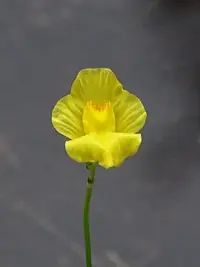
Striped bladderwort (Utricularia striata) is a small, carnivorous aquatic or semi-aquatic plant that naturally grows in nutrient-poor ponds, ditches, and boggy wetlands. It uses tiny underwater bladders to trap microscopic prey, gaining nutrients from captured organisms rather than from soil. The plant usually forms fine, threadlike foliage under water and sends up delicate, yellow, striped flowers above the surface in season. It often prefers still or slow-moving, clean water and very low-nutrient conditions. These specialized needs make it more challenging than typical houseplants, so learning how to care for striped bladderwort is important before adding it to a collection.

Main Plant Requirements

Care Difficulty

Hard Care

Light Preference

Partial Sun

Water Requirements

Aquatic

Temperature Preference

Warm Climate

Hardiness Zone

7–10

Soil Texture

Sandy, Peaty, Organic-rich

Soil pH

Strongly acidic (4.5–5.5), Acidic (5.5–6.5)

Soil Drainage

Waterlogged tolerant

Fertilization

Minimal (feed rarely)

Get Personalized Care Plan

Scan your plant to receive care tips personalized for your specific plant

Available on iOS and Android

How to Care for the striped bladderwort

This semi-aquatic carnivorous species prefers bright, gentle light that mimics open, boggy habitats.

  • Provide 4–6 hours of bright, indirect light or light shade, with soft morning sun and protection from intense midday and late-afternoon sun.
  • In outdoor bog or pond margins, use dappled or filtered light; striped bladderwort foliage can bleach or scorch under full, unfiltered sun in hot climates.
  • In low light the plant becomes sparse and flowers less, so shift it to a brighter position seasonally as sun angles change, especially in late fall and winter.

This species needs constantly wet, low-mineral conditions similar to a shallow bog or pond edge.

  • Maintain water at or just above substrate level; the soil or peat mix should never dry out, even in the top 1–2 cm.
  • Use rainwater, distilled, or reverse-osmosis water for Utricularia striata, since dissolved salts from tap water can damage its fine roots and traps over time.
  • In hot, windy weather, monitor daily for exposed, drying patches and top up water; pale, shrinking foliage usually signals lack of moisture, while sour smell and slimy algae suggest stagnation.

This carnivorous aquatic to semi-aquatic plant prefers mild to warm conditions without hard frost or extreme heat.

  • Aim for 65–80°F (18–27°C) for active growth, which suits most late-spring to early-fall conditions in temperate regions.
  • Short dips to around 50°F (10°C) are usually tolerated, but repeated exposure below 45°F (7°C) or any freeze can damage or kill delicate stolons and traps.
  • In hot spells above 86°F (30°C), provide light shade and ample water depth to keep the root zone cooler and prevent heat stress or dieback.

This species prefers consistently high humidity that mimics boggy, saturated habitats.

  • Aim for 60–90% humidity, as striped bladderwort grows best in very moist air near standing water.
  • Tolerates only brief dips into drier air; prolonged humidity below 50% often slows growth and reduces trapping activity.
  • Crisping leaf tips, stalled growth, and shrinking traps indicate low humidity; raise levels using water trays, enclosed setups, or a humidifier placed nearby.

This carnivorous species thrives in nutrient-poor, waterlogged media rather than conventional potting soil.

  • Use a loose, fine-textured mix of 1:1 unfertilized sphagnum peat and silica sand to mimic acidic, sandy bog conditions.
  • Keep the medium saturated but not compacted; it should hold water like a sponge while still allowing some air around the roots and stolons.
  • Target a pH of about 4.5–6.0, avoiding lime, fertilizers, or compost that add nutrients and raise alkalinity, which can damage Utricularia striata.
  • Rinse sand thoroughly before use to remove minerals and avoid any bark, manure, or standard potting mixes that introduce excess nutrients.

This species is suitable for container culture when moisture and water levels are tightly controlled.

  • Choose a wide, shallow container to give its spreading stolons horizontal space while keeping the water table close to the surface.
  • Use a solid, non-porous pot such as plastic to slow evaporation and maintain consistently saturated substrate.
  • Stand the container in a tray or outer reservoir, adjusting water depth so the medium stays saturated but the crown is not submerged.

This aquatic carnivorous species gains most nutrients from captured prey, so fertilizing Utricularia striata is usually unnecessary and can be harmful.

Pruning Utricularia striata is minimal and mainly helps maintain clean, healthy growth in cultivation.

  • Trim away dead or decaying leaves and spent flower stalks at any time to prevent rot in wet conditions.
  • Use fine scissors or aquascaping scissors to cut material just above healthy green tissue.
  • Thin out overly dense mats to improve water circulation and light penetration in the planting area.
  • Remove algae-covered or smothered portions to limit competition and support better flowering.

This species is usually grown in shallow aquatic containers or bog setups, where disturbance should be limited.

  • Transplant only when growth is overcrowded, water quality declines, or the substrate becomes compacted or fouled.
  • Aim to transplant in spring or early summer when water temperatures are rising and growth is active.
  • Typical intervals are 1–3 years, lifting and dividing mats rather than handling fine roots directly.
  • Gently move plant sections into fresh, low-nutrient medium and water, keeping tissues continuously moist to reduce stress.

Utricularia striata plant care often includes propagation to refresh colonies and share plants.

  • Division is the primary method, separating portions of the vegetative mat with healthy traps and leaves.
  • Carry out division in spring or early summer under stable, warm water conditions.
  • Place sections in low-nutrient, shallow water over sand or peat-based substrate with bright, indirect light.
  • Seed propagation is possible but slower; provide consistently wet, nutrient-poor medium and avoid algae buildup.

Winter care depends strongly on local climate and whether the plant is grown outdoors or in containers.

  • Hardy outdoor stands tolerate light to moderate frost if submerged or in consistently wet bog conditions.
  • In colder regions, sink containers into the ground and mulch around pots to insulate the root zone.
  • For small container setups, move tanks or trays indoors to a cool, bright, frost-free room for winter.

Care Tips

Shallow Water Setup

Use a wide, shallow container with 3–6 cm of soft, low-mineral water so the stolons can spread freely and traps stay fully submerged without forcing the plant into deep shade.

Clean Water Rotation

Rotate out 20–30% of the tray or aquarium water every 1–2 weeks to prevent mineral buildup and algae growth while keeping the plant in stable water conditions.

Algae And Moss Control

Limit strong light on bare water surfaces and manually remove filamentous algae or encroaching moss so the fine shoots and traps are not smothered.

Gentle Division Timing

Only divide and move mats when they are actively growing and forming dense, healthy stolons, and handle them under water to avoid tearing the delicate trap structures.

Monitor Prey Load

If kept outdoors or with many aquatic invertebrates, thin dense populations of mosquito larvae or similar prey so the plant does not accumulate decaying material that can foul the water when growing striped bladderwort.

Common Pests and Diseases

Algal overgrowth

Symptoms include green, slimy mats covering water surfaces, plant foliage, and container walls, which can block light and compete with the plant for nutrients and oxygen.

Solution

Reduce light intensity or duration to the lower end of this species’ requirement, increase partial shading, and perform frequent water changes to dilute nutrients. Manually remove algae from water surfaces and container sides, and avoid overfertilizing any companion plants in the same water body.

Filamentous aquatic fungi

This disease causes cotton-like white or gray growth on old foliage, dead flower stalks, and plant debris, and can slowly spread to healthy traps and stems in stagnant water.

Solution

Remove decaying plant material promptly, increase water movement or aeration, and replace part of the water to lower organic load. If growth persists, discard severely affected portions and refresh the planting container with clean, soft, low-nutrient water as part of Utricularia striata care instructions.

Aquatic snails

These pests graze on fine leaf segments and flower stalks, leaving irregular bite marks, shredded foliage, and reduced flowering, especially in confined containers or ponds.

Solution

Hand-pick visible snails regularly, rinse new aquatic plants before introduction, and use fine mesh barriers on inlets to reduce new introductions. In small containers, temporarily relocate the plant and rinse it gently in clean water, then reset the habitat using snail-free water and thoroughly cleaned substrate surfaces.

Mosquito larvae

These insects develop in still water around the plant, where heavy larval populations can disturb fine rootless structures and alter water quality through waste accumulation.

Solution

Increase water circulation with gentle aeration or small pumps, and break up standing water by regularly agitating or renewing it. In outdoor ponds, introduce compatible mosquito predators such as mosquito fish where legal, and avoid letting trays, buckets, or tubs of water remain stagnant for more than a few days.

Interesting Facts

Specialized bladder trap

This species has tiny underwater bladder traps mostly 0.5–1.5 mm wide that use a vacuum mechanism to capture small aquatic invertebrates such as water fleas and mosquito larvae within milliseconds.

Striped flower pattern

Its yellow flowers show distinct darker stripes on the lower lip that act as nectar guides, helping pollinators locate the entrance to the flower more efficiently.

Native coastal habitats

The plant is naturally found in shallow, nutrient-poor waters of the Atlantic and Gulf Coastal Plain in the southeastern United States, often in ponds, ditches, and slow-moving streams with sandy or peaty substrates.

Botan icon

Did you know?

Unlike many aquatic plants, this species usually lacks true roots and instead floats or anchors lightly in the substrate, relying on finely divided leaf-like structures and its carnivorous traps for both nutrient capture and support.

FAQs about striped bladderwort

Lack of flowers usually comes from insufficient seasonal temperature shifts, poor nutrient balance, or water that is too enriched with fertilizers. Cool winter rest, low-mineral water, and stable wet conditions often restore normal flowering over the following season.

Grow Healthy Plants with Botan Care

Keep your plants happy and healthy with plant identification, disease detection, and easy care guidance.

Botan plant care app — identify plants on mobile

Explore More Plants