Substrate anchoring
Secure stems lightly into a shallow layer of clean sand or fine gravel so the plant can anchor and form dense mats instead of floating loosely and breaking apart.

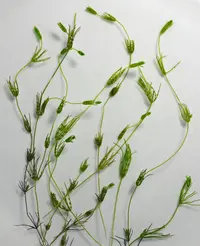
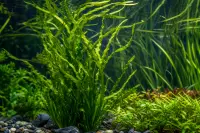
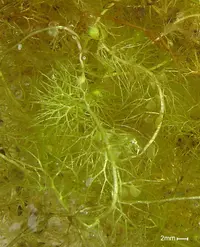
Fragile stonewort (Chara globularis) is a submerged green alga often treated like an aquatic plant in aquariums and ponds. It forms soft, bushy underwater tufts that resemble delicate stems with whorled branchlets. In nature it grows in still or slow-moving freshwater such as ponds, lakes, and canals, usually in clear, low-nutrient water. Its ability to compete with filamentous algae and stabilize water quality can make it a useful companion in naturalistic water gardens. For those who want to care for fragile stonewort, its needs are generally simple: clean, cool, well-oxygenated water and stable conditions without frequent disturbance.

Care Difficulty
Moderate Care

Light Preference
Partial Sun

Water Requirements
Aquatic

Temperature Preference
Cool Climate

Hardiness Zone
Unknown

Soil Texture
Silty, Organic-rich

Soil pH
Slightly acidic (6.5–7.0), Neutral (7.0)

Soil Drainage
Waterlogged tolerant

Fertilization
Minimal (feed rarely)
Scan your plant to receive care tips personalized for your specific plant
Available on iOS and Android
Chara globularis thrives in stable, moderate light conditions in shallow, clear water.
Water management focuses on clean, oxygenated water rather than traditional soil watering for this submerged alga.
This species prefers cool to mild water and tolerates a broad range if changes are gradual.
This aquatic alga relies on water conditions, not air humidity, so room humidity is generally irrelevant for fragile stonewort.
Chara globularis anchors in soft, submerged sediments rather than traditional potting soil.
This species can be grown in containers such as aquaria or tubs when water depth and stability are controlled.
Chara globularis in aquaria needs only minimal nutrition and often thrives without added fertilizer in balanced, lightly stocked tanks.
Pruning Chara globularis is mainly a maintenance task to keep underwater growth tidy and light-access balanced.
This species is usually anchored directly in substrate, so focus on gentle transplanting rather than traditional repotting.
Chara globularis propagation in aquaria is straightforward by division of existing thalli rather than from spores.
In outdoor ponds, this cold-tolerant alga usually requires little specific winter care once established.

Plant Health Check
Not sure what's wrong with your plant? Check your plant's health inside the app.
This species often precipitates calcium carbonate onto its surfaces in hard-water lakes, so its coarse, brittle stems feel rough and can even appear chalky under water.
It typically forms dense underwater meadows in clear, hard, calcareous lakes and slow-moving rivers, where it stabilizes sediments and helps maintain water clarity by trapping suspended particles.
Its reproductive organs (antheridia and oogonia) develop in distinct positions on the stem nodes, often with the female oogonia located above the male antheridia, which is a key feature used by botanists to distinguish it from related species.

Chara globularis is considered a bioindicator species for good water quality, and its presence in a lake is often used by freshwater ecologists to signal relatively low nutrient levels and limited pollution.
Growth is usually moderate under good conditions. In clean, nutrient-rich, still or slow-moving water with strong light, it can extend several centimeters per month, forming dense underwater mats over a single growing season.
Keep your plants happy and healthy with plant identification, disease detection, and easy care guidance.