Controlled Water Depth
Maintain a shallow, stable water layer of about 5–10 cm above the substrate during active growth to mimic its natural temporary pool habitat and reduce stress from sudden water level changes.

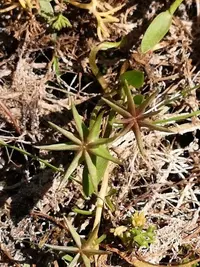
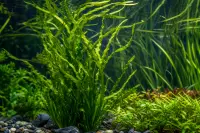
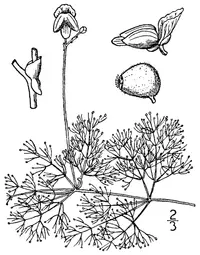
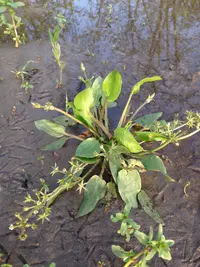
Damasonium polyspermum, sometimes called starfruit in aquatic plant literature, is a small, rosette-forming aquatic or semi-aquatic herb. It belongs to marsh and shallow water habitats. The plant typically has narrow, grass-like leaves and star-shaped inflorescences held above the water or mud surface, giving it a delicate, minimalist look.
In the wild, it occurs in parts of southern Europe and surrounding regions, usually in seasonal pools, ditches, and other calm, nutrient-poor waters. It can be challenging to grow in cultivation because it needs consistently moist or shallowly flooded conditions and low competition from other plants. Anyone wanting to learn how to care for Starfruit should focus on stable moisture, full sun, and sandy, low-nutrient substrates.

Care Difficulty
Hard Care

Light Preference
Full Sun

Water Requirements
Aquatic

Temperature Preference
Warm Climate

Hardiness Zone
Unknown

Soil Texture
Silty, Organic-rich

Soil pH
Slightly acidic (6.5–7.0), Neutral (7.0)

Soil Drainage
Waterlogged tolerant

Fertilization
Minimal (feed rarely)
Scan your plant to receive care tips personalized for your specific plant
Available on iOS and Android
This aquatic annual prefers bright, open conditions with protection from harsh afternoon sun.
Damasonium polyspermum thrives in consistently wet to shallowly submerged conditions.
This species grows best in mild to warm conditions typical of temperate-climate pond margins.
Humidity is not a major factor for Damasonium polyspermum when grown outdoors in typical wetland or pond-edge conditions, unlike more humidity-sensitive crops such as Starfruit.
Damasonium polyspermum is an aquatic or semi-aquatic species that needs persistently wet, nutrient-poor substrate.
This species is suitable for container growing only when the container is used as a small pond or water garden feature.
Damasonium polyspermum is a low-nutrient, aquatic or bog plant that needs only light supplemental feeding in cultivation compared with crops like Starfruit.
Pruning needs for Damasonium polyspermum are minimal and mainly hygienic rather than structural.
Transplanting Damasonium polyspermum focuses on renewing its shallow, aquatic or bog substrate rather than frequent pot changes.
Multiplying Damasonium polyspermum is usually done by division or seed, depending on conservation needs and available material.
Damasonium polyspermum is moderately hardy where winters are not severe but may need some protection in colder regions.

Plant Health Check
Not sure what's wrong with your plant? Check your plant's health inside the app.
This aquatic annual is strongly associated with traditional rice cultivation in parts of the western Mediterranean, where it germinates and completes its life cycle in seasonally flooded rice fields and irrigation channels.
The species has declined markedly as a result of agricultural intensification, herbicide use, and the shift away from traditional flooded rice systems, and it is now considered highly threatened in several parts of its native range.
Its star-like fruiting head is made of several dry, boat-shaped follicles, each containing numerous small seeds, a feature that led to the species name polyspermum, meaning many-seeded.
Despite the name, this aquatic species is not the tropical edible fruit tree. It is not cultivated for food and should not be eaten, as there is no safety data for human consumption.
Keep your plants happy and healthy with plant identification, disease detection, and easy care guidance.