Star Bladderwort Care (Utricularia stellaris)

Star Bladderwort

About Star Bladderwort

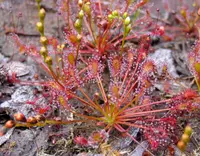
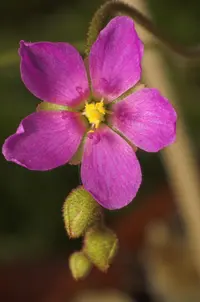
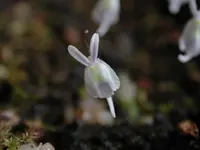
Star bladderwort, Utricularia stellaris, is a free-floating aquatic carnivorous plant found in still or slow waters across tropical Africa and Asia. It forms delicate, branching mats just below the water surface. Fine underwater leaves carry tiny bladder traps that capture small aquatic invertebrates, supplying nutrients where the water is poor in minerals. At the surface, it produces slender stalks with small, often yellow, snapdragon-like flowers that rise above the water. This species prefers warm, sunny, nutrient-poor, low-turbulence water and is sensitive to disturbance and pollution. Because of its specific water quality and nutrient needs, how to care for Star Bladderwort is more challenging than for most common aquarium or pond plants.

Main Plant Requirements

Care Difficulty

Hard Care

Light Preference

Full Sun

Water Requirements

Aquatic

Temperature Preference

Tropical / Frost Sensitive

Hardiness Zone

10–12

Soil Texture

Sandy, Silty, Organic-rich

Soil pH

Acidic (5.5–6.5)

Soil Drainage

Waterlogged tolerant

Fertilization

Minimal (feed rarely)

Get Personalized Care Plan

Scan your plant to receive care tips personalized for your specific plant

Available on iOS and Android

How to Care for the Star Bladderwort

This floating aquatic carnivorous plant thrives with strong light but needs protection from extreme midday intensity.

  • Provide 6–8 hours of sun daily, ideally with full morning sun and lightly filtered light from late morning to mid-afternoon in warm climates.
  • Allow partial shade (about 3–4 hours of direct sun) in very hot regions to prevent leaf scorch and overheating of the water surface.
  • In cooler seasons, shift Star Bladderwort to a position with longer direct sun exposure so water stays warm enough to sustain active growth.

As a free-floating aquatic species, this plant depends on consistently wet, low-nutrient water rather than traditional soil watering.

  • Grow Utricularia stellaris in shallow, still or very slow-moving water, 10–40 cm deep, with no soil substrate or only an inert medium like washed sand or gravel.
  • Maintain water levels so traps and foliage never dry; shrinking mats, pale foliage, or crispy edges indicate drying, while foul smell or slimy algae growth suggests excessive nutrients.
  • In warm seasons top up with rainwater or distilled water to replace evaporation; in cooler periods reduce top-ups but keep the water line stable to avoid temperature and depth shocks.

This tropical aquatics species prefers warm, stable water and air temperatures without frost or extreme heat swings.

  • Aim for 72–86°F (22–30°C) water and air for best growth, as cooler conditions slow trapping activity and overall vigor.
  • Protect the plant from temperatures below 59°F (15°C); brief dips to 50°F (10°C) may be survived but can cause dieback, especially of fine stolons and traps.
  • Avoid exposing shallow containers or ponds to prolonged heat over 95°F (35°C); provide light shade and good water volume to limit overheating and low-oxygen stress.

This aquatic carnivorous species needs consistently high humidity to thrive.

  • Maintain 70–100% humidity around Star Bladderwort, ideally over warm standing or gently circulating water.
  • Dry air leads to browning leaf tips, slowed growth, and shrinking or inactive traps.
  • Raise humidity by using covered aquaria, terraria lids, or deep trays of water rather than fine misting.

This species grows best in nutrient-poor, soft, waterlogged media rather than conventional potting soil.

  • Use a mix of 1:1 unfertilized peat and silica sand, or fine aquatic carnivorous-plant substrate, to mimic shallow, muddy habitats for Utricularia stellaris.
  • Ensure the mix stays fully saturated or submerged, with no fertilizer added, as nutrient-rich media damage the delicate bladders.
  • Keep pH mildly acidic, roughly 5.0–6.0, by using rainwater, distilled, or RO water instead of tap water where possible.
  • Avoid dense clay, added compost, manure, or bark-based mixes, which hold minerals, reduce oxygen, and can rot stolons and bladders.

This species is suitable for container culture when grown in water-filled trays, tubs, or aquaria.

  • Select wide, shallow containers to allow horizontal stolon spread while keeping the water column easy to light and manage.
  • Choose inert plastic or glass containers that do not leach minerals, which would gradually raise conductivity and stress the plant.
  • Stabilize the container so water levels remain steady and vibrations are minimal, which helps trap function and prevents delicate structures from damage.

Carnivorous Utricularia stellaris gains most nutrients from captured prey, so use fertilizer sparingly to avoid damage.

  • Skip fertilizer for healthy plants in nutrient-poor, soft water; Star Bladderwort often performs best without added feeding.
  • If growth is weak, use a very dilute balanced NPK aquatic fertilizer at 10–25% strength, no more than once every 4–6 weeks in active growth.
  • Never apply fertilizer directly onto leaves or traps; dose the surrounding water and monitor for algae or leaf burn.
  • Do not feed in winter or dormancy; maintain clean, low-mineral water instead.

Pruning Utricularia stellaris is minimal and mainly keeps growth tidy and flowering stems productive.

  • Trim away dead, yellowing, or decaying strands year-round using small scissors to maintain water quality.
  • Thin out congested mats during peak growing season to improve light penetration and oxygen movement around the foliage.
  • Remove spent flower stalks near the base to redirect energy to new vegetative growth and future blooms.
  • Avoid heavy cutting at once; remove sections gradually to limit stress on the plant’s aquatic system.

Transplanting Utricularia stellaris focuses on refreshing water and space rather than traditional root-ball repotting.

  • Move plants when growth slows, mats become overly dense, or strands crowd the container edges.
  • Plan transplanting in late spring or early summer, about every 1–2 years, when active growth supports recovery.
  • Gently lift and transfer sections with intact stolons into a clean container or pond area with soft, low-mineral water.
  • Handle roots and stolons minimally, keep them submerged, and match temperature and water chemistry to reduce shock.

Multiplying Utricularia stellaris is usually done vegetatively, using plant fragments instead of conventional cuttings.

  • Divide healthy mats in late spring or summer, separating sections with several green strands and traps.
  • Float divisions in shallow, soft, low-nutrient water with bright, indirect light for steady establishment.
  • Avoid burying plant parts in soil; keep them free-floating or loosely anchored in fine, inert substrate if used.
  • Seed propagation is possible but slow; provide stable warmth, high humidity, and still, nutrient-poor water for germination.

Cold sensitivity means Utricularia stellaris needs thoughtful winter management in temperate climates.

  • Treat it as a frost-sensitive aquatic; growth declines sharply near freezing and tissue can be damaged by frost.
  • Move containers indoors or into a heated greenhouse before temperatures fall below 40°F.
  • Maintain cool, bright conditions with soft water and reduced feeding to allow a gentle semi-dormant phase.
  • Avoid ice formation in the root zone or around stolons, as this can kill submerged growth.

Care Tips

Use Rainwater Reservoirs

Keep a dedicated, covered rainwater or RO-water container near the pond or tub so you can quickly top up low water levels without resorting to mineral-rich tap water that can weaken the plant’s traps over time.

Provide Gentle Water Movement

Use a small, low-flow air stone or gentle fountain to maintain light water circulation, which helps prevent stagnation, reduces algal film on the surface, and keeps the fine stolons from accumulating debris.

Control Competing Plants

Regularly remove aggressive floating species such as duckweed and water lettuce so they do not shade out the plant’s photosynthetic shoots or trap-bearing filaments.

Seasonal Container Refresh

In container culture, siphon out and replace 20–30% of the water every 4–6 weeks during the growing season to dilute dissolved minerals and organic buildup without disturbing the plant’s delicate roots and bladders.

Encourage Natural Prey

Position the container or pond near other moist vegetation or a light source that attracts small aquatic invertebrates, which provides a steady prey supply and supports healthy, sustained growth when growing Star Bladderwort.

Common Pests and Diseases

Algal overgrowth

Symptoms include submerged leaves and traps being shaded or smothered by fast-growing filamentous or planktonic algae. This condition often appears in nutrient-rich, still water under strong light.

Solution

Reduce dissolved nutrients by changing 20–30% of the water with soft, low-mineral water and limit any fertilizer or fish waste input. Manually remove filamentous algae, increase shade or floating cover slightly, and, if possible, add gentle water movement or more competing aquatic plants that do not outcompete Utricularia for space.

Cyanobacterial slime

This disease is caused by cyanobacteria (blue-green algae) forming slimy, dark green to reddish mats that coat stems and traps. This growth can block light and reduce gas exchange around the plant.

Solution

Siphon or manually remove as much slime as possible, then perform several small water changes over a week to lower nutrients and organic debris. Improve circulation, avoid excess heating and direct intense light, and maintain very low or no added fertilizer to discourage regrowth.

Spider mites

This pest may occur when plants are grown in very humid greenhouses with nearby terrestrial plants and then experience brief drying at the water surface or on emergent foliage. These insects feed on soft tissues, causing stippling, pale patches, and fine webbing on any emergent or marginal leaves.

Solution

Rinse affected foliage gently with a strong but controlled stream of water and increase ambient humidity while avoiding leaf desiccation. If mites persist, use a targeted miticide or insecticidal soap labeled for use around aquatic plants, keeping treatment localized and avoiding contamination of the main water volume as much as possible.

Aphids

This pest occasionally colonizes emergent flowering stalks and buds, sucking sap and causing distortion or drooping of flower stems. These insects can weaken flower production and attract ants or sooty mold on honeydew deposits above the water line.

Solution

Submerge or rinse infested flower stalks to dislodge aphids, or prune and discard heavily affected inflorescences. For persistent infestations, apply a mild insecticidal soap or horticultural oil directly to emergent parts only, shielding the water surface to protect the aquatic traps and microfauna.

Interesting Facts

Floating carnivorous mats

This species often forms dense, free‑floating mats on still or slow‑moving tropical waters, using finely divided foliage to increase buoyancy and light capture at the surface.

Sophisticated suction traps

Its underwater leaf segments carry tiny bladder traps that create negative pressure and snap open in milliseconds, drawing in small aquatic prey such as microcrustaceans and protozoa.

Specialist of warm wetlands

It is naturally restricted to warm, lowland wetlands and ponds in tropical and subtropical regions of Asia and Africa, where stable warmth and nutrient‑poor water favor its carnivorous strategy.

Botan icon

Did you know?

The bladder traps of this species are among the fastest known movements in the plant kingdom, with trap activation measured on the scale of milliseconds, comparable to the rapid closure of some Venus flytrap cultivars.

FAQs about Star Bladderwort

This species can spread quickly by vegetative fragments and seed in warm, nutrient-rich, still or slow-moving water. In contained ponds it often needs periodic thinning to prevent it from forming dense mats that crowd other aquatic plants.

Grow Healthy Plants with Botan Care

Keep your plants happy and healthy with plant identification, disease detection, and easy care guidance.

Botan plant care app — identify plants on mobile

Explore More Plants