Cool-night cycling
Provide cooler nights around 50–59°F in autumn and winter by placing pots near a slightly open window or in an unheated but frost-free room to extend the plant’s short life cycle and encourage better germination of self-sown seed.

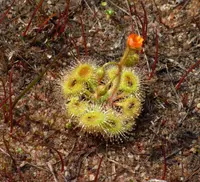
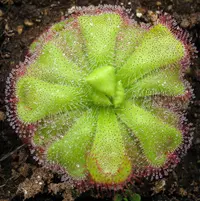
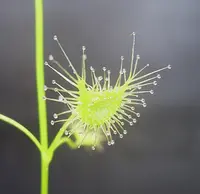
Pimpernel sundew (Drosera glanduligera) is a small, annual carnivorous plant that forms a flat rosette close to the soil surface. Its leaves are covered with sticky, glistening glands that trap tiny insects, giving the plant a sparkling, dew-like appearance.
This species is native to nutrient-poor, seasonally wet habitats in southern Australia, where it grows in open, sunny areas with damp, sandy or peaty soil. Because it is short-lived, needs cool conditions, and has a strong seasonal cycle, it is considered challenging for beginners.
Growers who want to learn how to care for Pimpernel sundew should know it prefers bright light, consistently moist substrate, and pure, low-mineral water for healthy growth.

Care Difficulty
Hard Care

Light Preference
Full Sun

Water Requirements
Aquatic

Temperature Preference
Cool Climate

Hardiness Zone
Unknown

Soil Texture
Sandy, Peaty, Organic-rich

Soil pH
Strongly acidic (4.5–5.5)

Soil Drainage
Waterlogged tolerant

Fertilization
Minimal (feed rarely)
Scan your plant to receive care tips personalized for your specific plant
Available on iOS and Android
Drosera glanduligera needs bright, direct sun to fuel its rapid growth and sticky traps.
This annual sundew prefers constantly moist, low‑nutrient, acidic substrate without drying out fully.
This species prefers mild, cool‑to‑warm conditions and declines in prolonged heat or hard frost.
This species needs consistently moist air to keep its sticky traps functioning well.
This carnivorous annual needs a very low-nutrient, airy, and consistently moist substrate.
This species is suitable for container growing when moisture and aeration are carefully controlled.
Drosera glanduligera generally does not need conventional fertilizer when grown in appropriate nutrient-poor media and fed insects.
Drosera glanduligera needs only minimal pruning to maintain hygiene and reduce mold risk.
This short‑lived annual is usually grown in the same pot for its full life cycle rather than repotted.
Propagation of Drosera glanduligera is almost always done from seed rather than vegetative methods.
This species is not frost hardy and needs careful seasonal management in temperate climates.

Plant Health Check
Not sure what's wrong with your plant? Check your plant's health inside the app.
This species has modified marginal tentacles that snap inward in about 75 milliseconds, making it one of the fastest known movement responses among plants and helping to fling small prey onto the sticky central leaf surface.
Each leaf functions as a single-use trapping structure: once the catapult tentacles fire and the leaf curls around captured prey, that individual leaf does not reset, and the plant relies on new leaves for further hunting.
In its native southern Australian range, this plant behaves as a short-lived winter annual that germinates with cool, wet conditions, grows and flowers quickly, then dies back before the dry summer.

This species is considered particularly difficult to maintain in cultivation because it requires a specific cool, wet winter and mild, short-lived growing period to complete its life cycle, which many growers find hard to replicate outside its native southern Australian climate.
Lack of flowers usually comes from insufficient light intensity, temperatures that are too high, or a plant that has not built enough energy from regular insect feeding. Adequate prey capture is essential for flowering in this species.
Keep your plants happy and healthy with plant identification, disease detection, and easy care guidance.