Pretty Sundew Care (Drosera pulchella)

Pretty Sundew

About Pretty Sundew

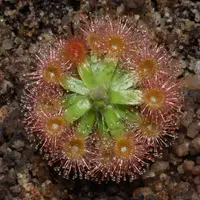
Drosera pulchella, commonly called pretty sundew, is a miniature carnivorous plant that forms tight rosettes of spoon-shaped leaves covered in glistening sticky hairs. These hairs trap small insects, which the plant slowly digests to supplement nutrients.

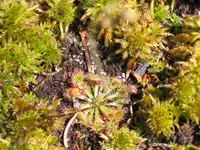
In nature it occurs mainly in nutrient-poor, sandy or peaty habitats of southwestern Australia, often in seasonally damp sites. Its compact size and interesting feeding behavior make it attractive for small collections.

This species prefers bright light, consistently moist low-mineral substrate, and good air movement, so learning how to care for Pretty Sundew is important for long-term success.

Main Plant Requirements

Care Difficulty

Hard Care

Light Preference

Partial Sun

Water Requirements

Keep Soil Moist

Temperature Preference

Tropical / Frost Sensitive

Hardiness Zone

Unknown

Soil Texture

Sandy, Peaty, Organic-rich

Soil pH

Strongly acidic (4.5–5.5)

Soil Drainage

Waterlogged tolerant

Fertilization

Minimal (feed rarely)

Get Personalized Care Plan

Scan your plant to receive care tips personalized for your specific plant

Available on iOS and Android

How to Care for the Pretty Sundew

This small sundew needs bright, gentle light to form strong, dewy traps without burning its leaves.

  • Provide 4–6 hours of direct morning sun plus bright filtered light for the rest of the day; avoid harsh mid‑afternoon summer sun.
  • Tolerates light partial shade, but dim conditions lead to pale leaves and reduced dew; increase light gradually if plants look stretched.
  • Outdoors, give Pretty Sundew a spot with early sun and dappled afternoon shade; in winter, move to the brightest frost‑free location available.

This species prefers consistently moist, low‑mineral conditions that mimic a bog rather than a typical garden bed.

  • Use rainwater, distilled, or reverse‑osmosis water; keep the soil evenly damp and never let it dry out more than the top 0.5–1 cm.
  • In warm growing seasons, maintain a shallow tray of water so the pot base just sits in it; lower the water level slightly during cooler months.
  • Signs of underwatering include dull, collapsing leaves with little dew; overwatering in poorly drained soil causes sour smell, algae, and root rot in Drosera pulchella.

This pygmy sundew grows best in mild, frost‑free conditions with moderate summer warmth.

  • Aim for 60–80°F (16–27°C) for steady growth; short peaks up to about 86°F (30°C) are tolerated if humidity stays moderate and roots never dry.
  • Avoid frost; growth slows below 45°F (7°C), and sustained exposure near or below 32°F (0°C) can damage or kill the rosette.
  • In hot summers, give afternoon shade and good air movement; in cooler seasons, protect from cold winds and sudden temperature swings, especially at night.

This small sundew prefers consistently moist air, but not a closed, saturated environment.

  • Aim for 50–70% relative humidity to keep leaf tentacles producing sticky mucilage reliably on Pretty Sundew.
  • It tolerates brief dips to 35–40% but prolonged very dry air causes dull, less dewy leaves and browned tips.
  • Raise humidity with a nearby water tray or grouped plants rather than misting, which can wash off dew and encourage fungus.

This species needs a nutrient-poor, open, and consistently wet carnivorous plant mix.

  • Use a 1:1 mix of sphagnum peat and silica sand or fine perlite to provide a loose, airy structure with steady moisture.
  • Keep drainage free but not fast-draining; the mix should remain damp to wet without forming stagnant, smelly pockets.
  • Avoid fertilizers, compost, regular potting soil, and hard tap water, as mineral buildup damages Drosera pulchella roots and leaf glands.
  • Rinse sand or perlite before use and lightly firm the surface so roots anchor while air spaces remain in the lower layer.

This species is well suited to container culture, especially shallow pots or trays.

  • Choose a wide, shallow plastic pot to keep the root zone evenly moist and reduce rapid edge drying in warm weather.
  • Place the pot in a water tray so the lower 1–2 cm of the mix stays wet while the surface remains just damp.
  • Use light-colored containers outdoors to limit overheating of the wet media, which can stress the fine roots in summer heat.

Drosera pulchella gains most nutrients from insect prey, so added fertilizer is used sparingly and with care.

  • Avoid standard houseplant feeds; if needed, use a very weak balanced NPK (about 1⁄8–1⁄4 strength) only during active growth.
  • Apply diluted fertilizer to the soil surface, never directly on the sticky leaves or traps.
  • Limit feeding to 1–2 times per month in spring–summer when growing Pretty Sundew under low insect availability.
  • Stop all fertilizing in fall–winter when growth slows or plants rest.

Pruning Drosera pulchella is light and focused on hygiene rather than shaping.

  • Best timing is during active growth in spring–summer, when recovery is fastest.
  • Remove only dead, blackened, or damaged leaves and old flower stalks to reduce mold and improve light to healthy rosettes.
  • Use fine-tip scissors or tweezers and cut at the base of the dead tissue without disturbing live leaves.
  • Limited thinning of crowded dead foliage keeps the compact cushion form but does not significantly change flowering.

This small carnivorous species prefers infrequent repotting with minimal root disturbance.

  • Repot every 2–3 years, or when growth stalls, the peat-sand mix compacts, or roots circle a tiny pot.
  • Best season is late winter to early spring, just before strong new growth begins.
  • Use a low-mineral mix such as 1:1 sphagnum peat and silica sand or perlite, pre-moistened with pure water.
  • Gently slide the plant out, keep the root ball intact, and firm new mix around it, then shade lightly for a few days to reduce stress.

Propagation of Drosera pulchella is usually done by division or gemmae rather than standard cuttings.

  • In late fall–winter, collect gemmae (tiny modified leaves) from mature rosettes and press them onto damp peat-sand mix.
  • Keep trays bright but out of harsh midday sun, at 60–75°F, and constantly moist with distilled or rainwater.
  • For division, separate small clumps in late winter, keeping roots and attached rosettes intact, then replant into fresh carnivorous mix.
  • Seed propagation is possible under bright light and consistently moist conditions but is slower and less predictable for beginners.

This species dislikes hard frost and benefits from cool but protected winter conditions in most climates.

  • Maintain temperatures around 40–55°F in winter, avoiding prolonged drops below freezing.
  • Move containers indoors to a cool windowsill, unheated greenhouse, or cold frame in cold regions.
  • Keep the soil just moist, not waterlogged, as growth slows and some foliage may decline.
  • Do not mulch heavily; excessive organic material can stay wet and encourage rot in the crown.

Care Tips

Seasonal Tray Depth

In summer, keep the water tray slightly deeper and in winter reduce the depth so the pot stays just moist, which helps prevent root rot in cool conditions while still supporting this plant’s bog-style culture.

Use Mineral-Free Ice

On very hot days, place a few cubes of distilled or rainwater ice on the soil surface to cool the root zone gradually and protect this small rosette from heat stress under strong light.

Refresh Moss Surface

Top-dress the pot annually with a thin layer of fresh, rinsed sphagnum or peat to maintain acidity and moisture near the crown and to discourage algae crust that can suffocate fine roots.

Controlled Feeding Schedule

Offer small, soft-bodied insects with tweezers no more than every 2–3 weeks during active growth, allowing leaves to fully digest previous prey before adding more to avoid leaf burn and fungal issues when growing Pretty Sundew.

Strategic Clump Division

Divide mature clumps only when several rosettes are well established, keeping 2–3 rosettes together per division so each new pot stabilizes quickly and suffers less transplant shock.

Common Pests and Diseases

Aphids

These insects feed on the tender growth and can cluster on flower stalks and young leaves, stealing nutrients and weakening the plant. This pest also excretes sticky honeydew that can encourage sooty mold on nearby surfaces.

Solution

Rinse the plant gently with distilled or rainwater to dislodge colonies, taking care not to damage the sticky traps. For persistent infestations, use a low-dose, carnivorous-plant-safe insecticide such as diluted neem oil spray applied to non-glandular areas, and repeat at intervals while monitoring new growth closely as part of Drosera pulchella care.

Fungus gnats

These insects are strongly attracted to wet, peaty media and their larvae can damage fine roots when populations are high. Symptoms include adults hovering over pots and reduced vigor in very small plants or seedlings.

Solution

Allow the surface of the carnivorous mix to dry slightly between waterings while keeping the lower layer moist, and use yellow sticky traps to catch adults. For severe cases, apply a biological control such as Bacillus thuringiensis israelensis (BTI) to the water tray according to label directions to target larvae without harming the plant.

Spider mites

These pests become a risk under warm, dry indoor conditions and can cause pale, stippled leaves and reduced dew production. This pest is often detected by very fine webbing and general decline of the rosette.

Solution

Increase humidity, rinse foliage gently with soft water, and isolate the plant from others. If mites persist, apply a targeted miticide or insecticidal soap at low strength, avoiding direct contact with the sticky glands as much as possible and repeating treatment over several life cycles.

Botrytis blight

This disease is a gray mold that develops on old leaves, dead insects, or flower stalks, especially in cool, stagnant, humid air. Symptoms include fuzzy gray growth, rapid browning of affected tissue, and potential spread across the rosette.

Solution

Promptly remove and discard any dead or moldy tissue, then improve air movement around the pot while keeping humidity moderate. If needed, apply a mild fungicide labeled safe for carnivorous plants to the affected areas and adjust watering so foliage dries more quickly while the growing medium remains moist.

Crown rot

This disease affects the central growing point when the plant sits in constantly saturated, poorly aerated media, particularly in cooler temperatures. Symptoms include a mushy, browning center and collapse of the small rosette from the base upward.

Solution

At the first signs, reduce water so the pot remains damp rather than waterlogged and improve drainage using a loose, airy mix of sphagnum and sand or perlite. Remove severely affected tissue, consider restarting the plant from healthy offsets if available, and maintain good air circulation to prevent recurrence.

Interesting Facts

Pygmy sundew gemmae

This pygmy sundew reproduces asexually through gemmae, tiny modified leaf structures that detach and form new plantlets, allowing rapid clonal spread in a single season.

Seasonal dormancy buds

In hot, dry Western Australian summers, it survives as compact resting structures called stipule buds, which protect the growth point until cooler, wetter conditions return.

Specialized dew tentacles

Its leaves are covered with short, reddish glandular tentacles that secrete sticky mucilage to trap very small insects, a scale well suited to the fine sand and low-nutrient habitats it occupies.

Botan icon

Did you know?

Drosera pulchella naturally forms tight, often colorful rosettes only about 1–2 cm across, making it one of the smallest carnivorous plant species regularly cultivated by enthusiasts.

FAQs about Pretty Sundew

Lack of flowering usually comes from insufficient light, too-warm winter conditions, or nutrient buildup from tap water or fertilizer. Provide bright conditions, a cool winter rest, and only low-mineral water to support regular blooms.

Grow Healthy Plants with Botan Care

Keep your plants happy and healthy with plant identification, disease detection, and easy care guidance.

Botan plant care app — identify plants on mobile

Explore More Plants