Label Dormant Clumps
Mark clump positions with durable labels in late spring as the foliage dies back, so you avoid disturbing resting corms during summer bed work or replanting.

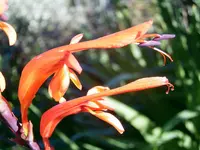
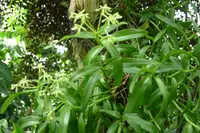
Cobra lily, Chasmanthe aethiopica, is a bulbous perennial from South Africa, grown mainly for its tall flower spikes and bold, upright foliage. The leaves form dense clumps, while the bright tubular flowers line one side of the stem, giving a distinctive architectural look.
In mild climates it is often grown in borders or naturalized in informal plantings, where it spreads gradually from bulbs. It prefers a sunny to lightly shaded spot with free-draining soil, and benefits from protection from hard frost.
Once established, it is relatively low-maintenance, though the tall flower stems mean wind exposure should be considered. Gardeners who learn how to care for Cobra lily usually find it a reliable seasonal feature plant.

Care Difficulty
Moderate Care

Light Preference
Full Sun

Water Requirements
Moderate Water

Temperature Preference
Warm Climate

Hardiness Zone
9–11

Soil Texture
Sandy, Loamy, Organic-rich

Soil pH
Slightly acidic (6.5–7.0), Neutral (7.0)

Soil Drainage
Moist but well-drained

Fertilization
Light (every 4–6 weeks)
Scan your plant to receive care tips personalized for your specific plant
Available on iOS and Android
Chasmanthe aethiopica thrives in bright outdoor conditions with a balance of direct sun and light shade.
This bulb prefers moist but fast-draining soil that never stays waterlogged for long.
This species grows best in mild, frost-free climates with cool, wet winters and warm, dry summers.
This species handles a fairly wide humidity range and usually does not need special humidity management outdoors.
Chasmanthe aethiopica prefers loose, well-drained soil that stays slightly moist in growth but dries a bit between waterings.
This species is well suited to container growing, especially where winters are cold or soils are heavy.
This corm-forming perennial benefits from modest feeding to support flowering but does not need heavy fertilization.
Pruning focuses on tidying Chasmanthe aethiopica and directing energy back to the corms.
This species is usually grown in the ground, but container plants or congested clumps benefit from periodic transplanting.
New plants are most commonly raised by division of corms, with seeds used when increasing numbers more slowly.
In mild climates this plant is fairly tolerant of cool, wet winters, but deeper cold requires simple precautions.

Plant Health Check
Not sure what's wrong with your plant? Check your plant's health inside the app.
This species is native to the winter-rainfall region of the Western Cape in South Africa and grows actively in cool, moist winters, then goes dormant in the dry summer. Its life cycle is tightly synchronized with this Mediterranean-type climate pattern.
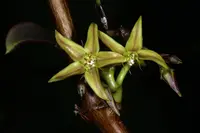
The long, tubular, orange flowers are adapted to bird pollination, especially by nectar-feeding sunbirds whose curved beaks match the flower shape. The inflorescences hold the flowers well above the leaves, making nectar and pollen easy for birds to access.
It grows from underground corms that multiply over time to form dense clumps. These corm clusters help the plant resprout reliably after seasonal drought or light disturbance.

In its native range, this species often appears in disturbed or rocky sites and road verges, where its persistent corms and bird-dispersed seeds allow it to re-establish quickly and form conspicuous winter-flowering stands that can dominate local hillsides.
Lack of flowers usually comes from insufficient winter chill, bulbs planted too deeply, or nutrient imbalance from high nitrogen. Allow a cool dormant period, keep bulbs 5–8 cm deep, and use a balanced, low-nitrogen fertilizer.
Keep your plants happy and healthy with plant identification, disease detection, and easy care guidance.